
The global football landscape is currently preparing for a monumental and unprecedented shift as FIFA 2026 rapidly approaches. For the first time in the long and storied history of international sports, three prominent nations—the United States, Mexico, and Canada—will officially unite to host the largest, most ambitious, and most geographically expansive sporting event ever conceived by humanity. This upcoming tournament represents far more than just a standard series of scheduled football matches; it is an unparalleled global celebration that fundamentally redefines the traditional boundaries of competition size, logistical mastery, international collaboration, and modern fan engagement.
When we look back at the history of international football, certain tournaments stand out as pivotal turning points. The introduction of the global stage in 1930, the televised revolution of 1970, and the modern commercial expansion of 1994 all changed the game forever. However, the sheer scale of what is being planned for the upcoming competition will dwarf all previous iterations. From radically expanded tournament formats to groundbreaking technological innovations implemented directly on the pitch, every single aspect of this mega-event is meticulously designed to leave a lasting and profound impact on global sports culture for generations to come.
Whether you are a lifelong, die-hard football enthusiast who tracks every statistical metric, or a casual observer drawn in solely by the immense cultural spectacle of the summer, understanding the deep structural, cultural, and tactical dimensions of this monumental event is absolutely essential. The sheer magnitude of organizing an event across an entire continent is a testament to the power of the beautiful game to transcend borders, languages, and political divides. As host cities prepare their transport networks, construct state-of-the-art training facilities, and renovate iconic arenas, the football world stands on the precipice of a new era.
The Unprecedented 48-Team Expansion in FIFA 2026
The most radical, widely discussed, and game-changing structural modification arriving with FIFA 2026 is the monumental expansion of the competing field from the traditional 32 teams to an astonishing 48 nations. This massive fifty percent increase in participating international squads marks the first major tournament expansion since the jump from 24 to 32 teams back in 1998 in France. For decades, the 32-team format was widely considered the gold standard of international football, offering a perfect balance of elite competition and manageable scheduling. However, the rapid global growth of the sport dictated a necessary and long-overdue evolution.
This massive expansion fundamentally alters the global qualification process, opening long-closed doors for developing football nations that have previously struggled to cross the agonizingly grueling and highly competitive qualification thresholds. Historically, traditional footballing powerhouses originating from the European and South American confederations have overwhelmingly dominated the tournament landscape, claiming every single championship trophy since the inception of the competition. With 48 highly coveted slots now available, confederations situated in Africa, Asia, North and Central America, and Oceania will receive significantly higher and much fairer tournament allocations.
Why the Expansion in FIFA 2026 Matters for Global Football
The redistribution of qualification slots across regional confederations represents a major step toward democratizing international sports competition. The allocation breakdown highlights significant increases across all continents:
-
Africa (CAF): Direct qualification slots have increased from 5 to 9 guaranteed spots, plus an additional entry in the intercontinental playoff tournament. This change properly reflects the immense depth of talent and competitive equity developing across African football.
-
Asia (AFC): Representation has nearly doubled, rising from 4.5 to 8 direct slots, with a playoff opportunity. Rising Asian nations now have a realistic trajectory to consistently test their domestic league improvements on the world stage.
-
North and Central America (CONCACAF): Direct slots expand to 6 nations, which includes the three automatic host qualifiers (United States, Mexico, and Canada), along with two additional playoff entries.
-
South America (CONMEBOL): Direct slots increase from 4.5 to 6 guaranteed entries, with one intercontinental playoff slot, ensuring that nearly seventy percent of South America’s highly competitive nations will feature in the main event.
-
Europe (UEFA): Representation increases from 13 to 16 direct slots, ensuring that top European nations face fewer traumatic qualification exits while still maintaining high regional competition standards.
-
Oceania (OFC): For the very first time in history, the region receives a guaranteed direct slot, eliminating the heartbreaking intercontinental playoff hurdle that historically blocked their regional champions from participating.
This critical redistribution of access guarantees a much broader international representation, giving emerging footballing nations a highly visible global platform to test their tactical skill, physical endurance, and technical ability against the most established and revered powerhouses in the world.
The New Group Stage Dynamics and Tournament Structure of FIFA 2026
In order to properly and safely accommodate the massive influx of 48 teams without severely diluting the overall quality of the competition or creating bizarre scheduling imbalances, governing officials were tasked with creating a completely new structural framework for FIFA 2026. Initially, serious consideration was given to implementing sixteen groups of three teams each. However, that concept was quickly abandoned due to legitimate concerns regarding potential anti-competitive behavior in final group fixtures, match-fixing vulnerabilities, and a reduced number of guaranteed matches for traveling supporters.
The final, officially approved structure features a highly dynamic twelve-group model. The 48 qualified nations will be divided evenly into twelve distinct groups of four teams. This traditional four-team group setup preserves the dramatic simultaneous kickoffs on the final matchday of the group stage, ensuring that excitement, integrity, and sporting tension remain at maximum levels throughout the opening phase.
The Road to the Final in FIFA 2026
Qualifying from the group stage under this expanded framework introduces exciting new mathematical calculations and dramatic knockout implications. To advance through the tournament, teams must navigate the following operational parameters:
-
Group Champions and Runners-Up: The top two performing teams from each of the twelve groups automatically qualify for the knockout stage, filling 24 of the available knockout positions.
-
Best Third-Place Finishers: The eight best third-place finishers across all twelve groups will also advance to complete a robust field of 32 teams.
-
The Round of 32: This introduces a completely new knockout stage fixture to the modern tournament calendar, replacing the traditional immediate jump to the Round of 16.
-
Increased Total Matches: The total number of competitive fixtures played throughout the summer jumps from 64 to an astonishing 104 matches, creating a full month and a half of non-stop elite competition.
-
Eight-Match Campaign: To lift the championship trophy, the ultimate winner will now have to play 8 matches instead of the historic 7, adding significant physical strain and requiring masterclass squad management.
This structural overhaul means that every single goal scored in the group stage will carry tremendous weight, as goal differential will serve as a primary tiebreaker when determining which third-place teams survive to enter the Round of 32.
Iconic Stadiums and Host Cities in FIFA 2026
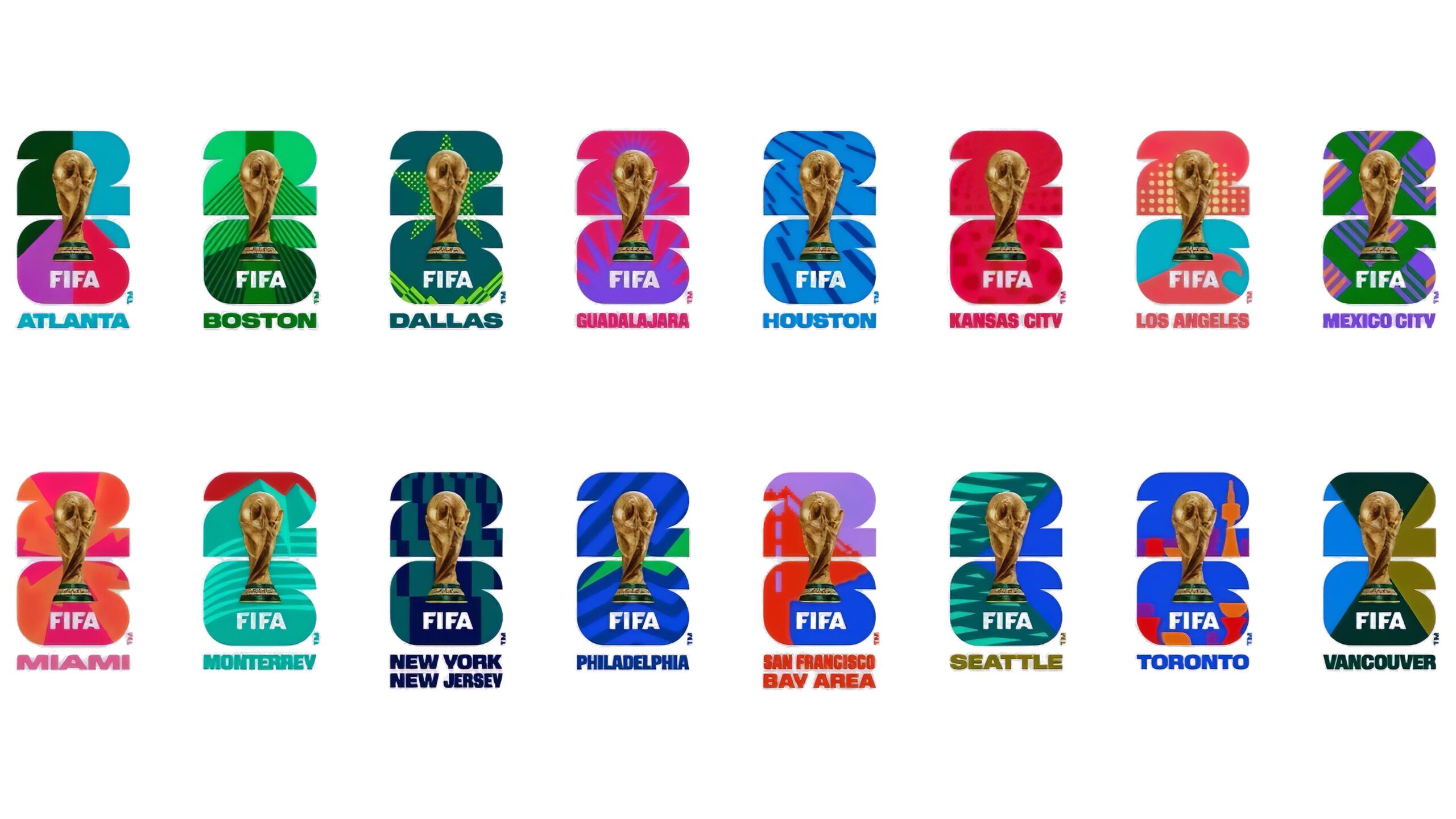
Spread extensively across 16 world-class, state-of-the-art venues, FIFA 2026 spans three immense countries, crosses four geographic time zones, and encompasses a vast array of summer climates. The selected host venues collectively represent the absolute pinnacle of modern architectural engineering, sustainable sports infrastructure, and historic international tradition.
The sixteen host metropolitan areas are strategically categorized across North America:
-
East Region: New York / New Jersey (MetLife Stadium), Boston (Gillette Stadium), Philadelphia (Lincoln Financial Field), Toronto (BMO Field), Miami (Hard Rock Stadium), and Atlanta (Mercedes-Benz Stadium).
-
Central Region: Kansas City (GEHA Field at Arrowhead Stadium), Dallas (AT&T Stadium), Houston (NRG Stadium), Atlanta, Monterrey (Estadio BBVA), Mexico City (Estadio Azteca), and Guadalajara (Estadio Akron).
-
West Region: Vancouver (BC Place), Seattle (Lumen Field), San Francisco Bay Area (Levi’s Stadium), and Los Angeles (SoFi Stadium).
In the United States, the tournament will utilize iconic venues constructed primarily for American football that offer massive seating capacities, world-class luxury amenities, and advanced engineering. SoFi Stadium in Los Angeles features an architectural canopy and a dual-sided 4K HDR oval video board, while AT&T Stadium in Dallas provides climate-controlled indoor conditions beneath a retractable roof structure. MetLife Stadium in East Rutherford, New Jersey, situated just outside New York City, has been awarded the ultimate honor of hosting the grand final match on July 19.
Canada steps into the spotlight with two dynamic host venues. BMO Field in Toronto is undergoing extensive stadium expansion project work to temporarily increase seating capacity to international standards, serving as an urban hub for vibrant domestic support. Meanwhile, BC Place in Vancouver offers a centrally located downtown venue equipped with a retractable roof system and scenic waterfront views, serving as the primary anchor for matches in the Pacific Northwest.
Geographical Clusters to Minimize Travel in FIFA 2026
One of the most persistent concerns regarding the execution of a tri-national, continent-spanning tournament is the potential burden of travel logistics. The physical distance between Vancouver on the Pacific coast and Miami on the Atlantic coast spans thousands of miles, crossing multiple terrain types and weather conditions. To combat player exhaustion, reduce carbon emissions, and ease travel burdens for supporters, organizers implemented an intelligent regional clustering model for FIFA 2026.
The clustering model divides the sixteen host venues into three primary geographical zones:
-
The Western Zone: Encompassing Vancouver, Seattle, San Francisco, and Los Angeles. Teams assigned to this zone travel along a direct north-south corridor, keeping flight times short and remaining within the Pacific Time Zone.
-
The Central Zone: Linking Guadalajara, Mexico City, Monterrey, Houston, Dallas, and Kansas City. This cluster minimizes travel across central plains and high-altitude locations while managing warm summer environments efficiently.
-
The Eastern Zone: Connecting Toronto, Boston, Philadelphia, New York / New Jersey, Atlanta, and Miami. Teams operating in this zone benefit from short interstate flights and consistent Eastern Time Zone scheduling.
By strictly confining group stage matches and early knockout rounds within designated regional clusters, competing teams avoid exhausting long-haul flights across the continent. This thoughtful logistical planning guarantees that athletes are provided sufficient recovery time between fixtures, preserving high-level performances on the pitch.
Historic Venues Highlighted in FIFA 2026
While modern arenas form the structural foundation of the venues in the United States and Canada, Mexico brings a level of football history and emotional weight to FIFA 2026 that cannot be replicated by modern architecture alone.
Estadio Azteca: The Cathedral of Football History
Mexico City’s historic Estadio Azteca will achieve an immortal sporting milestone during the tournament by becoming the first stadium in human history to host matches across three separate World Cup editions (1970, 1986, and 2026). To understand the significance of this venue is to understand the history of modern sports:
-
1970 Legacy: It was on this exact turf that Pelé orchestrated Brazil’s iconic team to victory, lifting the Jules Rimet trophy in front of a mesmerized crowd.
-
1986 Drama: The Azteca witnessed Diego Maradona’s double against England, featuring both the controversial “Hand of God” and the extraordinary “Goal of the Century,” before leading Argentina to global glory.
-
2026 Modern Era: Following extensive modernization projects to upgrade seating, player facilities, and broadcast infrastructure, the Azteca will host the opening match, connecting football’s golden past with its bright future.
Complementing the historic stature of the Azteca are Mexico’s modern architectural gems. Estadio BBVA in Monterrey offers a striking design set against the dramatic backdrop of the Cerra de la Silla mountain range, while Estadio Akron in Guadalajara features an eco-friendly design built into a natural hillside. This combination of rich history and modern infrastructure ensures that matches hosted in Mexico will deliver unforgettable atmosphere and visual brilliance.
Tactical Evolution and Player Load Management in FIFA 2026
The expanded tournament format and physical demands of FIFA 2026 will heavily influence tactical strategies. In past eras, national team managers could rely on a static, established starting eleven to navigate a seven-game campaign. In this new era, squad management, rotational depth, and tactical adaptability will dictate success.
With the total tournament path extending to eight matches and the permanent adoption of the five-substitution rule, managers must manage their squads as dynamic twenty-six-player units rather than relying solely on a starting eleven.
Navigating Diverse Climates and High Altitudes
The geographic diversity of the host venues introduces unique environmental conditions that demand specialized tactical approaches:
-
High-Altitude Strategy: Matches played in Mexico City (over 7,200 feet above sea level) require tactical pacing. Teams attempting unrefined, ninety-minute high-pressing systems at high altitude risk rapid physical exhaustion. Managers will likely favor possession control to regulate match tempo and conserve physical energy.
-
Humidity Management: Coastal venues such as Miami and Houston feature high summer temperatures and humidity. Smart teams will rely on structured defensive blocks, compact mid-blocks, and swift counter-attacks to limit unnecessary physical exertion.
-
Bench Utilization: The ability to execute five tactical substitutions per match allows managers to refresh energetic positions—such as wing-backs and box-to-box midfielders—without altering core defensive organization.
Coaches who balance squad rotation, monitor biometric player data, and adjust tactics based on local environmental factors will hold a major competitive edge during the grueling knockout rounds.
Key Stars and Emerging Talents Watching FIFA 2026
Every international football tournament is ultimately defined by the individual brilliance of the athletes who step onto the pitch. FIFA 2026 arrives at a fascinating moment, representing a generational transition between iconic veterans and a rising wave of young global talent.
As legends who dominated the sport for the past two decades move toward the twilight of their international careers, a new generation of elite players is ready to claim the global stage during their peak years:
-
Kylian Mbappé (France): Possessing terrifying speed, clinical finishing, and proven big-match temperament, Mbappé aims to lead France to further glory and solidify his legacy among the game’s greatest attackers.
-
Jude Bellingham (England): Providing midfield elegance, physical dominance, and tactical intelligence, Bellingham serves as the engine room for a talented English side aiming for international silverware.
-
Vinícius Júnior (Brazil): Representing South American flair, speed, and creative attacking play, Vinícius carries the dreams of a nation seeking its sixth world title.
-
Erling Haaland (Norway): An elite goal-scoring force whose physical power and lethal finishing could make a massive impact on the expanded global stage.
Alongside these established superstars, teenage prodigies and young academy graduates from across Europe, South America, Africa, and Asia will make their tournament debuts. The expanded 48-team format ensures that fans will discover exciting new talent from emerging football nations, creating star-making moments throughout June and July.
Economic and Cultural Impact of FIFA 2026
The economic and cultural magnitude of FIFA 2026 will reach unprecedented levels. Host cities across the United States, Mexico, and Canada are making substantial investments in urban transportation, airport capacity, hotel infrastructure, and community fan zones.
Economic analyses project that the mega-event will generate significant financial activity across North America:
-
Economic Output: Estimated to generate over $5 billion in short-term economic activity across the sixteen host metropolitan regions.
-
International Visitors: More than 5 million traveling supporters are expected to visit host cities, boosting local hospitality, tourism, transport, and retail sectors.
-
Global Viewership: Cumulative global television and digital streaming audiences are projected to top 5 billion unique viewers, breaking all previous broadcast records.
A Unifying Cultural Festival Across North America
Beyond financial impacts, co-hosting across three distinct nations creates a rich cultural exchange. Official Fan Festivals hosted in iconic public spaces—such as Mexico City’s Zócalo, New York’s Central Park, and Toronto’s Nathan Phillips Square—will serve as global gathering points where fans from around the world can unite in celebration.
Each host nation brings its unique identity to the global celebration: Canada showcases its welcoming multicultural diversity; Mexico displays its deep football passion, rich traditions, and historic hospitality; and the United States delivers sports entertainment, production quality, and modern venue operations. Together, they offer a blueprint for future multi-nation hosting arrangements.
Fan Logistics, Ticketing, and Travel Tips for FIFA 2026
Attending a continent-wide sporting event requires strategic planning and early preparation. Fans planning to travel for FIFA 2026 should take proactive steps to ensure a smooth, enjoyable tournament experience.
Crucial Steps for Traveling Supporters
-
Official Ticket Channels: Always purchase tickets exclusively through official governing body portals to avoid fraudulent secondary markets and ensure legitimate venue entry.
-
Visa and Travel Documentation: Verify entry requirements for all three host countries well in advance. Depending on your itinerary, traveling across borders during the tournament may require separate travel authorizations (such as the US ESTA, Canadian eTA, or Mexican tourist entry visas).
-
Book Lodging in Regional Clusters: Once match schedules and venue locations are drawn, secure accommodation within your team’s designated regional cluster to streamline transit logistics and manage travel expenses.
-
Utilize Public Transportation: Major host cities are implementing dedicated matchday transit passes and park-and-ride shuttles. Using public transport options helps fans avoid severe matchday traffic around major stadium venues.
By addressing these logistical considerations early, fans can focus entirely on enjoying the football and exploring the vibrant culture of the host cities.
Technological Advancements Premiering in FIFA 2026
Football officiating, broadcast production, and stadium analytics will reach new levels of technological integration during FIFA 2026. The tournament will feature sophisticated digital tools designed to support match officials, improve accuracy, and deliver immersive experiences for broadcast audiences.
Advanced Officiating and Match Analytics
-
Semi-Automated Offside Technology (SAOT): Utilizing specialized tracking camera networks installed beneath stadium roofs in combination with connected ball sensor technology, SAOT provides rapid, highly accurate offside decisions, minimizing match delays during VAR reviews.
-
In-Stadium Referee Announcements: Match officials will deliver clear, real-time audio announcements explaining video review outcomes directly to stadium crowds and television audiences, improving transparency and communication.
-
Precision Ball Tracking: Connected match balls containing embedded central motion sensors provide high-frequency real-time spatial data, accurately tracking kick points, ball velocity, and trajectory.
Next-Generation Broadcast Experience
Television and digital streams will feature interactive viewing options, including multi-camera angle selection, real-time player tracking data, dynamic heatmaps, and augmented reality (AR) statistical overlays for smart devices. These innovations will bring remote audiences closer to the action than ever before.
Why FIFA 2026 Will Transform North American Sports History
The long-term legacy of FIFA 2026 will resonate across North American sports culture for decades. Just as the 1994 World Cup in the United States catalyzed the creation of Major League Soccer (MLS) and accelerated the sport’s domestic growth, the 2026 edition will launch football into a new era of mainstream popularity.
Grassroots participation in soccer across Canada, Mexico, and the United States is experiencing remarkable growth. Massive investments in youth academies, community pitches, and coaching education guarantee that the tournament’s legacy will benefit future generations of young athletes.
By blending world-class stadium infrastructure, passionate host communities, and an expanded 48-team field, the tournament will solidify football’s position as a dominant sport in the North American sporting landscape.
Final Thoughts on FIFA 2026
The stage is officially set for an extraordinary athletic spectacle. Featuring 48 competing nations, 16 iconic host cities, 104 thrilling matches, and millions of passionate fans visiting North America, FIFA 2026 promises to redefine international sports hosting on a grand scale.
As qualifying campaigns reach their dramatic conclusions and host cities complete their final infrastructure preparations, global excitement continues to build. Whether you are following your national team’s qualification journey or planning a summer travel itinerary across host cities, prepare to witness a historic, ground-breaking event that will capture the imagination of sports fans worldwide.