
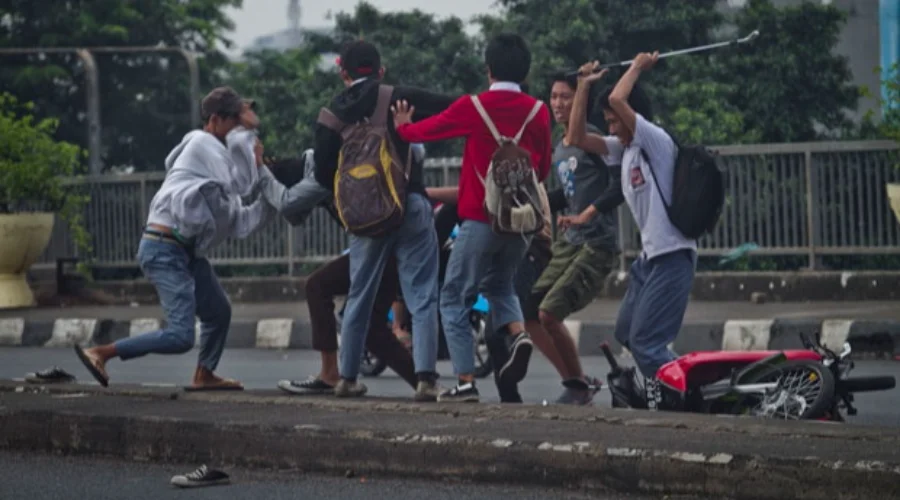
Youth violence is a phenomenon observed across various cultures and continents, yet few manifestations are as deeply entrenched, structured, and violent as the practice of student street brawling in Southeast Asia’s largest archipelagic nation. Known locally as tawuran, these collective conflicts between rival educational institutions or neighborhood youth groups have plagued urban spaces for decades. What once began as spontaneous physical altercations between rival schools has morphed into a complex socio-cultural ritual characterized by dangerous weapons, generational feuds, and digital coordination.
To truly understand this issue, one must look past the sensationalized headlines and explore the underlying social mechanisms, systemic failures, and psychological drivers that sustain it. Below, we examine the critical dimensions of this violent tradition, uncovering its historical roots, its modern digital evolution, and the ongoing efforts to eradicate it.
1. The Historical Roots of Indonesian Tawuran
To understand why mass brawling persists among teenagers today, one must trace the historical trajectory of Indonesian Tawuran. The roots of institutionalized student rivalries date back several decades, with early records pointing toward the mid-to-late 20th century in major urban centers like Jakarta, Bandung, and Surabaya.
“Street brawling did not emerge overnight; it grew out of decades of territorial rivalry, school identity competition, and changing urban landscapes.”
The Post-Independence Era and School Identity
During the 1960s and 1970s, as the nation’s public education system expanded rapidly, secondary vocational schools (Sekolah Teknik Menengah or STM) and general high schools (SMA) began forming distinct institutional identities. School pride became heavily tied to physical dominance over shared public spaces, transit routes, and neighboring territories.
The Role of Public Transportation Routes
Public transit played an unexpected role in shaping Indonesian Tawuran tradition. Students traveling long distances on public buses inevitably crossed paths at major transit hubs such as Senen, Blok M, or Manggarai in Jakarta. Over time, specific bus lines (jalur) became associated with particular schools:
-
Bus Line Dominance: Senior students established control over specific public transit routes, demanding that junior students defend these lines against rival schools.
-
Transit Hub Clashes: Interchanges became natural battlegrounds where rival groups collided during peak commuting hours.
-
Territorial Marking: Spray-painted graffiti on bus stops, public walls, and bridges served as territorial markers to assert dominance.
The Shift from Fists to Weapons
In its earliest forms, student skirmishes primarily involved bare-knuckle fistfights or simple thrown stones. However, as decades passed, the intensity escalated dramatically. By the late 1980s and throughout the 1990s, participants began introducing improvised bladed weapons, bicycle chains, and heavy wooden planks, setting a dangerous precedent that transformed these clashes into deadly events.
2. The Shocking Psychology Behind Indonesian Tawuran Culture
Why do teenagers willingly participate in clashes that carry high risks of severe injury, legal punishment, or death? The psychological drivers behind Indonesian Tawuran are multifaceted, rooted in collective identity, peer influence, and rigid social structures within student groups.
Peer Pressure and the Search for Belonging
Adolescence is a formative period characterized by a desire for acceptance and identity formation. For many young men, particularly those from under-resourced socio-economic backgrounds, school gangs offer a sense of belonging, protection, and brotherhood that they may lack elsewhere.
-
Solidarity (Solidaritas): The concept of peer loyalty is heavily weaponized. Refusing to join a brawl when invited is often framed as cowardice or betrayal.
-
In-Group Loyalty vs. Out-Group Hostility: Students are conditioned to view rival school members not as individual peers, but as hostile threats to their collective honor.
-
Status Elevation: Participating in violent encounters grants lower-grade students immediate prestige and respect among their peers and senior mentors.
Toxic Masculinity and the Proof of Courage
A key factor driving Indonesian Tawuran participation is the cultural expectation of proving physical toughness. Within these youth subcultures, physical bravery in battle is treated as a rite of passage into adulthood:
The Systemic Influence of Senior Alumni (Alumni Gaek)
One of the most concerning aspects of this phenomenon is the active role played by former students, often referred to as senior alumni (alumni gaek). Rather than discouraging violence, certain alumni groups maintain active control over current student cohorts:
-
Financial & Logistical Support: Senior alumni sometimes supply weapons, fund transportation, or provide bail money for arrested students.
-
Ideological Conditioning: Older generations pass down stories of past glory and grievances, ensuring that historic rivalries are inherited by incoming freshman classes.
-
Coercion and Intimidation: Juniors who resist participating may face physical punishment or harassment from senior organizers.
3. Weapons, Gang Rituals, and Escalation in Indonesian Tawuran
The violent mechanics of modern clashes have drawn widespread attention due to the extreme nature of the weaponry involved and the ritualistic elements that precede each encounter.
The Evolution of Dangerous Improvised Arms
Participants in Indonesian Tawuran rarely use firearms; instead, they rely on readily available, custom-crafted cold weapons designed to inflict maximum physical damage. Common items confiscated by law enforcement authorities include:
-
Celurit (Sickles): Oversized, curved agricultural sickles modified with sharpened steel blades, often measuring over one meter in length.
-
Corbek and Corbek Modified Saws: Heavy steel tools and sharpened saw blades attached to wooden handles or bamboo poles.
-
Corrosive Acids (Air Keras): Chemical solutions stored in plastic bottles, thrown into crowds to cause severe chemical burns and permanent disfigurement.
-
Gear Chains and Sharpened Metal Bars: Heavy industrial gear chains attached to belts or ropes, swung to break bones and disperse rival formations.
“The introduction of chemical acids and oversized steel sickles transformed traditional street fights into fatal encounters, raising urgent public safety concerns across urban centers.”
Tactical Formations and Group Dynamics
Far from being random chaos, an organized encounter often follows predictable tactical patterns:
-
Vanguard Units (Pasukan Depan): Armed with long sickles or shields, the most aggressive participants lead the front line to break the enemy formation.
-
Support Units: Positioned behind the vanguard, these participants throw rocks, glass bottles, or fireworks to create confusion and disorient the opposing group.
-
Getaway Drivers: Motorcyclists remain on standby at the edges of the conflict zone to facilitate rapid retreats before police arrive.
4. How Digital Media Amplifies Indonesian Tawuran Today
While the core dynamic of school violence has existed for generations, the modern digital landscape has drastically altered how Indonesian Tawuran events are organized, executed, and amplified.
From Street Corners to Social Media Live Streams
In past decades, confrontations depended on physical scouting and spotters posted at bus stops. Today, social media platforms—particularly Instagram, TikTok, and short-form video channels—have transformed these brawls into spectacle-driven digital media events.
Key Digital Mechanisms Fueling Modern Violence
-
Content Creation and Clout-Chasing: Many contemporary clashes are staged primarily for social media content. Groups broadcast their fights via live stream to build an online following and claim digital clout.
-
Digital Challenges (Tantangan Online): Rival groups send direct messages or post challenge videos tag-ging rival handles, setting specific times and neutral meeting points for confrontations.
-
Encrypted Messaging Coordination: Platforms like WhatsApp, Telegram, and private Instagram groups allow organizers to coordinate sudden assembly points while evading law enforcement monitoring.
-
Glorification through Video Edits: Post-match highlights are edited with stylized music, slow-motion effects, and graphics, turning violent clashes into stylized pop-culture content aimed at recruiting younger followers.
5. Impact on Society: The Devastating Cost of Indonesian Tawuran
The widespread occurrence of Indonesian Tawuran extends far beyond the individual students involved, creating severe ripple effects that impact families, educational institutions, public infrastructure, and the broader community.
Loss of Human Life and Severe Physical Disability
The most devastating consequence of street brawling is the tragic loss of young lives. Every year, scores of teenagers suffer fatal injuries or permanent physical disabilities due to deep lacerations, head trauma, and chemical burns.
Furthermore, innocent bystanders—including street vendors, commuters, and public transit workers—frequently find themselves caught in the crossfire, suffering injuries or property loss through no fault of their own.
Psychological Trauma and Academic Disruption
The persistent threat of violence inflicts ongoing psychological stress on students who simply want to attend school safely:
-
Atmosphere of Fear: Normal students living or studying near high-risk zones experience chronic anxiety during their daily commutes.
-
Academic Ruin: Students arrested or injured in clashes face suspension, expulsion, or criminal charges, permanently altering their educational and employment prospects.
-
Institutional Reputation: Schools associated with persistent violence suffer severe damage to their academic reputation, leading to declining enrollment and loss of community support.
Economic Costs and Infrastructure Damage
Urban municipalities expend substantial resources repairing damage caused by street violent events:
Direct & Indirect Costs of Street Brawls:
- Emergency healthcare and trauma surgery costs for injured youth.
- Damage to public transit buses, shelters, and commercial storefronts.
- increased deployment expenses for urban police and municipal security forces.
- Decline in local business activity along frequent clash corridors.
6. Modern Solutions to Eradicate Indonesian Tawuran
Addressing the complex issue of Indonesian Tawuran requires a comprehensive strategy that combines legal enforcement, educational reform, community intervention, and youth empowerment. Simple punitive measures alone have proven insufficient to break a cycle that spans generations.
Comprehensive Community and Preventive Strategies
To achieve long-term success, government bodies, schools, parents, and community leaders must collaborate across multiple fronts:
A. Law Enforcement and Digital Monitoring
Police agencies have modernized their response strategies to keep pace with evolving tactics:
-
Cyber Patrols: Specialized law enforcement units monitor public social media accounts and encrypted groups to detect planned brawls before they occur.
-
Community Patrol Units: Increased police presence along high-risk transit routes and known assembly points during dismissal hours acts as an effective physical deterrent.
-
Legal Accountability for Adults: Prosecuting senior alumni who supply weapons or incite minors ensures that the root organizers face legal consequences.
B. Educational Reform and Positive Outlets
Schools must focus on creating environments that offer alternative pathways for youth energy and identity formation:
-
Extracurricular Redirection: Expanding access to sports, martial arts, robotics, music, and vocational training provides constructive outlets for energy and social bonding.
-
Positive Inter-School Programs: Organizing joint sports tournaments, cultural exchanges, and collaborative projects between rival schools helps humanize peers across institutional divides.
-
Counseling and Mental Health Services: Providing accessible school counselors enables early intervention for students experiencing home conflicts, peer pressure, or behavioral struggles.
C. Parental Engagement and Community Vigilance
Families and local communities serve as the primary line of defense against youth violence:
-
Parental Supervision: Encouraging parents to monitor their children’s after-school schedules and social media activities helps detect early warning signs.
-
Neighborhood Watch Programs: Community leaders (RT/RW) and local residents playing an active role in reporting suspicious youth gatherings helps secure neighborhood spaces.
Conclusion
The issue of Indonesian Tawuran is a multifaceted socio-cultural challenge that cannot be resolved through punitive measures alone. While its historical origins are rooted in institutional rivalries and urban transit dynamics, its modern continuation is fueled by digital media, peer pressure, and generational subcultures.
Dismantling this deeply entrenched tradition requires a sustained, systemic effort that addresses the root psychological and social needs of young people. By replacing violent rites of passage with positive creative outlets, strengthening family support systems, leveraging digital cyber patrols, and promoting collaborative inter-school relationships, society can create a safer environment where the nation’s youth can thrive without fear. Breaking the cycle of violence is not merely a matter of law enforcement—it is an investment in the future, wellbeing, and potential of the next generation.