
The Paralympic Games represent one of the most powerful celebrations of human athletic excellence, resilience, and determination on the planet. Today, thousands of elite athletes with physical, visual, and intellectual impairments compete at the absolute highest level, breaking world records and captivating billions of viewers worldwide. However, the incredible journey of how this massive global phenomenon came to be is deeply rooted in human compassion, medical innovation, and an unwavering belief in human potential.
Understanding Paralympic origins requires stepping back into one of the darkest periods of modern history: the mid-20th century. What began as an experimental rehabilitation method for injured war veterans in a modest English hospital grew into the second-largest multi-sport event in the world. This is the ultimate narrative of how tragedy was transformed into triumph through vision, courage, and athletic passion.
Understanding the Historical Context of Paralympic Origins
To truly appreciate Paralympic origins, one must first understand the devastating reality faced by individuals with spinal cord injuries prior to the mid-1940s. Before World War II, a spinal cord injury was almost universally regarded as a prompt death sentence. Medical science at the time lacked the necessary protocols to prevent fatal complications such as urinary tract infections, severe sepsis, and debilitating pressure sores.
“Until the mid-20th century, patients with traumatic spinal cord damage were kept heavily sedated, immobile, and isolated. Over 80% died within two years of injury.”
During World War II, thousands of military personnel suffered severe trauma on the battlefield. The massive influx of young, paralyzed soldiers forced medical communities to re-evaluate traditional palliative treatments. The British government recognized the urgent need for a specialized medical strategy to care for returning injured personnel.
In 1943, the British government commissioned a pioneering rehabilitation facility at the Stoke Mandeville Hospital in Buckinghamshire, England. The creation of the National Spinal Injuries Centre at Stoke Mandeville marked the official starting point of Paralympic origins, creating a supportive space where innovative medical philosophies could challenge decades of fatalistic medical dogma.
Sir Ludwig Guttmann: The Driven Visionary Behind Paralympic Origins
At the absolute heart of Paralympic origins stands a single, remarkably determined individual: Dr. Ludwig Guttmann. A Jewish-German neurologist who fled Nazi persecution in 1939 to settle in the United Kingdom, Guttmann brought a radical perspective to spinal rehabilitation. Appointed as the head of the National Spinal Injuries Centre at Stoke Mandeville in 1944, he rejected the conventional belief that paralyzed patients should remain passive hospital residents waiting for an early death.
Guttmann firmly believed that active physical movement was crucial for both bodily healing and psychological recovery. He introduced sport into the daily rehabilitation regimen of his patients, starting with simple recreational activities such as wheelchair polo, punch-bag training, and target archery.
Guttmann observed that competitive sports restored physical strength, developed trunk balance, enhanced lung capacity, and, most importantly, re-ignited a passion for living. His revolutionary philosophy transformed the narrative surrounding disability from one of passive pity to one of active physical capability, cementing his legacy as the founding father of Paralympic origins.
The 1948 Stoke Mandeville Games: The Spark of Paralympic Origins
The pivotal milestone in Paralympic origins occurred on July 29, 1948. On this precise day, the London 1948 Olympic Games were officially opening just 35 miles away at Wembley Stadium. Taking advantage of the national athletic enthusiasm, Dr. Guttmann organized the very first Stoke Mandeville Games on the lawn of the hospital grounds.
| Event Aspect | 1948 Stoke Mandeville Games | Modern Paralympic Games |
| Total Athletes | 16 (14 men, 2 women) | 4,000+ |
| Participating Nations | 1 (United Kingdom) | 160+ |
| Primary Sport | Archery | 22 Sports |
| Target Audience | Hospital Staff & Patients | Global Audience (Billions) |
The inaugural 1948 competition involved 16 injured British service personnel (14 men and 2 women) who competed in target archery. While modest in size, the event carried profound symbolism. By organizing the games on the exact same day as the Olympic opening ceremony, Guttmann sent a clear, uncompromising message to the global community: athletes with disabilities possessed the same competitive spirit, dedication, and right to athletic recognition as non-disabled Olympians.
Guttmann famously expressed his daring vision during these initial games, daring to dream that one day, an international sports competition dedicated entirely to athletes with physical disabilities would take place alongside the Olympic Games. That single afternoon of archery in 1948 ignited the spark that ignited Paralympic origins.
From Hospital Grounds to Rome 1960: Scaling Paralympic Origins
The success of the 1948 event created immediate momentum. Year after year, the Stoke Mandeville Games grew in popularity and scope. In 1952, Dutch veterans joined the competition, transforming the local gathering into the International Stoke Mandeville Games. This international participation demonstrated that Guttmann’s rehabilitation model was gaining traction far beyond the borders of the United Kingdom.
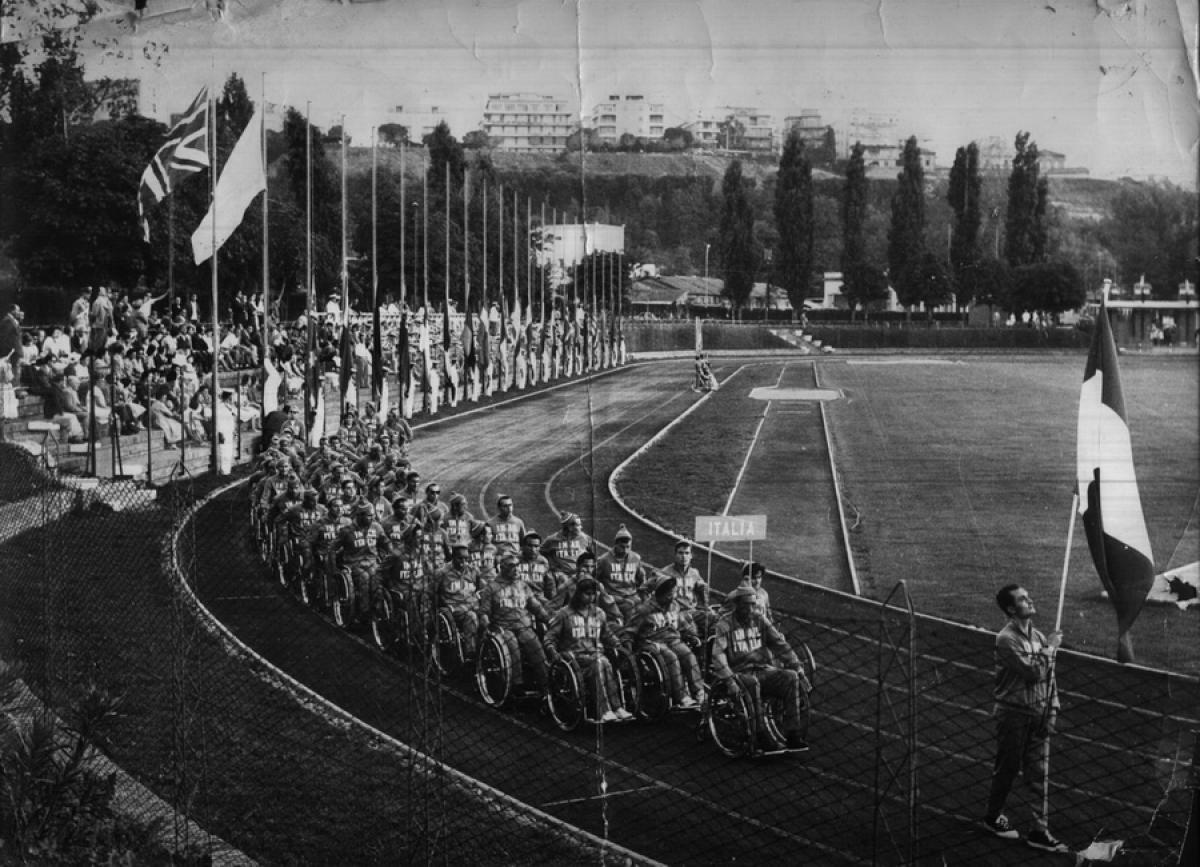
By the late 1950s, the movement had outgrown the hospital lawns of Buckinghamshire. The decisive leap in Paralympic origins occurred in 1960, when the games were held outside Great Britain for the very first time.
Directly following the 1960 Rome Summer Olympics, 400 athletes with spinal cord injuries representing 23 nations gathered in Rome to compete in 8 distinct sports. Today, historians formally recognize the 1960 Rome International Stoke Mandeville Games as the 1st Official Paralympic Games. The event featured events such as wheelchair basketball, swimming, fencing, athletics, and archery, proving to the world that elite competitive sports for people with disabilities could succeed on a international scale.
7 Pivotal Milestones That Shaped Paralympic Origins
To fully grasp the evolution of Paralympic origins, it is necessary to examine seven monumental historical milestones that transformed a local rehabilitation exercise into a worldwide sports phenomenon.
1. The Inaugural Stoke Mandeville Archery Contest (1948)
The event that started it all. Sixteen war veterans proved that physical impairment did not prevent competitive athletic spirit.
2. International Expansion with the Dutch Team (1952)
When ex-servicemen from the Netherlands traveled to England, the movement became international, leading to the creation of the International Stoke Mandeville Games Committee.
3. The Historic Rome 1960 Games
The first time the games were held in the same host city as the Olympic Games, setting the foundation for the modern Paralympic host system.
4. Inclusion of Diverse Impairment Groups (1976)
At the Toronto 1976 Games, participation expanded beyond spinal cord injuries to include amputees and visually impaired individuals for the first time, dramatically expanding the scope of Paralympic origins.
5. The First Winter Paralympic Games in Örnsköldsvik (1976)
Sweden hosted the inaugural Winter Paralympics, introducing adaptive skiing, ice sledge racing, and cross-country skiing, proving that adaptive winter sports could captivate global audiences.
6. The Seoul 1988 Co-Location Breakthrough
The 1988 Summer Games in Seoul, South Korea, marked a major milestone. The Paralympics were held in the exact same venues, using the exact same facilities and infrastructure as the Olympic Games immediately following their conclusion.
7. The Founding of the International Paralympic Committee (1989)
On September 22, 1989, in Düsseldorf, Germany, the International Paralympic Committee (IPC) was established as an independent, international non-profit governing body, finalizing the institutionalization of Paralympic origins.
Classification Systems and Broadened Access in Paralympic Origins
A critical factor in the success of Paralympic origins was the development of fair, scientific classification systems. In the earliest days at Stoke Mandeville, classification was purely medical. Athletes were categorized strictly based on their anatomical level of spinal injury.
However, as the movement expanded to include athletes with different types of impairments—such as cerebral palsy, limb deficiencies, visual impairments, and intellectual disabilities—medical classification alone proved insufficient to ensure equitable competition.
During the 1980s and 1990s, the IPC introduced the functional classification system. This approach assesses how an athlete’s physical or sensory impairment impacts their ability to execute specific athletic movements within a given sport. For example, a functional classification system evaluates how well a swimmer can propel themselves through water, rather than focusing solely on medical diagnosis.
This transition from medical to functional classification represents a crucial chapter in Paralympic origins, ensuring that athletic victory is determined by skill, training, strategy, and talent rather than varying degrees of physical capability.
Snow and Ice Innovations: The Winter Expansion of Paralympic Origins
While the early narratives of Paralympic origins focus heavily on summer sports, the expansion into winter disciplines opened up entirely new athletic frontiers. Adaptive winter sports began emerging independently in Europe shortly after World War II, as injured skiers sought ways to return to the slopes.
In 1970, pioneer Sepp Zwicknagl, an Austrian pioneer who had lost both legs below the knee during the war, developed early prototypes for sit-skis and three-track skiing. His innovations demonstrated that snow sports could be safely adapted for individuals with severe mobility challenges.
When Sweden hosted the 1976 Örnsköldsvik Winter Games, 16 countries participated in alpine and Nordic skiing events. The success of these winter competitions demonstrated that Paralympic origins extended across all climate zones and athletic environments, opening up opportunities for athletes with physical impairments worldwide.
Societal Shifts and Perception Changes Rooted in Paralympic Origins
The broader societal impact of Paralympic origins extends far beyond medal tallies and athletic records. Historically, individuals with disabilities were frequently marginalized, hidden away in institutions, or viewed through a lens of pity. The emergence of the Paralympic movement catalyzed a shift in how society views disability.
“The Paralympics transformed disability from a medical condition requiring sympathy into a showcase of human athletic excellence.”
By providing a global platform where athletes perform extraordinary feats of strength, speed, and strategic skill, the movement forced the global public to focus on capability rather than limitation. This cultural shift directly supported the international disability rights movement of the late 20th century, influencing national legislation regarding accessibility, civil rights, and public infrastructure worldwide.
Furthermore, Paralympic origins played a key role in promoting universal accessibility in modern architecture and urban design. Cities hosting the Paralympic Games were required to build fully accessible transit systems, public facilities, and athletic centers. Today, urban centers around the globe benefit from accessible infrastructure originally created to support Paralympic competitions.
Technological Innovations Driven by Paralympic Origins
The history of Paralympic origins is closely tied to technological innovation. In the late 1940s, athletes competed in standard, heavy hospital wheelchairs that weighed over 40 pounds. These heavy steel frames were difficult to maneuver and restricted high-speed athletic performance.
As competition intensified, engineers, biomechanists, and athletes began collaborating to build custom equipment designed specifically for elite sports performance.
Key technological breakthroughs stemming from Paralympic origins include:
-
Rigid Frame Wheelchairs: Transitioning from foldable steel frames to ultralight welded aluminum and titanium frames.
-
Cambered Wheels: Angling the rear wheels outward to improve high-speed stability and quick turning agility in basketball and rugby.
-
Carbon Fiber Running Prostheses: The development of energy-storing flex-foot prostheses (such as the “Cheetah” blade) that allow leg amputees to run with natural spring strides.
-
Advanced Sit-Skis: Utilizing shock-absorbing suspension systems engineered to handle high-speed alpine racing courses.
These engineering advances have not only elevated athletic performance in Paralympic competition, but have also improved mobility devices used daily by millions of non-athletes around the world.
The Enduring World Legacy Built Upon Paralympic Origins
Today, the Paralympic Games stand alongside the Olympic Games as one of the premier sporting events in the world. The official partnership agreement signed between the International Olympic Committee (IOC) and the International Paralympic Committee (IPC) in 2001 ensured the principle of “One City, One Bid”—guaranteeing that whichever city wins the right to host the Olympic Games also hosts the Paralympic Games using the same venues, facilities, and village infrastructure.
From 16 injured British veterans competing in target archery in 1948 to thousands of elite international athletes competing across dozens of sports today, the growth of the Paralympic movement is remarkable. The legacy of Paralympic origins serves as a constant reminder that human potential is bounded not by physical limitations, but by imagination, courage, and opportunity.
As new generations of athletes break world records, their achievement stands upon the firm foundation established at Stoke Mandeville Hospital decades ago. The origin story of the Paralympics proves that when human empathy, vision, and athletic drive come together, extraordinary progress is possible.