
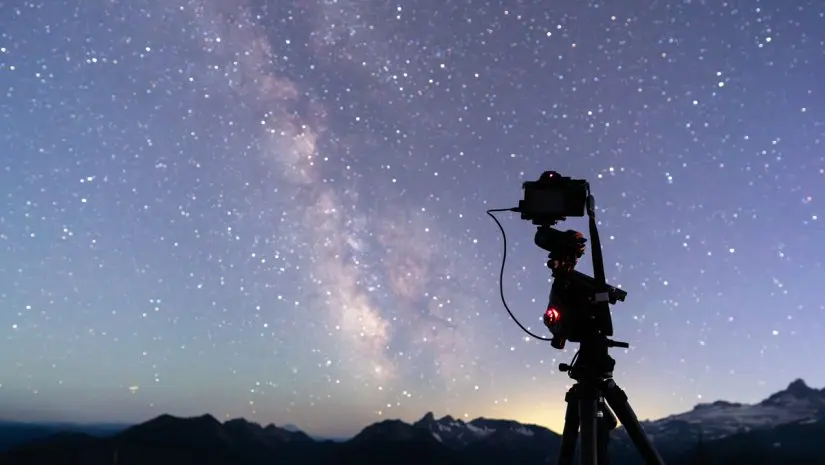
The night sky has always fascinated humanity. From the earliest civilizations mapping constellations to modern astronomers probing the edges of the observable universe, our desire to capture and understand the cosmos has never waned. Today, thanks to revolutionary advancements in astrophotography cameras and telescope technology, that dream is more accessible than ever.
Gone are the days when capturing a breathtaking image of a distant nebula required a PhD in astrophysics and access to a million-dollar observatory. Modern astrophotography cameras have democratized deep-space imaging, putting the power of professional-grade astronomical photography into the hands of enthusiasts. Whether you are a beginner eager to photograph the Moon or a seasoned astrophotographer chasing faint galaxies millions of light-years away, the technology available in 2026 is nothing short of extraordinary.
This article explores the cutting-edge technologies behind modern astrophotography cameras, from sensor innovations and cooling systems to smart telescopes and image-processing breakthroughs that are transforming how we see the universe.
The Digital Revolution: From Film to Pixels
Before diving into the latest technologies, it is worth understanding how far astrophotography cameras have come. In the pre-digital era, astrophotography was done with film—an unforgiving medium with low sensitivity and many limitations. Long exposures were necessary, and the process required darkroom development and precise control over every step.
The introduction of CCD (Charge-Coupled Device) sensors revolutionized the field. Suddenly, astrophotographers could capture fainter objects, stack multiple exposures, and process images with software. Today, digital sensors are not just convenient—they are essential. The transition from CCD to CMOS technology has been particularly transformative, offering faster readout speeds, lower power consumption, and superior sensitivity at more affordable prices.
Understanding the Sensor: The Heart of Every Astrophotography Camera
The most important component of any astrophotography camera is the digital sensor. Every pixel on the sensor collects light from the night sky and converts it into an electric signal. These signals are then digitized and turned into an image.
CMOS vs. CCD: The Great Debate
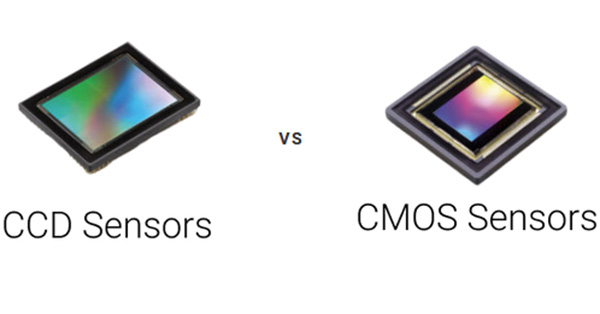
For years, CCD sensors were considered the gold standard for low-noise, high-quality imaging. However, modern CMOS sensors have largely surpassed them in most applications. Today’s CMOS sensors offer lower read noise, higher frame rates, and excellent sensitivity—making them the preferred choice for astrophotographers.
The Sony IMX571 sensor, found in many high-end astrophotography cameras like the ZWO ASI2600 Pro and the Atik Apx26, exemplifies this technological leap. With 26 megapixels, an APS-C format, and back-illuminated technology, this sensor delivers exceptional quantum efficiency exceeding 80%. Back-illuminated sensors move the circuitry behind the photosensitive layer, allowing more photons to be captured by each pixel—a critical advantage when photographing faint deep-space objects.
Pixel Size and Resolution: Finding the Balance
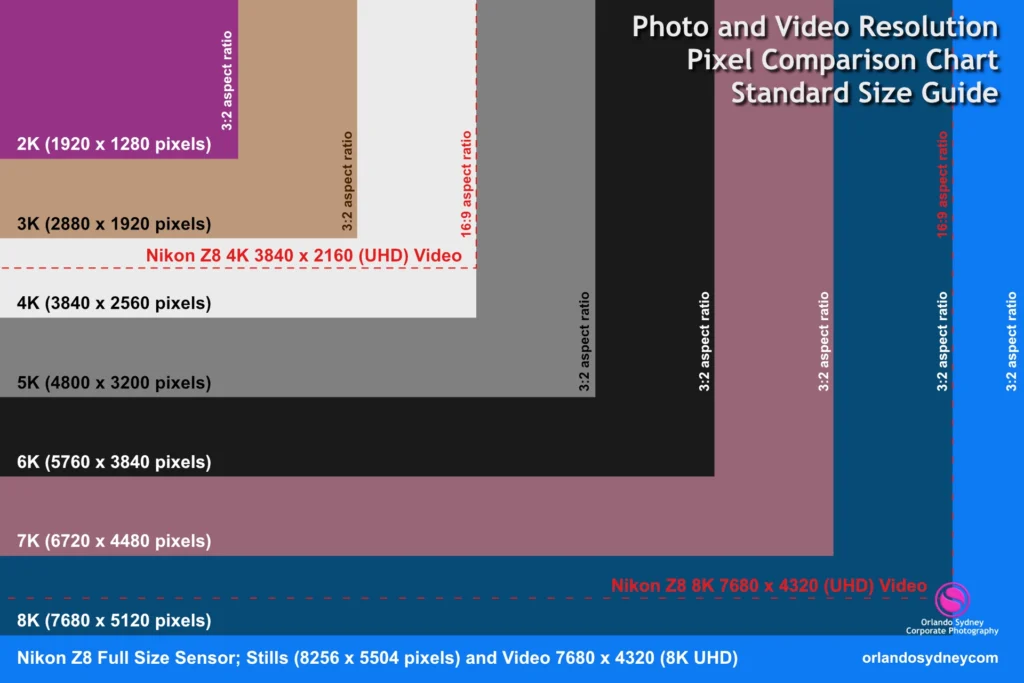
Choosing the right pixel size is crucial in astrophotography cameras. Larger pixels capture more light but offer lower resolution, while smaller pixels provide finer detail but may introduce more noise. The sweet spot for many deep-sky applications is around 3.76 micrometers—a pixel size found in sensors like the Sony IMX571.
This pixel size strikes a fine balance between resolution and sensitivity, ensuring that astrophotographers can capture finely detailed structures while retaining enough full well capacity to achieve a wide dynamic range. The 3.76 μm pixel, combined with 16-bit analog-to-digital conversion, enables astrophotography cameras to record extremely subtle differences in brightness across a wide tonal range.
Don’t Forget Check This One:
The Future of Camera Sensor Technology: 7 Breakthroughs Changing Photography in 2026
Cooling Technology: Taming Thermal Noise
Thermal noise is one of the main limiting factors in long-exposure astrophotography. As exposure time increases, sensor temperature becomes the primary source of noise. This is where cooling technology in modern astrophotography cameras becomes essential.
Two-Stage Thermoelectric Cooling
High-end astrophotography cameras employ sophisticated two-stage thermoelectric cooling (TEC) systems. These systems can reduce the sensor temperature by 30°C to 45°C below ambient temperature. For example, the Svbony SC571CC features a two-stage TEC system that can lower the sensor temperature to 35°C below ambient, significantly reducing dark current and improving the consistency of individual frames during long exposures.
The Atik Apx26 takes this even further, with a cooling system capable of lowering the sensor temperature 35°C below ambient, ensuring that signal-to-noise ratios remain optimal even during extended imaging sessions that run overnight. With exceptionally low dark current of just 0.0008 e⁻/p/s at -15°C, the Apx26 enables exposures up to 24 hours without degrading image integrity.
Zero Amp Glow Design
Another critical innovation in modern astrophotography cameras is zero amp glow design. During long exposures, glow often appears at the edges of the CMOS sensor due to readout circuitry. Advanced cameras solve this problem at the hardware level, reducing reliance on post-processing corrections and preserving a cleaner raw signal.
The Three Main Types of Astrophotography Cameras
Depending on what you want to capture and how you plan to use your telescope, you can choose from three main types of astrophotography cameras.
1. DSLR and Mirrorless Cameras
These are ideal for beginners and those transitioning from regular photography. They are versatile and easy to use, but not specifically designed for astrophotography. DSLR and mirrorless cameras include IR-cut filters that limit sensitivity to key wavelengths like H-alpha, which can reduce performance when photographing emission nebulae.
However, specialized models like the Canon EOS Ra are designed specifically for astrophotography, with modified filters that allow more H-alpha light to reach the sensor.
2. Cooled Astronomy Cameras
Designed specifically for astrophotography, these astrophotography cameras feature active cooling systems to minimize thermal noise—especially important during long exposures used for deep-sky objects. They are available in both color and monochrome sensor versions.
Color cameras are simpler to use, producing color images in a single shot. However, they are more limited when it comes to light pollution filtering. Monochrome cameras offer higher sensitivity and allow the use of narrowband filters (H-alpha, OIII, SII), which are extremely effective in fighting light pollution and bringing out faint details in nebulae.
3. Smart Telescopes
The newest category of astrophotography cameras comes integrated into smart telescopes—small robotic instruments that point at and take images of sky objects with little or no human intervention. These devices make obtaining astrophotos of surprising quality easy for just about anyone.
Smart Telescopes: The Democratization of Astrophotography
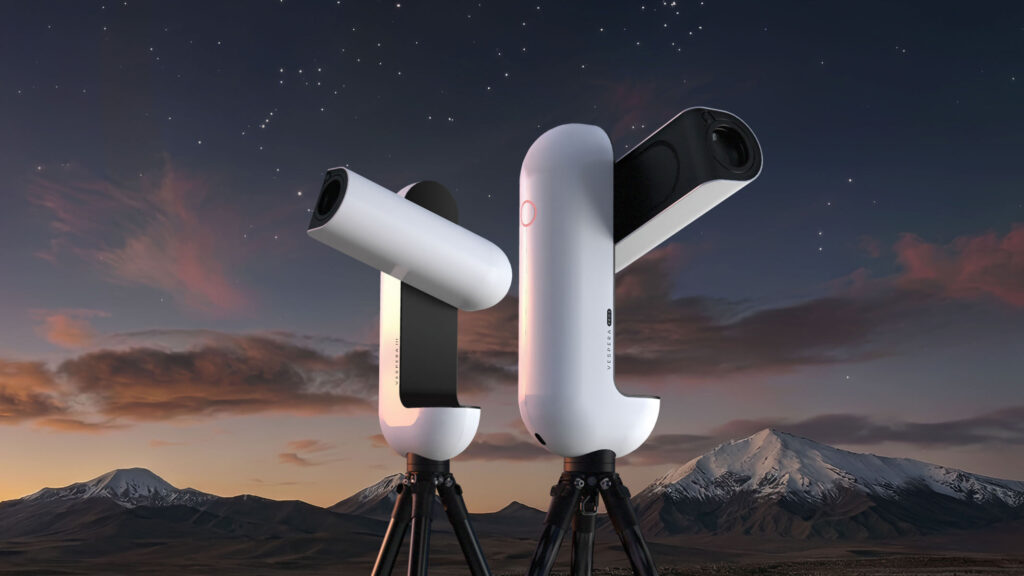
The smart-telescope revolution has transformed the landscape of astrophotography cameras. These all-in-one devices combine optics, sensors, mounts, and onboard computers into compact, user-friendly packages.
ZWO Seestar S30: A Pint-Sized Powerhouse
The ZWO Seestar S30 exemplifies this trend. Despite its 30-mm aperture apochromatic refracting telescope, this device produces images that surprise even seasoned astrophotographers. The heart of the S30 is an integrated one-shot color camera built around a Sony IMX662 CMOS sensor with an array of 1,920 × 1,080 pixels (2.1 megapixels).
Weighing a mere 1.65 kilograms and measuring just 21 × 14 × 8 centimeters, the S30 is an amazingly small and compact package. It is equipped with dual-axis drive motors, an internal computer, on-board Wi-Fi, a rechargeable battery, an internal dew heater, and a dual-band light-pollution filter that can be switched in and out automatically.
Unistellar eVscope eQuinox 2: Autonomous Field Detection
The Unistellar eVscope eQuinox 2 takes a different approach. At its core, it is a 4.5-inch (114mm) reflector telescope mounted on a motorized altazimuth mount that autonomously aligns with and tracks the night sky. Inside is the latest Sony IMX347 image sensor, which takes short exposures of deep-sky objects. Its onboard computer then stacks those images in real time, gradually revealing an ever-clearer image on connected smartphones and tablets.
The eQuinox 2’s Autonomous Field Detection technology is a thing of beauty. With its nine-hour onboard battery charged using a USB-C cable, the telescope images the stars above and plate-solves them with a database, automatically aligning in seconds. If you have ever been frustrated when aligning telescopes, the eQuinox 2 is aimed at you.
Vaonis Vespera Pro: Premium Smart Astrophotography
The Vaonis Vespera Pro represents the premium end of the smart telescope market. It solves the biggest barrier to deep-sky astrophotography—time. There is no setup beyond placing it on its tripod, no complex alignment, and no delays. With its integrated 12.5-megapixel camera and innovative technologies, the Vespera Pro offers a complete solution that allows anyone to dive into astrophotography.
Enjoy This Article So Far? You May Also Like This One:
From Celluloid to AI: 7 Ways Film Technology Revolutionized Cinema
Image Stacking: The Secret to Deep-Space Detail
One of the most powerful techniques in modern astrophotography is image stacking. Astrophotos usually consist of dozens to hundreds of multiple-minute exposures that are “stacked” together to reduce noise and bring out the dim celestial object being imaged.
How Stacking Works
The process of combining multiple frames into a single image is called stacking. This process requires significant computational resources and is performed by dedicated software. By averaging many light frames, the stacking process drastically reduces image noise. The simple rule is: the more light frames, the better the quality of the final image.
Live Stacking
Modern smart telescopes and software now offer “live stacking”—a feature that enables the capture of deep-sky images without the traditional requirements of a high-accuracy, guided, equatorial mount and long sub-frame exposures. This technology allows astrophotographers to see their images improve in real time as more frames are added.
Software Solutions
Popular stacking software includes PixInsight, Astro Pixel Processor (APP), DeepSkyStacker, and Siril. These tools not only stack images but also calibrate, register, and adjust them, all while maintaining the highest possible image quality.
Autoguiding: Precision Tracking for Sharp Images
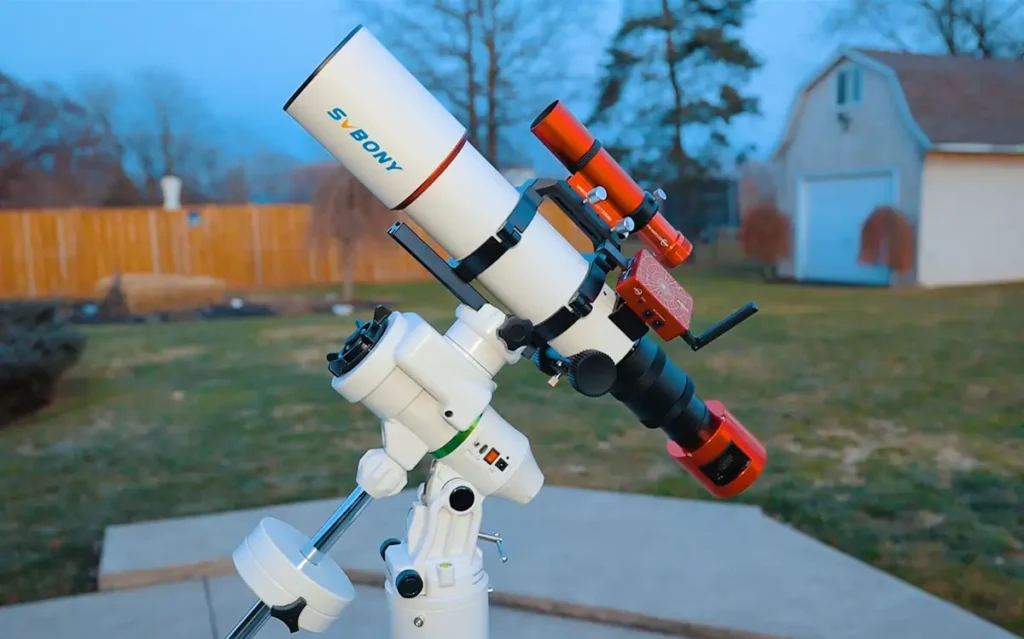
Long-exposure astrophotography requires precise tracking. Even the smallest tracking error can cause blurry star trails that ruin an image. This is where autoguiding comes in.
How Autoguiding Works
Autoguiding uses a second camera to take a continuous series of short exposures of a “guide star” near the object being imaged. If the star drifts, the software sends a correction pulse to nudge the mount back. This compensation ensures that the main camera remains perfectly aligned throughout the exposure.
Software for Autoguiding
PHD2 is a free, open-source telescope guiding software that simplifies tracking a star. It helps astrophotographers achieve better results by controlling the telescope mount to correct periodic errors and tracking errors. More advanced setups use Ekos, an advanced cross-platform observatory control and automation tool with built-in native autoguidingsupport.
Adaptive Optics: Beating Atmospheric Turbulence
For ground-based telescopes, atmospheric turbulence is one of the biggest obstacles to achieving sharp images. Adaptive optics (AO) systems correct these real-time perturbations, allowing telescopes to recover the diffraction-limited resolution imposed by their aperture.
How Adaptive Optics Works
Adaptive optics consists of three main components: a wavefront sensor to measure the aberrations present in the wavefront, a deformable mirror to correct them, and a control system to coordinate the process. Today, adaptive optics is installed on all very large astronomical telescopes.
Challenges for Smaller Telescopes
While adaptive optics is well-established for large telescopes, it remains challenging for smaller instruments (0.5–2m) due to the small isoplanatic angle and high correction speeds needed at visible wavelengths. However, ongoing research continues to push the boundaries of what is possible.
Space-Based Astrophotography Cameras: The Ultimate View
While amateur astrophotography takes place from Earth, space-based telescopes represent the pinnacle of astrophotography cameras technology. Free from atmospheric interference, these instruments capture images of the universe with unprecedented clarity.
James Webb Space Telescope
The James Webb Space Telescope (JWST) is the most powerful space telescope ever built. Its primary camera, NIRCam (Near-Infrared Camera), captures stunning images of galaxies and stars. NIRCam also includes a coronagraph—a device that blocks out starlight so it can photograph very faint objects near bright sources, such as planets orbiting bright stars.
Webb carries four state-of-the-art science instruments: MIRI (mid-infrared camera and spectrograph), NIRSpec (near-infrared spectrograph), NIRCam (near-infrared camera), and FGS-NIRISS (fine guidance sensor and near-infrared imager). Each of these instruments is like a Swiss army knife of specialized components, with multiple observing modes.
Rubin Observatory LSST Camera
On the ground, the Vera C. Rubin Observatory’s LSST Camera represents the other extreme. The size of a small car, it is the largest digital camera ever built. Its sensor has a mind-boggling 3,200 megapixels—roughly the same number of pixels as 260 modern cell phone sensors.
Installed on the Simonyi Survey Telescope in March 2025, this astrophotography camera captures 45 times the area of the full Moon in the sky with each exposure. By the end of its ten-year survey, it will have cataloged 20 billion galaxies and collected up to 60 petabytes of data.
Choosing the Right Astrophotography Camera
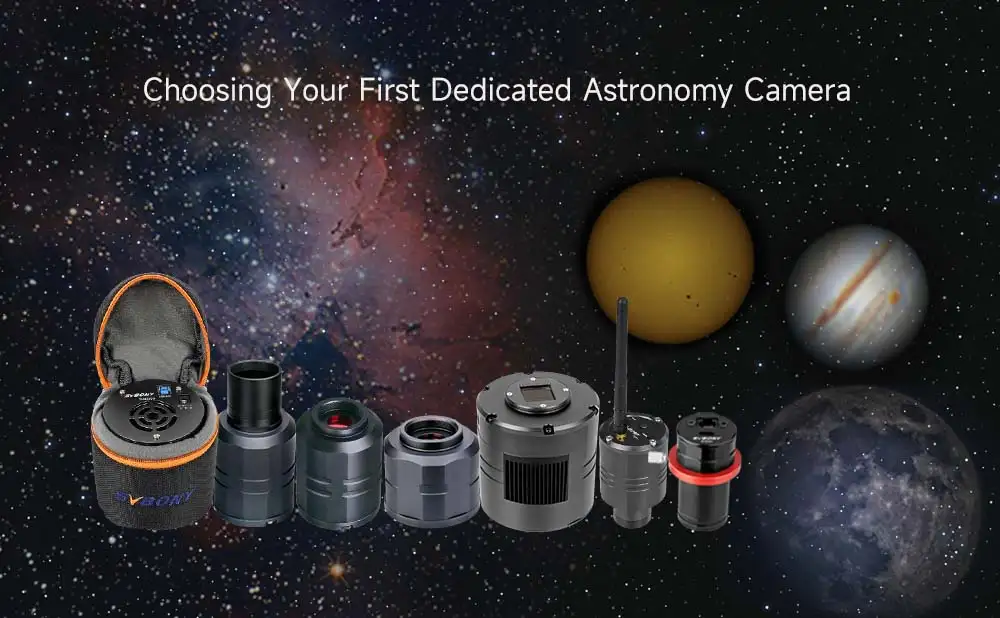
With so many options available, choosing the right astrophotography camera can be overwhelming. Here are some factors to consider:
Sensor Size and Resolution
Larger sensors capture more light and offer wider fields of view. APS-C sensors (like those found in the ZWO ASI2600 Pro) offer an ideal balance between performance and cost. Full-frame sensors provide even wider views but require more precise optics.
Cooling Capability
For deep-sky imaging, cooling is essential. Look for astrophotography cameras with two-stage TEC cooling that can achieve at least 30°C below ambient temperature.
Color vs. Monochrome
Color cameras are simpler and more affordable, making them ideal for beginners. Monochrome cameras offer superior sensitivity and flexibility with narrowband filters but require more time and expertise.
Budget and Experience Level
Beginners may want to start with a smart telescope like the ZWO Seestar S30 or a cooled color camera like the ZWO ASI533MC Pro. Advanced astrophotographers often prefer monochrome cameras like the ZWO ASI2600 Pro or Atik Apx26.
The Future of Astrophotography Cameras
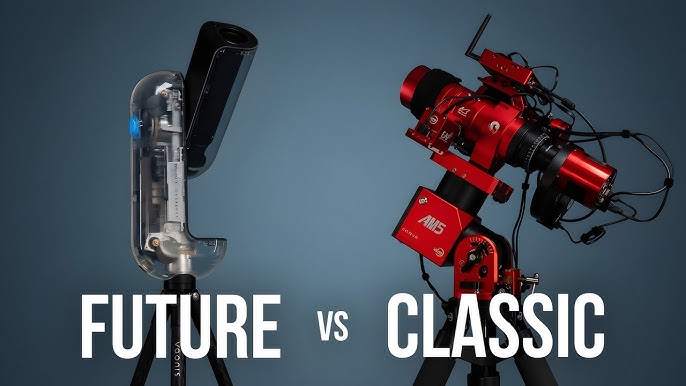
The future of astrophotography cameras is incredibly exciting. Emerging technologies promise to push the boundaries even further:
AI-Powered Imaging
Artificial intelligence is already being used to improve telescope performance. NASA is exploring how AI can enhance the James Webb Space Telescope’s capabilities. Smart telescopes already use AI for object recognition and real-time image optimization.
Neuromorphic Cameras
Drawing inspiration from the human retina, neuromorphic cameras excel in speed and high dynamic range by utilizing asynchronous pixel operation. These cameras can simultaneously capture faint and bright celestial sources while preventing saturation.
Larger and More Sensitive Sensors
Sensor technology continues to advance. Back-illuminated CMOS sensors with quantum efficiency exceeding 90% are becoming more common. Larger sensors and higher resolutions will enable even more detailed views of the cosmos.
Computational Photography
The combination of multispectral cameras and computational photography is opening new possibilities. These techniques can extract more information from each exposure, revealing details that were previously invisible.
Conclusion
The technology behind modern astrophotography cameras has evolved dramatically, transforming what was once an exclusive domain of professional astronomers into an accessible hobby for millions of enthusiasts worldwide. From cooled CMOS sensors and smart telescopes to image stacking and autoguiding, the tools available today are more powerful and user-friendly than ever before.
Whether you are capturing your first image of the Moon with a smartphone adapter or spending nights gathering photons from a distant galaxy with a professional-grade monochrome camera, the universe is waiting to be explored. The astrophotography cameras of 2026 represent the pinnacle of human ingenuity—tools that allow us to reach across the vast distances of space and capture the beauty of the cosmos.
The night sky has never been more accessible. All you need is the right camera, a clear night, and a sense of wonder.