
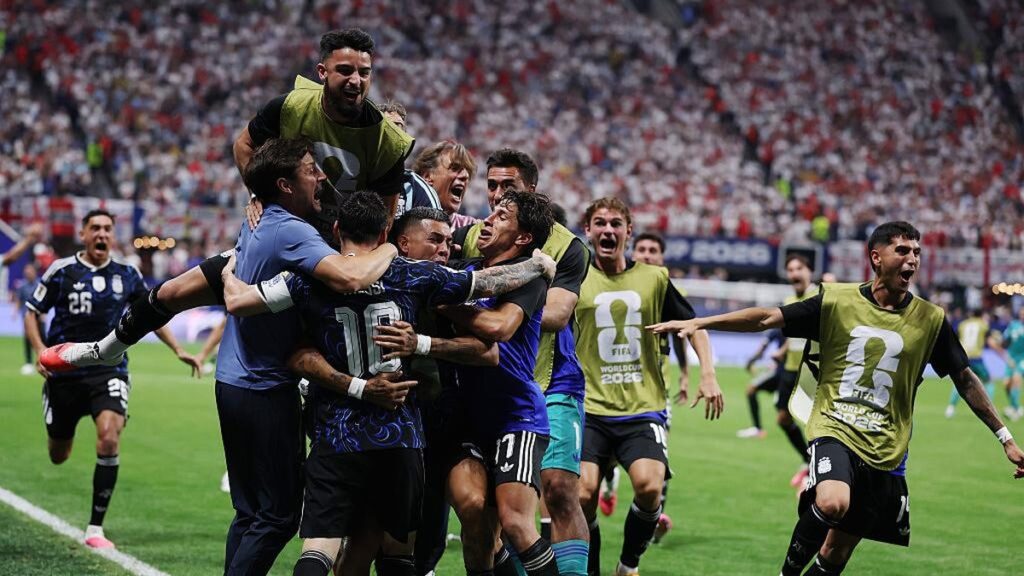
The global football landscape shifted permanently on a dramatic December evening in Lusail, Qatar. Following a mesmerizing final that will be remembered for generations, the South American giants ended a brutal 36-year wait to claim their third world championship. The iconic scenes of celebration in Buenos Aires, where millions of passionate supporters flooded the streets around the Obelisco, highlighted the deep emotional and cultural connection the nation shares with football. However, in the unforgiving world of international sports, the glow of past achievements fades remarkably fast. As the global football community turns its collective gaze toward the sprawling host nations of Canada, Mexico, and the United States, a single, monumental question dominates the discourse: Can Argentina 2026 repeat history and successfully defend their hard-earned global crown?
Defending a championship is widely considered the ultimate test of a sporting dynasty. The history of international football is littered with the shattered dreams of defending champions who succumbed to the immense pressure, tactical stagnation, or physical burnout. To find a nation that successfully won back-to-back titles, one must look back to the legendary Brazil teams of 1958 and 1962, or the Italy squads of the 1930s. Modern football is infinitely more demanding. It is defined by microscopic data analysis, hyper-athleticism, and relentless tactical innovations. For Argentina 2026, relying purely on the emotional momentum and romanticism of their previous victory will be insufficient. Surviving and thriving in the upcoming tournament demands a calculated evolution of their tactical blueprint, a seamless transition of their squad personnel, and an unbreakable psychological resolve.
In this comprehensive analytical guide, we will dissect the critical components of the national team. By stripping away the emotion and focusing strictly on sporting reality, we present the seven ultimate tactical and structural secrets that will define the journey of Argentina 2026 as they prepare to conquer the North American continent.
1. The Historical Context Behind Argentina 2026
To truly understand the monumental task facing the national team, we must first analyze the historical curse that often plagues defending champions. Over the last two decades, entering a tournament as the reigning titleholder has frequently proven to be a poisoned chalice. France in 2002, Italy in 2010, Spain in 2014, and Germany in 2018 all suffered catastrophic group-stage eliminations immediately after winning the ultimate prize. This recurring phenomenon is not merely a coincidence; it is the result of a complex mixture of factors including aging squads, predictable tactical systems, a subconscious drop in competitive hunger, and opponents who spend four years specifically designing game plans to neutralize the champions.
The preparation for Argentina 2026 involves a rigorous psychological conditioning program designed specifically to combat this complacency. The coaching staff is acutely aware that resting on past laurels is the fastest route to failure. The integration of the “Champion’s Curse” into their psychological preparation is a masterstroke. Rather than ignoring the pressure, the leadership group addresses it directly. They demand the same relentless work ethic that defined their previous campaigns. The team has managed to maintain a remarkable level of intensity in their continental competitions and qualifying matches, proving that their collective appetite for victory remains unsated.
Furthermore, the environment surrounding Argentina 2026 is significantly different from previous eras of the national team. Historically, the squad was often plagued by internal political strife, media pressure, and disjointed management. Today, the internal atmosphere is characterized by absolute unity and unwavering trust in the managerial staff. This cohesive environment provides a crucial psychological shield against the inevitable external pressures that will mount as the tournament in North America approaches.
2. Tactical Evolution and Formations for Argentina 2026
When Lionel Scaloni originally took the managerial reins, the global consensus was one of skepticism. He was viewed as a temporary placeholder with limited top-level experience. Fast forward to the present, and he has masterminded one of the most structurally sound and adaptable national teams in modern history. The fundamental secret to the tactical setup of Argentina 2026 is the explicit rejection of rigid, dogmatic formations. Instead of forcing players into a strict system, the system fluidly adapts to maximize the specific strengths of the players on the pitch and exploit the specific weaknesses of the opposition.
The base architecture of Argentina 2026 fluidly transitions between multiple shapes throughout a single ninety-minute match. While they may nominally start in a traditional 4-3-3 formation, the in-game reality is far more complex. Against teams that deploy a low defensive block, they seamlessly shift into a 3-5-2 or a 2-3-5 in possession, pushing their fullbacks extremely high to provide maximum attacking width. Conversely, against opponents who dominate possession, they are incredibly comfortable dropping into a compact, impenetrable 4-4-2 diamond or a flat 4-4-2, compressing the space between the midfield and defensive lines to suffocate opposing playmakers.
A key element of this evolution is their sophisticated pressing strategy. Modern elite teams often utilize a relentless, high-intensity press for the entire match. However, the coaching staff recognizes that this approach is physically unsustainable over a grueling tournament schedule, especially in the varied climates of North America. Therefore, the pressing system for Argentina 2026 relies heavily on calculated mid-block traps. They allow the opposition’s central defenders to hold the ball, actively encouraging passes into the wide areas. The moment the ball travels to the opposing fullback, the trap is sprung. The winger, the central midfielder on that side, and the fullback simultaneously collapse on the ball carrier, creating a localized numerical superiority that forces turnovers in dangerous transition areas.
3. The Defensive Foundation Securing Argentina 2026
The old football adage states that attacks win matches, but defenses win championships. This philosophy is deeply ingrained in the DNA of the current squad. While the team is globally celebrated for its offensive flair and creative mastery, the true bedrock of their success lies in a defense that borders on the uncompromising. The defensive unit of Argentina 2026 is an intimidating blend of physical aggression, elite spatial awareness, and exceptional ball-playing ability.
At the heart of this defensive fortress is the formidable central defensive partnership. Cristian Romero brings an explosive, front-foot aggressive style to the backline. He is a proactive defender who thrives on stepping out of the defensive line to intercept passes and physically dominate opposing strikers. His aggression sets the emotional tone for the entire team. Partnering him is the technically gifted Lisandro Martinez. Despite lacking the traditional towering height of a center-back, Martinez compensates with world-class anticipation, ferocious tackling, and most importantly, elite progressive passing. His ability to thread line-breaking passes directly from the defensive third is a vital weapon for launching quick counter-attacks.
The role of the fullbacks in the Argentina 2026 system is equally demanding. Players like Nahuel Molina on the right and Nicolas Tagliafico on the left must operate with an immense physical engine. They are tasked with providing the primary source of offensive width while simultaneously tracking back to secure the defensive flanks. Their tactical discipline ensures that the team maintains defensive solidity even when committing multiple players forward.
Behind this defensive wall stands the crucial figure of Emiliano Martinez. Goalkeeping in a tournament setting requires immense mental fortitude, and Martinez has proven time and again that he thrives in the most high-pressure environments imaginable. Beyond his exceptional shot-stopping ability and penalty shootout heroics, his command of the penalty area and sweeping abilities allow the defensive line to push higher up the pitch, compressing the playing area and stifling opposition attacks before they can fully develop.
4. The Midfield Engine Room Powering Argentina 2026
If the defense is the foundation, the midfield is undoubtedly the central nervous system of the team. The success of Argentina 2026 will rely heavily on an engine room that perfectly balances technical brilliance, tactical intelligence, and sheer physical endurance. The modern international game is frequently won or lost in the central areas of the pitch, and the South American champions boast one of the most complete midfield trios on the planet.
Enzo Fernandez operates as the primary deep-lying orchestrator. His spatial awareness and passing range allow him to control the tempo of the match from the base of the midfield. Whether executing short, intricate combinations to escape opposition pressing or launching precise, long-range diagonal switches to isolate wingers, his distribution is flawless. Crucially, his defensive positioning provides a vital shield for the central defenders.
Operating slightly further forward is Alexis Mac Allister, a player whose footballing intelligence makes the entire system function. Mac Allister is the ultimate connective tissue between the defensive and offensive phases. He possesses an uncanny ability to find pockets of space between the opposition’s defensive and midfield lines, offering himself as a constant outlet for progression. His composure in tight areas and his ability to execute the final, killer pass make him indispensable to the attacking strategy of Argentina 2026.
Completing this dynamic trio is Rodrigo De Paul, arguably the tactical heartbeat of the team. De Paul’s contribution transcends traditional statistics. He provides an astonishing work rate, covering immense distances to press opponents, track back on defense, and offer passing options in attack. He functions as a tactical bodyguard on the right side of the pitch, constantly adjusting his positioning to cover spaces left by advancing teammates. His physical presence and relentless energy ensure that the midfield of Argentina 2026 is rarely overrun or outmuscled by physically dominant European or African opponents.
5. Attacking Dynamics and the Frontline of Argentina 2026
The offensive philosophy of the team has transitioned from a heavy reliance on individual brilliance toward a more cohesive, system-based attacking structure. While the team still possesses players capable of producing moments of pure magic, the attacking methodology of Argentina 2026 is built on dynamic movement, positional rotation, and rapid vertical transitions.
The striker position is fiercely contested by two world-class talents: Lautaro Martinez and Julian Alvarez. This internal competition is a massive advantage for the coaching staff. Lautaro Martinez offers elite penalty-box instincts, exceptional hold-up play, and the physical strength to pin back opposition central defenders. He is a traditional number nine who excels in finishing precise crosses and cutbacks.
On the other hand, Julian Alvarez provides a completely different tactical profile. His relentless pressing from the front disrupts opposition build-up play at the source. His off-the-ball movement is characterized by sharp, diagonal runs that stretch defensive lines and create massive gaps for the midfield runners to exploit. The ability of the coaching staff to alternate between these two distinct striker profiles gives Argentina 2026 the flexibility to alter their attacking approach seamlessly based on the specific defensive structure of their opponents.
Wide areas are exploited with a combination of inverted wingers and overlapping fullbacks. The attacking wide players are instructed to drift into the central half-spaces, pulling opposition fullbacks out of position and creating numerical overloads in the middle of the pitch. This strategy forces opposing defenses to make impossible choices: either stay compact centrally and allow space on the wings, or spread out and leave gaping holes through the middle.
6. Youth Integration and Next Generation for Argentina 2026
No national team can remain stagnant and expect continued success. The natural aging process of veteran players necessitates a constant injection of fresh talent. One of the most impressive secrets behind the sustained excellence of this squad is the highly structured and deliberate integration of the next generation of superstars. The preparation for Argentina 2026 heavily features young, dynamic players who add entirely new dimensions to the team’s tactical playbook.
Alejandro Garnacho represents the vanguard of this new generation. Operating primarily on the wings, Garnacho introduces a direct, vertical, and electrifying style of play that the team previously lacked. His exceptional one-on-one dribbling ability and explosive pace make him a terrifying prospect for tiring defenders. When the team is absorbing pressure in a low block, Garnacho serves as the ultimate transition outlet, capable of carrying the ball the length of the pitch in mere seconds.
Furthermore, players like Valentin Barco and Valentin Carboni are being systematically integrated into the senior setup. Barco offers incredible versatility on the left flank, capable of playing as an overlapping full-back, an inverted wing-back, or a traditional wide midfielder. His technical security under pressure aligns perfectly with the team’s possession-based principles. Carboni brings a sophisticated, elegant approach to the attacking midfield role, possessing the vision and tight control necessary to unlock stubborn, deep-sitting defenses.
The deliberate blending of these fearless young talents with the experienced core of veteran leaders ensures that the squad for Argentina 2026 is perfectly balanced. The older players provide the tactical wisdom, emotional stability, and big-game experience, while the youth provide the physical energy, unpredictability, and raw hunger to prove themselves on the grandest stage.
7. Navigating the Expanded Format for Argentina 2026
The most significant external challenge facing the team is the radically altered landscape of the tournament itself. The upcoming World Cup introduces an expanded format, featuring 48 teams and a grueling 104-match schedule. To lift the trophy, a team will now need to navigate an extra knockout round—the Round of 32—meaning they must successfully play eight grueling matches instead of the traditional seven. For Argentina 2026, this expanded format presents unique logistical, physical, and tactical hurdles that demand meticulous planning.
The physical toll of an eight-match tournament cannot be overstated. Player fatigue, muscle injuries, and general physical burnout will be the biggest enemies of any title contender. The coaching staff must manage squad rotation with absolute precision during the group stages. The ability to rest key starters without compromising team cohesion or dropping crucial points will separate the true contenders from the pretenders. The deep squad roster we discussed earlier is not just a luxury; it is an absolute necessity for surviving the marathon format of Argentina 2026.
Equally challenging are the extreme geographical and climatic variations of the North American continent. The tournament will be spread across an enormous landmass, from the high-altitude stadiums in Mexico City to the sweltering heat and humidity of the southern United States, and the cooler, coastal climates of Canada. The logistical operations supporting Argentina 2026 will need to be flawless. Travel fatigue, acclimatization protocols, hydration strategies, and recovery science will play a role just as crucial as on-pitch tactics. The medical and sports science departments will be working overtime to ensure the players maintain peak physical condition across vastly different environments.
Furthermore, the expansion to 48 teams means encountering a wider variety of unfamiliar tactical styles from emerging football nations. The analytical department for Argentina 2026 will face an unprecedented workload, scouting and dissecting teams from Asia, Africa, and CONCACAF that they rarely encounter in standard international play. Avoiding complacency against supposedly inferior opposition in the newly expanded group stages is a psychological imperative.
Conclusion: The Final Verdict on Argentina 2026
Retaining the ultimate prize in global sports requires an almost impossible alignment of tactical perfection, physical endurance, elite talent, and a touch of fortune. The hurdles are immense: an expanded grueling format, complex travel logistics across three massive nations, highly motivated opponents desperate to dethrone the champions, and the inevitable historical pressure of the “Champion’s Curse”.
However, a clinical analysis of the current landscape reveals that the national team is uniquely positioned to defy history. By embracing tactical fluidity over rigid systems, maintaining a ferociously aggressive defensive spine, dominating the midfield engine room, and seamlessly integrating electrifying young talent with seasoned winners, the team has built a resilient and adaptable machine.
The seven ultimate secrets outlined in this guide demonstrate that the preparation for Argentina 2026 is not built on nostalgia or emotion, but on rigorous sporting excellence and constant evolution. While predicting the outcome of knockout football is inherently perilous, the undeniable reality is that this squad possesses the precise combination of tactical intelligence, squad depth, and psychological invincibility required to successfully navigate the grueling North American tournament and secure a historic fourth star for their nation.