
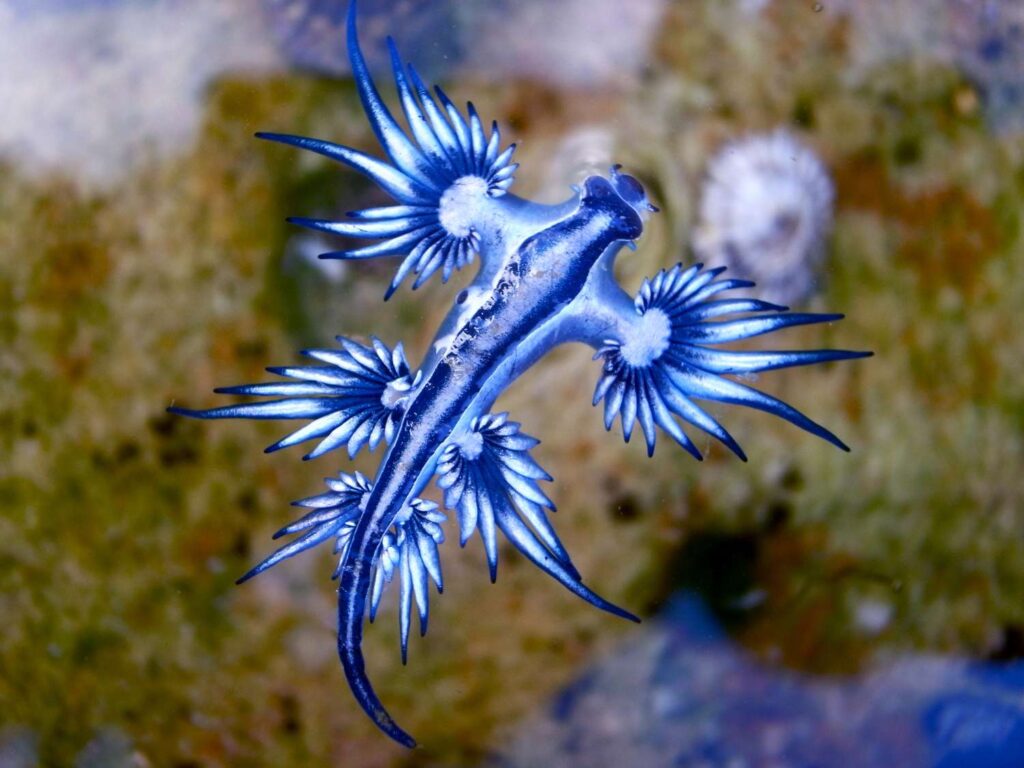
When we look at modern maps, satellite imagery, and the incredible reach of human civilization, it is easy to assume that we have explored every inch of our planet. Many people believe that the era of biological discovery ended in the 19th or 20th century. However, the reality is far more fascinating. We are currently living in a golden age of taxonomy and biological exploration. Every single year, scientists describe thousands of previously unknown organisms.
You might wonder how it is possible that in the 21st century, with our advanced satellites and global connectivity, we are still uncovering massive mammals, peculiar reptiles, and bizarre deep-sea creatures. More interestingly, how do scientists keep finding animals that belong to a well-known genus but possess radically different physical characteristics?
The answers lie in a combination of geographical isolation, technological revolutions in genetics, and the sheer, unfathomable scale of Earth’s ecosystems. The natural world is vastly more complex than our textbooks suggest. Let us dive deep into the fascinating mechanisms and environments that explain this phenomenon, exploring the seven primary reasons we continue to uncover the hidden wonders of the animal kingdom today.
The Deep Ocean: A Vast Frontier for New Species
The most significant portion of our planet is covered by water, yet the deep ocean remains the most unexplored frontier on Earth. It is often said that we know more about the surface of the moon than we do about the bottom of our own oceans. The abyssal and hadal zones—stretching thousands of meters below the surface—are environments of extreme pressure, absolute darkness, and freezing temperatures.
Because human divers cannot survive these depths, marine biologists must rely on Remotely Operated Vehicles (ROVs) and autonomous submersibles. Whenever these machines dive into deep-sea trenches or explore hydrothermal vents, they almost inevitably encounter a completely unknown new species. In these harsh environments, animals have evolved extraordinary physical criteria to survive.
For example, within the genus Grimpoteuthis, commonly known as Dumbo octopuses, scientists continuously find variations that look astonishingly different from one another. Even though they belong to the same genus, one might have elongated, wing-like fins, while another might have a gelatinous, bell-shaped body adapted to float effortlessly in a different current layer. These drastic physical differences are evolutionary responses to the micro-environments within the massive, layered water column. The deep ocean is not a single uniform bathtub; it is a complex, multi-layered ecosystem where even a slight change in depth or temperature creates a completely distinct habitat.
Dense Rainforests Hide Many Bizarre New Species
While the ocean holds its secrets under millions of gallons of water, terrestrial environments hide their mysteries behind impenetrable walls of green. Tropical rainforests, such as the Amazon basin, the Congo Basin in Central Africa, and the remote jungles of Borneo and New Guinea, are recognized as the absolute epicenters of global biodiversity.
What makes these rainforests such a hotspot for finding a terrestrial new species? The answer is vertical stratification. A rainforest is not just a flat piece of land covered in trees; it is a towering, multi-story structure. The forest floor, the understory, the canopy, and the emergent layer all represent entirely different ecological zones. For centuries, explorers mostly cataloged the animals living on the forest floor or the lower branches. The canopy, soaring hundreds of feet into the air, remained largely inaccessible until modern climbing gear and canopy cranes were developed.
Today, researchers exploring the canopy are finding that animals living in the upper branches have evolved entirely different physical traits compared to their relatives on the ground. Take the genus Brookesia, the leaf chameleons of Madagascar. Scientists recently found a new species in this genus that is small enough to sit on the tip of a matchstick. While larger chameleons in similar genera adapted to grasp thick branches and display bright colors, these micro-chameleons evolved miniature bodies, brown leaf-like camouflage, and different skeletal structures to navigate the intricate leaf litter. Their distinct physical criteria allow them to occupy an ecological niche so specific that human explorers walked past them for centuries without ever noticing their existence.
How Modern Technology Helps Us Spot New Species
In the past, identifying an animal required a physical specimen, a magnifying glass, and a vast library of anatomical reference books. Today, the biological sciences have undergone a massive technological revolution. We are no longer relying solely on our eyes to find hidden wildlife.
One of the most groundbreaking tools in modern biology is Environmental DNA, commonly referred to as eDNA. As animals move through their environment, they shed microscopic traces of genetic material through skin cells, hair, mucus, or waste. By simply scooping up a cup of river water or a handful of forest soil, scientists can sequence the DNA within it. This technology often alerts researchers to the presence of a new species long before anyone has actually seen the animal with their own eyes.
Furthermore, acoustic monitoring and artificial intelligence are playing massive roles in taxonomy. Researchers can leave sensitive audio recorders in a jungle for months. AI algorithms then analyze thousands of hours of audio to detect bird calls, frog croaks, or insect chirps that do not match any known database. This is how scientists realize that what they thought was one widespread population of frogs is actually composed of multiple distinct groups. Once the researchers track down the source of the unknown sound, they often find an animal that, despite belonging to a familiar genus, exhibits completely different vocal sac structures, mating displays, or coloration.
Micro-Habitats and the Evolution of New Species
Evolution does not only happen on a large, continental scale. Often, the most radical physical changes occur in highly confined, restricted areas known as micro-habitats. When a small population of animals becomes isolated from the rest of its kind, it begins to evolve rapidly in response to its specific, localized environment.
A classic example of this is found in karst limestone cave systems in Southeast Asia and the Balkans. When a population of surface-dwelling fish, insects, or amphibians becomes trapped in a completely dark underground cave system, they undergo extreme morphological changes over thousands of generations. Even if they remain in the exact same genus as their relatives swimming in the sunny rivers above ground, the cave-dwelling new species will look entirely alien.
These subterranean creatures typically lose their skin pigmentation, appearing completely translucent or ghostly white. Because eyes are biologically expensive to maintain and useless in total darkness, these animals often lose their eyes completely, developing enhanced sensory organs like elongated antennae or highly sensitive lateral lines instead. Thus, you end up with two animals in the exact same genus—one vividly colored with large eyes, and the other a blind, pale phantom—simply because of the micro-habitat that isolated them. Similar isolations happen on “sky islands,” which are isolated mountain peaks separated by deep, warm valleys, trapping cold-adapted species at the top and forcing them to evolve unique physical traits.
The Role of Climate Change in Revealing New Species
It is a tragic irony that the ongoing global climate crisis is inadvertently leading to the discovery of unknown animals. As global temperatures rise, habitats are shifting, melting, and exposing areas that have been inaccessible to humans for thousands of years.
In the polar regions, the rapid melting of glaciers and ice shelves is revealing sub-glacial marine ecosystems that have been trapped under thick ice since the last Ice Age. Marine biologists exploring these newly opened waters in Antarctica are hauling up nets filled with strange, cold-adapted organisms. Furthermore, changing climates are forcing animals to migrate out of their historical ranges. As animals move to higher altitudes or new latitudes to escape the heat, they cross paths with human populations and scientists for the first time, leading to the documentation of a new species.
Additionally, climate-induced habitat overlap sometimes leads to hybridization, but more often, it reveals that populations we thought were connected are actually separated by invisible environmental barriers. As scientists rush to survey endangered habitats before they are destroyed by changing weather patterns or deforestation, they are working frantically to catalog wildlife. This sheer urgency has led to massive, intensive biological surveys in threatened areas, naturally resulting in a spike in the discovery of animals with strange, highly specialized physical features that make them particularly vulnerable to climate shifts.
Cryptic Diversity: The Hidden Traits of New Species
Perhaps the most fascinating reason we are still naming animals today answers a very specific question: how can animals be physically different, belong to the same genus, yet remain undiscovered for so long? The answer is a biological concept known as cryptic diversity.
For centuries, taxonomy was entirely morphological; scientists classified animals based on what they looked like to the naked eye. If two butterflies had the same wing pattern, or two snakes had similar scale colors, they were lumped together under a single scientific name. However, appearances can be deeply deceiving.
With the advent of advanced molecular genetics, scientists have realized that many animals we thought were a single, widespread species are actually complexes of multiple, genetically distinct groups. When researchers look closer at these cryptic populations, they begin to notice the subtle but distinct physical criteria that early naturalists missed.
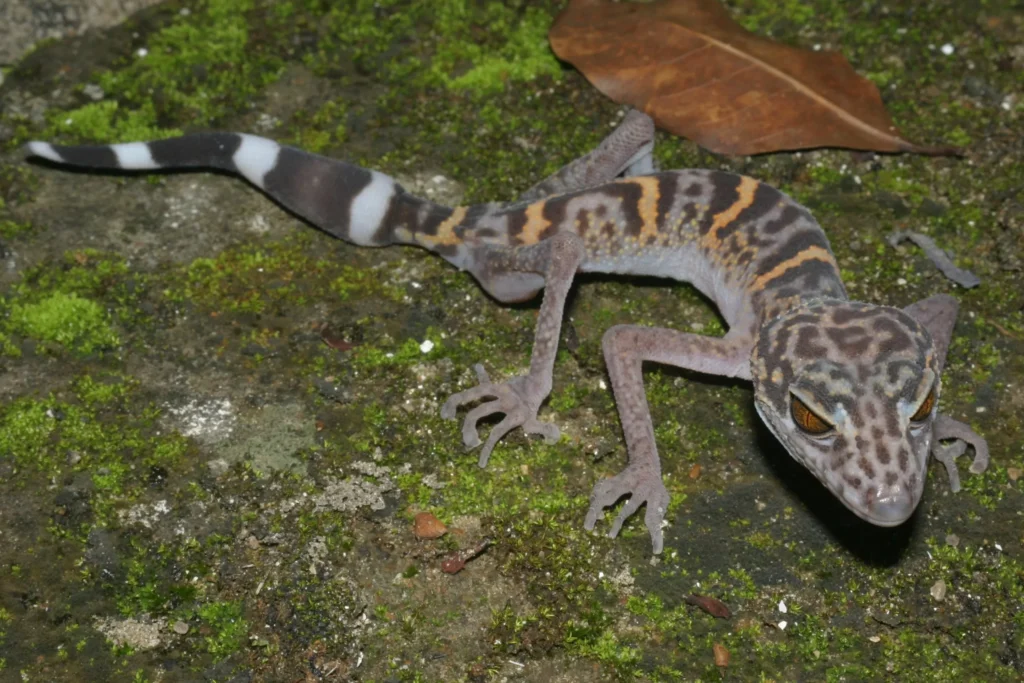
For instance, two groups of geckos might belong to the same genus and have the same general body shape. But upon closer inspection prompted by a DNA test, scientists might realize that the new species has a slightly different arrangement of toe pads allowing it to grip smoother leaves, a different number of scales around its eyes, or a differently shaped hemipenis (reproductive organ) that physically prevents it from mating with the other group. Because these physical differences are so minute or internal, they were completely overlooked until modern science gave us the tools to look closer. This cryptic diversity proves that nature’s variety is infinitely more granular than humans initially categorized.
Why Finding Every Single New Species Matters Today
With all these discoveries happening globally, from the deepest ocean trenches to the highest mountain canopies, one might ask why it is so crucial to keep documenting them. Why spend millions of dollars and countless hours tracking down a tiny, brown frog in the middle of a remote jungle?
First and foremost, biodiversity is the foundational pillar of Earth’s life support system. Every single organism, no matter how small or bizarre its physical criteria may be, plays a specific role in its ecosystem. They are pollinators, scavengers, predators, and prey. When we discover a new species, we gain a clearer, more accurate map of the ecological web. We cannot protect an ecosystem if we do not even know what lives inside it.
Secondly, these discoveries have profound implications for human health and technology. The unique physical and chemical adaptations these animals have evolved to survive in their micro-habitats often hold the keys to medical breakthroughs. The venom of newly discovered snakes or sea snails has been used to create powerful, non-addictive pain medications. The unique proteins found in deep-sea sponges are being studied for cancer treatments. Every undiscovered animal is a potential library of biological solutions to some of humanity’s most pressing problems.
Finally, the continuous discovery of these amazing creatures serves as a deeply humbling reminder of our place in the universe. In an age dominated by artificial intelligence, concrete cities, and digital screens, finding an entirely unknown mammal or a brightly colored bird reminds us that Earth is still a wild, untamed, and endlessly creative planet.
The 21st century is not the end of biological exploration; in many ways, thanks to our new tools and deeper understanding of micro-habitats, it is only just the beginning. The natural world still holds countless secrets, waiting patiently in the dark caves, deep oceans, and dense canopies for the moment we finally look closely enough to see them.