
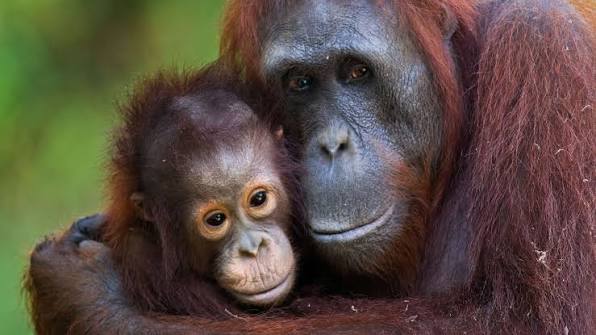
The rainforests of North Sumatra have long been a sanctuary for some of the most extraordinary creatures on Earth. Among them, the Tapanuli orangutan (Pongo tapanuliensis) stands as the world’s rarest great ape, a species so elusive that science only formally recognized its existence in 2017. With fewer than 800 individuals remaining in the wild, every single life matters profoundly for the survival of this critically endangered species.
Yet in late November 2025, catastrophe struck. Cyclone Senyar unleashed unprecedented fury upon the Indonesian island of Sumatra, triggering catastrophic floods and landslides that would forever alter the fate of the Tapanuli orangutan. When the storm finally subsided and the waters receded, the world confronted a staggering loss: an estimated 58 Tapanuli orangutans had perished. This represented approximately 7% of the entire global population of the species—a demographic shock from which the apes may never fully recover.
This article examines the devastating North Sumatra flood disaster, its catastrophic impact on the region’s critically endangered orangutan population, the role of deforestation and climate change in amplifying the tragedy, and the urgent conservation efforts needed to prevent the extinction of the world’s rarest great ape.
The Cyclone Senyar Disaster: Four Days of Hell
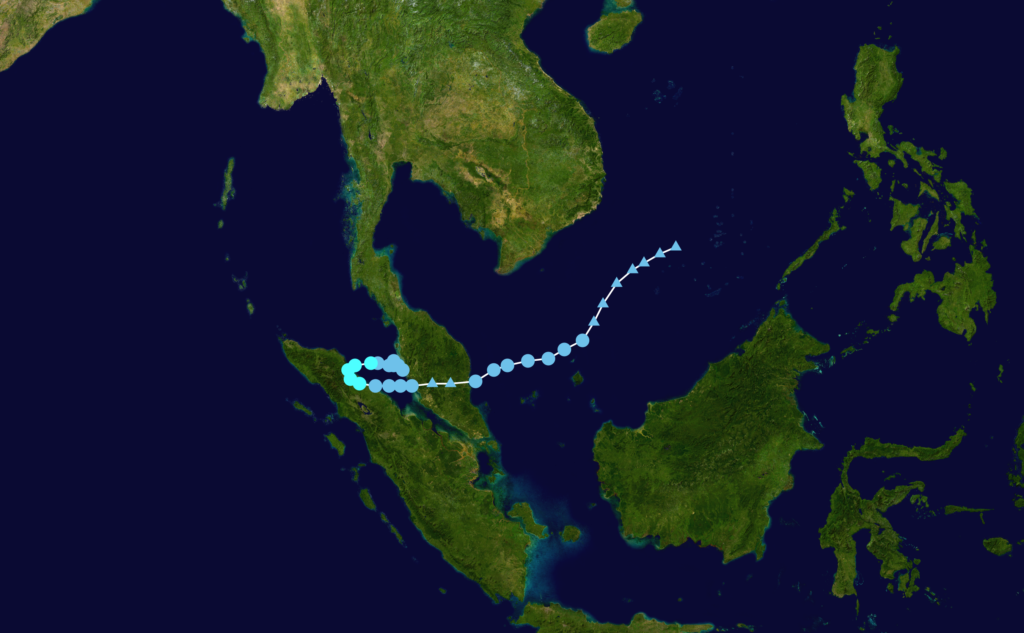
Cyclone Senyar made landfall on the Indonesian island of Sumatra in late November 2025, bringing with it some of the most intense rainfall the region had experienced in recent years. For four consecutive days, torrential rain pounded the mountainous forests of North Sumatra, dumping more than 1,000 millimeters of precipitation across the province. The ground, already saturated from days of relentless downpour, could no longer hold.
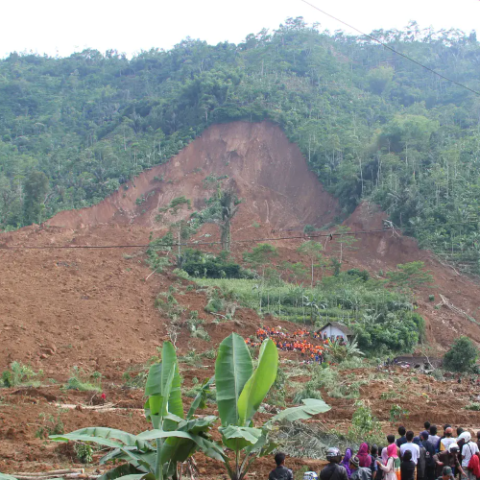
What followed was a cascade of destruction. Hillsides that had stood for millennia gave way in massive landslides, sending torrents of mud, rock, and uprooted trees crashing into the valleys below. Satellite imagery later revealed more than 50,000 individual landslide scars across the region. Approximately 8,300 hectares (20,500 acres) of forest in the western block of the Batang Toru ecosystem—the species’ most important stronghold—were affected by the disaster. Nearly 12% of the forest cover in this critical habitat was destroyed in just four days.
“The destroyed areas would have contained some 35 orangutans, and considering the violence of the destruction it wouldn’t surprise us if they are all dead. That’s a major blow to the population,” Professor Erik Meijaard, managing director of Borneo Futures and lead author of the study, told the BBC in the immediate aftermath of the disaster.
The violence of the landslides was unlike anything researchers had ever witnessed. While the slides were relatively shallow, they moved with extraordinary speed, transforming into channelized debris flows that offered wildlife virtually no chance of escape. “If you get caught as an orangutan or any wildlife, and it’s a very steep, dissected area, so if anything comes down, it comes down at great speeds, survival chances are going to be very minimal,” Meijaard explained.
“It must have been hellish in the forest at the time,” Meijaard added, a sentiment that captured the unimaginable terror experienced by the region’s wildlife during those four catastrophic days.
The Orangutan Deaths: A Species Pushed to the Brink
The scale of the orangutan deaths in North Sumatra represents one of the most significant single-event mortality events ever recorded for a great ape species. The study, published in the journal Current Biology, estimated that approximately 58 Tapanuli orangutans were killed by the landslides and floods. This figure accounts for roughly 11% of the local population living in the western block of the Batang Toru ecosystem and 7% of the entire global population of the species.
These numbers, however, may be conservative. The study’s authors noted that their analysis only quantified direct mortality from landslides and did not account for deaths caused by canopy collapse outside mapped landslide areas, starvation from reduced food availability, injuries, or longer-term ecological consequences. “It could well be that up to 120 animals died during the landslide events,” Meijaard said.
The grim reality of the disaster was brought into sharp focus when humanitarian workers discovered the carcass of what they believed to be a Tapanuli orangutan in Pulo Pakkat village in central Tapanuli district. The animal was found semi-buried in debris of mud and logs, its condition consistent with having been swept away by cascading debris.
“I have seen several dead bodies of humans in the past few days but this was the first dead wildlife,” said Deckey Chandra, who was working with a humanitarian team in the area. “They used to come to this place to eat fruits. But now it seems to have become their graveyard”.
“What struck me is that all the flesh had been ripped off the face,” Meijaard said after seeing photographs of the dead orangutan. “If a few hectares of forest comes down in massive landslides, even powerful orangutans are helpless and just get mangled”.
The Human Toll: A Regional Catastrophe
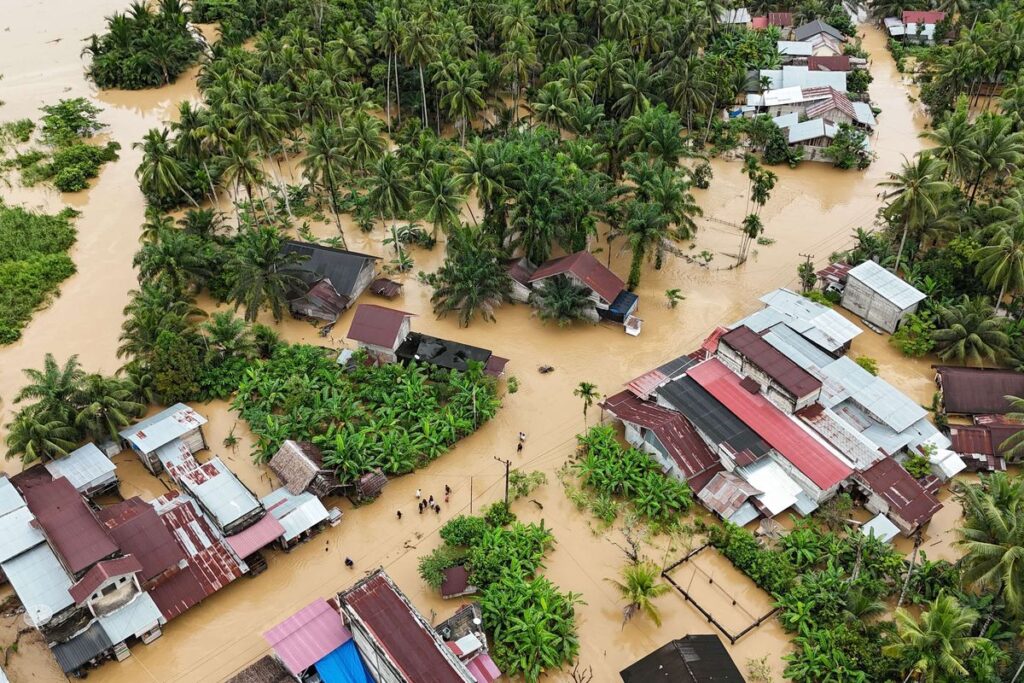
The North Sumatra flood disaster was not merely an environmental tragedy—it was one of the deadliest natural disasters to strike Southeast Asia in 2025. The cyclone-induced floods and landslides killed at least 1,200 people and damaged approximately 300,000 homes across three provinces on the island of Sumatra. Hundreds more were reported missing, with many villages completely destroyed as the storm swept across the island.
The scale of human suffering was immense. Entire communities were displaced, livelihoods were destroyed, and the region faced a long and difficult road to recovery. Environmental groups were quick to point out that the extent of the damage was exacerbated by rapid deforestation of Sumatra island. The clearing of forests for agriculture, mining, and palm oil plantations had stripped the landscape of its natural protection against flooding and landslides.
In response to the disaster, the Indonesian government temporarily halted major developments in the Batang Toru area, including mining, oil palm, and hydropower expansion. The government also filed lawsuits against six companies over alleged damage to watersheds in North Sumatra province, involving the clearing of 2,516 hectares (6,217 acres) of rainforest. In January 2026, the environment ministry took legal action against these companies, holding them accountable for their role in exacerbating the disaster.
The tragedy served as a stark reminder that deforestation is not merely an environmental issue—it is a matter of life and death for both human communities and the wildlife that shares their habitat.
Deforestation: The Hidden Driver of Disaster
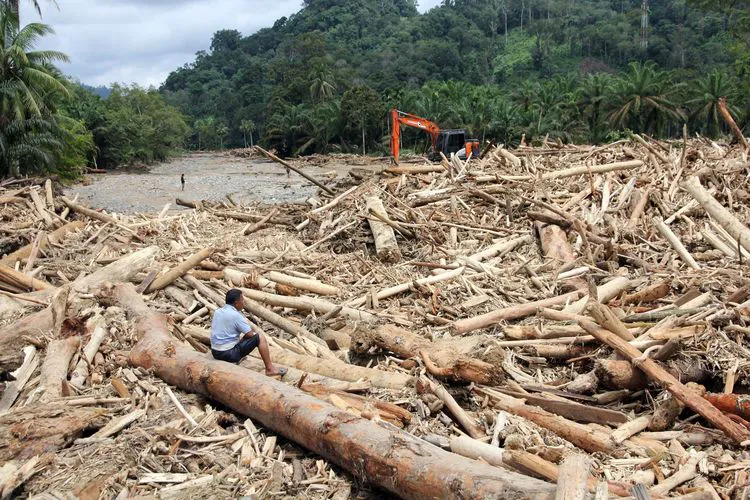
The destruction wrought by Cyclone Senyar was not solely the result of extreme weather. Decades of deforestation had fundamentally altered the landscape of North Sumatra, making it far more vulnerable to the impacts of heavy rainfall.
The Batang Toru ecosystem, home to the Tapanuli orangutan, had long been under pressure from human activity. The forest was already squeezed by roads, farming, mining, palm oil plantations, and hydropower development. These activities had fragmented the habitat, reduced its resilience, and left both human communities and wildlife exposed to the devastating impacts of extreme weather.
The connection between deforestation and disaster is clear. Forests act as natural sponges, absorbing rainfall and slowing the flow of water across the landscape. When forests are cleared, rainwater runs off more quickly, increasing the risk of flooding. Tree roots bind the soil together, preventing erosion and landslides. When trees are removed, the soil becomes unstable and prone to collapse—exactly what happened when Cyclone Senyar’s torrential rains saturated the deforested hillsides of North Sumatra.
“The crisis facing the Tapanuli orangutan illustrates the convergence of climate change and habitat destruction in driving species toward extinction,” the study’s authors warned. It is a convergence that has made the region’s wildlife—and its people—increasingly vulnerable to the impacts of a warming planet.
Don’t Forget To Read:
7 Shocking Facts About Tapir Indonesia: Why Slaughter Must Stop Now!
Climate Change: Fueling the Fire
While deforestation created the conditions for disaster, climate change provided the spark. Researchers noted that Cyclone Senyar was an anomalous event, but that human-induced climate change played a significant role in its intensity.
Climate change likely increased the intensity of the rainfall associated with Cyclone Senyar by 9% to 50%, according to one analysis. The warming atmosphere holds more moisture, leading to more intense rainfall events. As global temperatures continue to rise, the frequency and intensity of extreme rainfall in the area are likely to increase, posing an ongoing threat to the survival of Tapanuli orangutans and their habitat.
The study’s findings represent one of the first examples of climate change immediately threatening the survival of an entire species. The Tapanuli orangutan, already critically endangered and numbering fewer than 800 individuals, now faces the added threat of climate-driven extreme weather events that can wipe out significant portions of its population in a matter of days.
“This level of loss is substantial for a species with such a small total population,” Meijaard said. “When combined with ongoing pressures such as habitat degradation and human-wildlife conflict, it further increases the urgency of implementing and adequately resourcing a coordinated species action plan”.
The Reproductive Challenge: Slow Recovery

One of the most alarming aspects of the orangutan deaths in North Sumatra is the species’ extremely slow reproductive rate. Female Tapanuli orangutans produce offspring only once every six to nine years, making it exceptionally difficult for the population to recover from losses.
Previous studies have shown that sustained annual losses exceeding 1% of the population could eventually drive the species to extinction. The estimated 58 orangutan deaths from the North Sumatra flood disaster represent approximately 7% of the entire global population—a loss equivalent to seven years’ worth of mortality in a single event.
“That’s why it’s of such a concern, because it’s an added event with extra mortality on top of mortality that’s already so high that they’re under threat already,” said co-author of the study Serge Wich, a primatologist at Liverpool John Moores University.
The demographic shock of losing 58 individuals in such a short period is unprecedented for a great ape species. With only around 800 Tapanuli orangutans remaining in the wild, every individual matters. The loss of 58 represents not just a tragedy in itself, but a potential tipping point for a species already teetering on the brink of extinction.
Conservation Efforts: A Race Against Time
In the wake of the North Sumatra flood disaster, conservationists and researchers have renewed their calls for urgent action to protect the Tapanuli orangutan and its habitat. Panut Hadisiswoyo, founder of the Orangutan Information Centre, urged the Indonesian government to work together with NGOs and researchers to prevent the further decline of the orangutan population.
“We can minimise the poaching or hunting and then the number probably can be stabilised,” Hadisiswoyo said, adding that all parties must pay attention to the poor use of land, which also contributes to the declining population.
The Indonesian government has taken some steps in response to the disaster. In addition to temporarily halting major developments in the Batang Toru area, the government has shown willingness to consider scientific studies on the Tapanuli orangutan, including research estimating the impacts of floods and landslides on the species.
However, conservationists argue that more needs to be done. The Batang Toru ecosystem, despite its critical importance to the survival of the Tapanuli orangutan, has not been granted the level of protection it desperately needs. The tragedy of Cyclone Senyar has renewed calls to safeguard the Batang Toru ecosystem by halting industrial projects and granting it stronger protection, as climate-driven disasters escalate across Sumatra.
“The Tapanuli orangutan was only discovered in 2017, and already it is facing extinction,” conservationists have warned. The species has been pushed to the brink by habitat loss, hunting, and now climate-driven extreme weather. Without swift and decisive action, the world may lose the rarest great ape on Earth within our lifetime.
Looking Forward: What Must Be Done
The North Sumatra flood disaster and the resulting orangutan deaths have exposed the urgent need for a comprehensive approach to conservation that addresses both the immediate threats facing the species and the underlying drivers of its decline.
First and foremost, the Batang Toru ecosystem must receive stronger legal protection. The temporary halt on major developments in the area is a positive step, but it must be made permanent. The forest is the only home of the Tapanuli orangutan, and its destruction would mean the extinction of the species.
Second, reforestation and habitat restoration efforts must be accelerated. The landslides that killed so many orangutans were exacerbated by deforestation. Restoring forest cover in the region would help stabilize the soil, reduce the risk of future landslides, and provide the orangutans with the habitat they need to survive.
Third, climate change must be addressed at a global level. While local conservation efforts are essential, they cannot succeed in isolation. The increasing frequency and intensity of extreme weather events driven by climate change pose an existential threat to the Tapanuli orangutan. Reducing greenhouse gas emissions is essential to limiting future warming and the extreme weather it brings.
Fourth, more research is needed to understand the full impact of the disaster on the Tapanuli orangutan population. The study’s estimate of 58 orangutan deaths may be conservative. Ongoing monitoring and research are essential to track the recovery of the population and to identify additional threats that may emerge.
Finally, the international community must support conservation efforts in Indonesia. The Tapanuli orangutan is a global treasure, and its survival is a shared responsibility. Funding for conservation, research, and habitat protection must be increased to ensure that the species has a fighting chance.
Conclusion: A Wake-Up Call for the World
The North Sumatra flood disaster that killed 58 orangutans in 2025 stands as one of the most devastating wildlife tragedies of the modern era. In just four days, Cyclone Senyar wiped out 7% of the world’s rarest great ape population, pushing a species already on the brink of extinction even closer to the edge.
The tragedy is a stark reminder of the interconnectedness of our world. Deforestation in one part of the globe contributes to climate change that intensifies storms elsewhere. The loss of a single species diminishes the biodiversity that sustains all life on Earth. The suffering of orangutans in North Sumatra is not an isolated event—it is a symptom of a global crisis that demands a global response.
“It is tragic to lose so many apes in this way,” said Professor Serge Wich. The sentiment captures the profound sense of loss felt by scientists, conservationists, and all who care about the future of our planet’s incredible biodiversity.
The Tapanuli orangutan may yet survive. But its survival depends on our willingness to act—to protect its habitat, to address the drivers of climate change, and to recognize that the fate of this remarkable species is inextricably linked to our own. The North Sumatra flood disaster was a warning. The question is whether we will heed it before it is too late.
As the study’s authors concluded, “The crisis facing the Tapanuli orangutan illustrates the convergence of climate change and habitat destruction in driving species toward extinction”. It is a convergence that we have the power to alter—if we choose to act.