
The Tragic Fate of Tapir Indonesia: A Wake-Up Call for Conservation
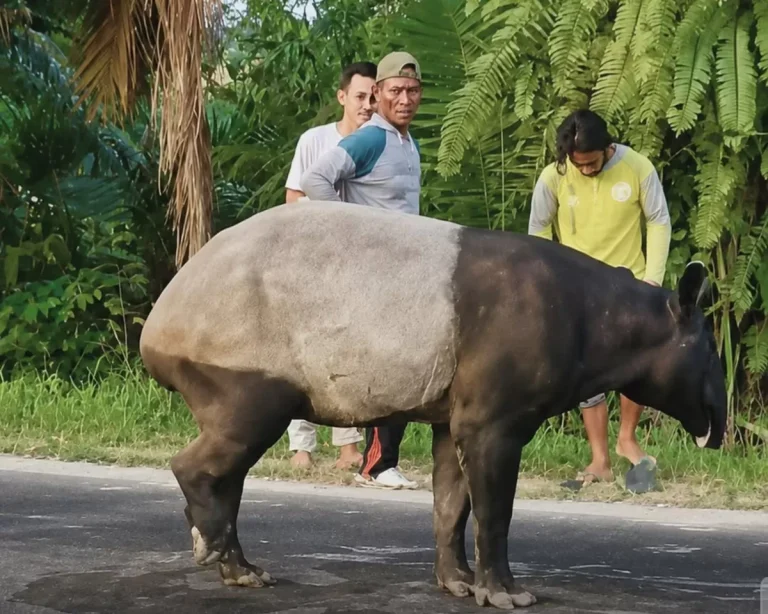
In early July 2026, Indonesia was shaken by a heartbreaking incident that captured the attention of the nation and the world. A Malayan tapir (Tapirus indicus), one of the rarest and most ancient mammals on Earth, was spotted wandering along the Trans-Sumatra Highway in Register 45, Mesuji, Lampung. Before conservation officers could reach it, the animal was chased, speared, slaughtered, and its meat distributed among local residents. The viral videos of this brutal act sparked outrage and raised urgent questions about wildlife protection in Indonesia.
This article explores the fascinating world of the tapir Indonesia, why this species is so precious, the legal framework that protects it, and most importantly, why those who slaughter this protected animal must face the full force of the law.
What is Tapir Indonesia? Understanding the Malayan Tapir
A Living Fossil
The tapir Indonesia is scientifically known as Tapirus indicus, commonly called the Malayan tapir or Asian tapir. It is the only tapir species native to Asia and the largest of the four surviving tapir species in the world. Remarkably, tapirs are ancient creatures that have inhabited the Earth for millions of years, earning them the nickname “living fossils”.
Physical Characteristics

The Malayan tapir is a large herbivorous mammal with a distinctive appearance. Adults can weigh up to 350 kilograms and reach 1.8 meters in length. Their most recognizable feature is their unique black-and-white coloration—the front and rear portions of the body are black, while the middle section (shoulders, back, and belly) is white. This striking pattern serves as natural camouflage in the dappled light of the forest floor, helping predators mistake them for rocks or fallen logs.
They possess a short, flexible proboscis (snout) resembling a miniature elephant trunk, which they use to grasp leaves, fruits, and aquatic vegetation. Despite their pig-like appearance, tapirs are actually more closely related to horses, rhinos, and zebras.
Habitat and Distribution
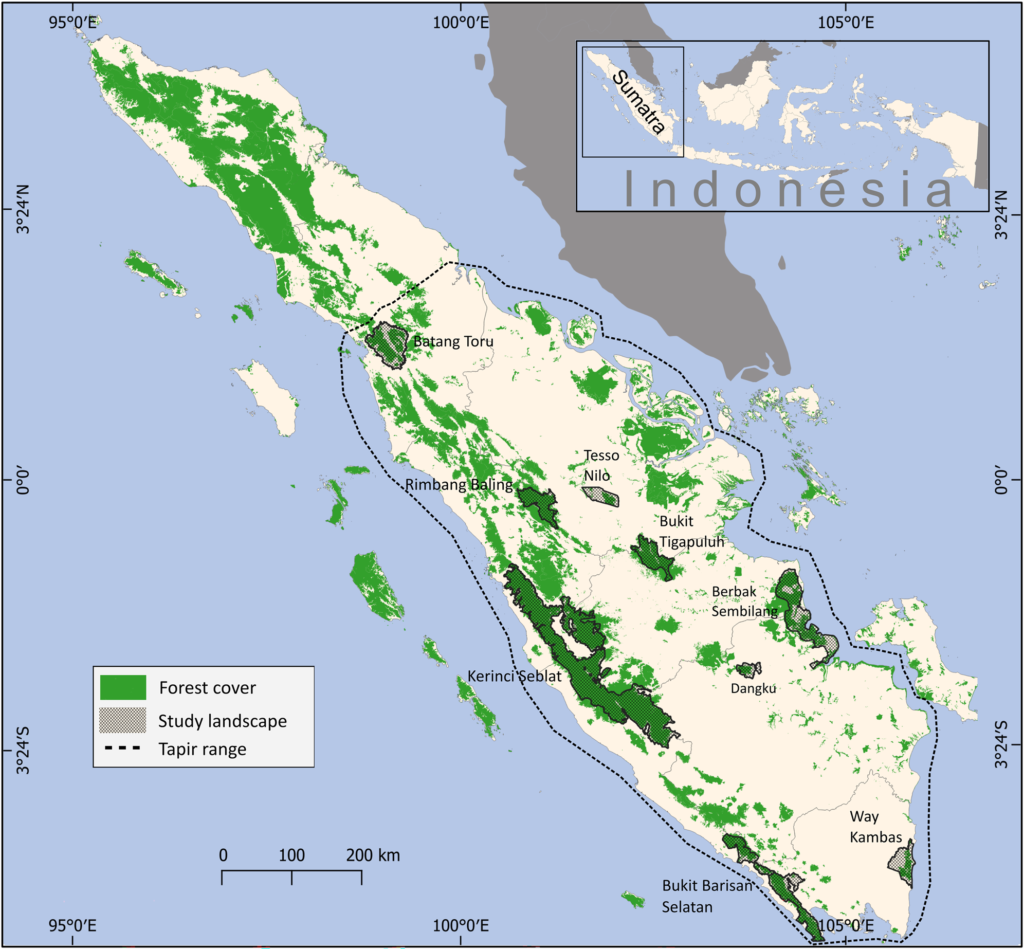
In Indonesia, tapir Indonesia populations are found exclusively on the island of Sumatra. They inhabit lowland rainforests, swampy areas, and dense jungles with abundant understory vegetation. The Register 45 area in Mesuji, Lampung, where the recent tragedy occurred, remains one of their natural habitats.
Behavior and Ecology
Tapirs are primarily nocturnal (active at night) and are known to be shy, solitary animals that generally avoid human contact. They are excellent swimmers and often seek refuge in water to escape predators or cool down. As herbivores, they play a critical ecological role as seed dispersers—consuming fruits and vegetation and spreading seeds through their droppings, which helps maintain forest regeneration.
Why is Tapir Indonesia Endangered?
IUCN Red List Status
The Malayan tapir is listed as Endangered on the IUCN Red List of Threatened Species. This classification means the species faces a very high risk of extinction in the wild. The global population continues to decline due to multiple interconnected threats.
Habitat Loss and Fragmentation
The primary threat to tapir Indonesia is habitat destruction. Sumatra’s forests are being rapidly converted for agriculture, palm oil plantations, industrial timber estates (HTI), mining, and human settlements.
In the Register 45 area specifically, the forest has become severely fragmented. The 42,762-hectare production forest managed by PT Silva Inhutani Lampung now consists mostly of fragmented patches interspersed with farmland and agricultural activities. Only small portions of intact forest cover remain. This fragmentation forces tapirs to venture out of their natural habitat in search of food and water, increasing their encounters with humans.
Hunting and Poaching
Despite legal protection, tapirs are still hunted for their meat in some areas. The Mesuji case is a stark reminder that illegal hunting remains a persistent problem. Even accidental shootings and snaring continue to threaten the species.
Human-Wildlife Conflict
As forests shrink and tapirs lose their natural food sources, they are forced to enter human-dominated landscapes. This leads to conflict, as seen in the Mesuji incident where a tapir wandering near a highway was killed by local residents. Experts note that such incidents are “a signal that the forest ecosystem is experiencing serious disturbance”.
The Legal Protection of Tapir Indonesia
National Protection Status
The tapir Indonesia is fully protected by Indonesian law. This protection is established through multiple legal instruments:
-
Government Regulation No. 7 of 1999 concerning the Preservation of Plant and Animal Species
-
Minister of Environment and Forestry Regulation No. P.106/MENLHK/SETJEN/KUM.1/12/2018
-
Law No. 5 of 1990 concerning Conservation of Living Natural Resources and Their Ecosystems, as amended by Law No. 32 of 2024
These laws explicitly prohibit the hunting, killing, capturing, possessing, transporting, and trading of protected wildlife species, including the tapir.
International Protection
Beyond national laws, the Malayan tapir is also protected internationally. It is listed under CITES Appendix I, which prohibits international trade in the species. It is also recognized as endangered under the U.S. Endangered Species Act. Indonesia has protected the Malayan tapir since 1931, demonstrating a long-standing commitment to its conservation.
Don’t Forget To Read This:
58 Orangutan Deaths: North Sumatra Flood Disaster
The Mesuji Slaughter Case: A Detailed Account
The Incident
On July 1, 2026, a Malayan tapir was spotted walking along the Trans-Sumatra Highway in Register 45, Mesuji Timur District, Mesuji Regency, Lampung. The following day, July 2, 2026, at approximately 3:30 PM, the animal was chased into the forest by local residents. It was then speared, slaughtered, and cut into pieces. The meat was distributed and reportedly cooked as spicy stir-fry and shared among villagers.
By the time conservation officers from BKSDA (Natural Resources Conservation Agency) arrived, the tapir was already dead.
The Investigation and Arrests

The case came to light after amateur videos of the slaughter went viral on social media. The Ministry of Forestry received reports through their call center on July 2, 2026.
A joint team comprising BKSDA Lampung, Polres Mesuji, and Polda Lampung immediately launched an investigation. On July 3, 2026, less than 24 hours after the incident, police arrested four suspects:
-
Ketut Suwarne (50 years old)
-
Wayan Supatre (30 years old)
-
Tri Suharyanto (45 years old)
-
Made Putra (43 years old)
Each suspect played a different role in the crime: chasing, spearing, slaughtering, and providing the machete used to butcher the animal.
Two additional suspects remain at large and are listed as fugitives (DPO).
Evidence Seized
Police confiscated significant evidence, including:
-
A video recording of the slaughtered tapir
-
A broken spear
-
A machete
-
Bones, skin, and processed tapir meat
Legal Charges
The suspects are charged under Article 40A paragraph (1) letter d of Law No. 32 of 2024 concerning Conservation of Living Natural Resources and Their Ecosystems.
Why Must Tapir Indonesia Slaughterers Be Arrested?
:quality(80):watermark(https://cdn-content.kompas.id/umum/kompas_main_logo.png,-16p,-13p,0)/https://cdn-dam.kompas.id/images/2026/05/11/9c17ee6b79373539903d3c8a926e1dc8-WhatsApp_Image_2026_05_11_at_17.47.32.jpeg)
1. It Is a Clear Violation of Indonesian Law
The most straightforward reason is that killing a protected species is a criminal offense. The tapir Indonesia is explicitly protected under multiple laws and regulations. The law is not ambiguous—anyone who hunts, kills, captures, or trades this species is committing a crime and must face legal consequences.
2. It Contributes to Species Extinction
With the Malayan tapir already listed as Endangered, every individual lost is a significant blow to the species’ survival. As Professor Budi Setiadi Daryono, Chairman of the Indonesian Biology Consortium (KOBI), stated: “The loss of one tapir individual means the loss of regeneration potential for an already stressed population”. The population is so fragile that each death accelerates the march toward extinction.
3. It Undermines Conservation Efforts
The Mesuji incident has been described as “a setback for Indonesia’s biodiversity conservation efforts”. Indonesia has invested decades of work in conservation programs, scientific research, and international collaborations to protect its unique wildlife. Allowing illegal killings to go unpunished undermines these efforts and sends a dangerous message that wildlife crime carries no consequences.
4. It Disrupts Ecosystem Balance
Tapirs are in their ecosystems. As large herbivores and seed dispersers, they play an irreplaceable role in maintaining forest health. The loss of tapirs disrupts seed dispersal patterns, affecting forest regeneration and the entire food web. Protecting the tapir Indonesia is not just about saving one species—it’s about preserving the ecological balance that sustains all life, including humans.
5. It Violates International Commitments
By protecting the tapir, Indonesia honors its commitments under international conservation agreements including CITES. Failing to enforce these protections damages Indonesia’s international reputation and could affect its standing in global conservation efforts.
6. To Create a Deterrent Effect
As DPR member Daniel Johan emphasized: “Consistent law enforcement is important to provide a deterrent effect while protecting Indonesia’s biodiversity”. Without arrests and serious penalties, the cycle of wildlife crime will continue. Strong enforcement sends a clear message that wildlife crime is not tolerated.
7. It Highlights the Need for Education
The Mesuji case also exposed a critical gap in public awareness. Some residents may not fully understand the protected status of tapirs or the ecological consequences of killing them. While this does not excuse the crime, it underscores the urgent need for conservation education in communities living near wildlife habitats. However, education must be accompanied by enforcement—one without the other is ineffective.
8. It Addresses the Root Causes of Human-Wildlife Conflict
The arrest and prosecution of wildlife criminals also draw attention to the underlying causes of human-wildlife conflict. DPRD Lampung member Wahrul Fauzi Silalahi pointed out that massive land conversion in Register 45 has destroyed wildlife habitat and forced animals to enter human settlements. Addressing these root causes—through better forest management, habitat protection, and sustainable land-use planning—is equally important.
Enjoy This Article So Far? Article You Also Interested:
Green Technology: 7 Revolutionary Benefits for Clean Energy and Ecosystems
What Penalties Do Perpetrators Face?
Under Law No. 32 of 2024, individuals convicted of killing protected wildlife can face severe penalties. The maximum sentence for killing a protected species is up to 15 years in prison and fines of up to billions of rupiah. The exact penalty depends on the circumstances of the crime, including whether the perpetrator knowingly violated the law.
The suspects in the Mesuji case are currently undergoing legal proceedings, and authorities have vowed to pursue the case to its conclusion.
The Ecological Importance of Tapir Indonesia
Seed Dispersal and Forest Regeneration
Tapirs consume large quantities of fruit and vegetation. As they travel through the forest, they disperse seeds in their droppings, helping to regenerate vegetation and maintain forest diversity. This makes them essential for the health of Sumatra’s tropical rainforests.
Creating Forest Gaps
By feeding on vegetation and moving through dense undergrowth, tapirs create gaps in the forest canopy. These gaps allow sunlight to reach the forest floor, enabling new plant growth and maintaining a diverse ecosystem.
Indicator Species
The presence of tapirs in an ecosystem is a sign of a healthy, functioning forest. Conversely, their decline signals ecological distress. The fact that a tapir was forced to leave the forest and wander onto a highway is itself a warning that the forest ecosystem is in trouble.
What Must Be Done?
1. Strengthen Law Enforcement
Authorities must continue to investigate and prosecute wildlife crimes thoroughly. The pursuit of the two remaining fugitives in the Mesuji case is a critical step. But beyond this case, systemic improvements in wildlife law enforcement are needed across Indonesia.
2. Protect and Restore Habitat
As Pakar Konservasi IPB University Dr. Abdul Haris Mustari noted, habitat protection is fundamental. The government must evaluate forest management in areas like Register 45 and ensure that conservation concerns are prioritized alongside economic interests.
3. Educate Local Communities
Conservation education must reach communities living near wildlife habitats. People need to understand the legal status of protected species, their ecological importance, and the consequences of harming them. KOBI has offered to collaborate with local governments and communities to strengthen conservation education.
4. Develop Human-Wildlife Conflict Resolution Mechanisms
As human populations expand and wildlife habitats shrink, conflicts will increase. Proactive strategies—such as wildlife corridors, early warning systems, and compensation schemes for crop damage—can help reduce tensions and prevent tragic incidents like the Mesuji slaughter.
5. Empower Local Communities as Conservation Partners
Rather than viewing local communities as threats, conservation efforts should engage them as partners. When communities benefit from conservation—through ecotourism, sustainable livelihoods, or other incentives—they become stewards rather than adversaries of wildlife.
Conclusion
The slaughter of the tapir Indonesia in Mesuji, Lampung, is a tragedy that should never have happened. It represents the loss of an endangered individual from a species already teetering on the brink of extinction. But more than that, it is a symptom of deeper problems: habitat destruction, lack of public awareness, and insufficient enforcement of wildlife protection laws.
Arresting and prosecuting those who kill protected wildlife is not an act of cruelty toward the perpetrators—it is an act of justice toward the species, the ecosystem, and future generations. It sends a clear message that Indonesia takes its conservation commitments seriously and that wildlife crime will not be tolerated.
The Mesuji case has already led to four arrests, with two more suspects still being pursued. This swift action by authorities is commendable. But the work does not end here. To truly protect the tapir Indonesia, we must address the root causes of human-wildlife conflict, strengthen habitat protection, and build a culture of conservation that values every living creature.
As the Indonesian Biology Consortium (KOBI) stated: “The protection of Tapirus indicus is not only the responsibility of the government but also the moral responsibility of all elements of the nation”. Every Indonesian has a role to play in ensuring that the tapir Indonesia—this ancient, gentle, and irreplaceable creature—survives for generations to come.
The time to act is now. The tapir cannot wait.