
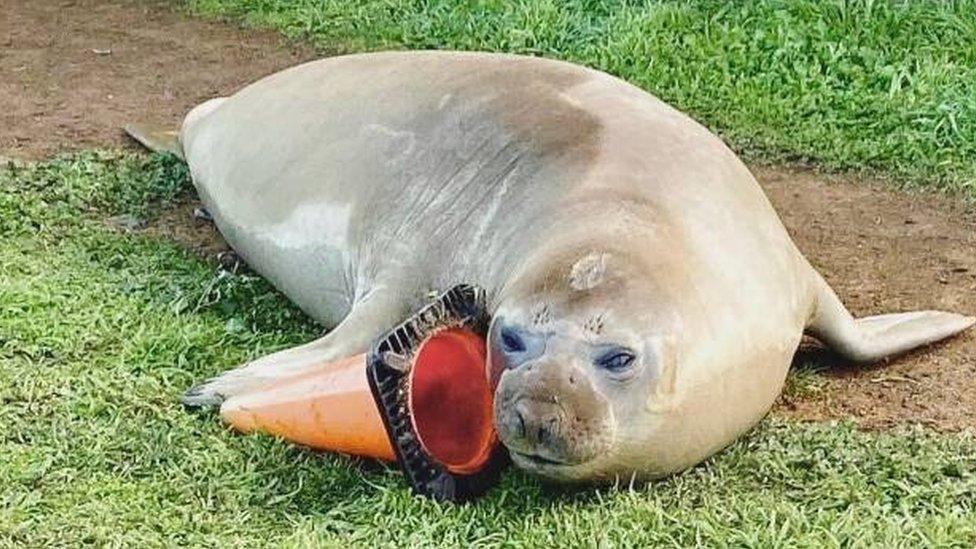
When a 1,000-kilogram southern elephant seal hauled himself onto the shores of Seven Mile Beach near Hobart, Tasmania, in mid-2026, he didn’t just come for a nap. He came for chaos — and the world couldn’t get enough.
Neil the Seal, a five-year-old southern elephant seal weighing approximately 1,000 kilograms (2,200 pounds), has become one of Australia’s most unexpected global celebrities. His bollard-bashing, fence-crushing, traffic cone-chewing antics have turned him into an internet sensation, captivating millions on TikTok and Instagram. But Neil is more than just a viral video star — his story is one of survival, biology, and the complicated relationship between humans and wildlife.
This article explores everything you need to know about Neil the Seal, from his unusual birth and annual visits to the science behind his fame and the serious conservation questions his celebrity status raises.
The Unlikely Origin of Neil the Seal
Neil the Seal was born in October 2020 in Salem Bay on the Tasman Peninsula, a rugged stretch of coastline in southeastern Tasmania. His birth was remarkable from the start. Southern elephant seals typically breed on remote subantarctic islands like Macquarie Island and Heard Island, not on mainland Tasmania.
Wildlife experts believe Neil’s mother may have been young and inexperienced, unable to reach the traditional breeding grounds in time. She gave birth on a Tasmanian beach instead — and that decision changed everything.
When Neil was just a 40-kilogram pup, he was found lying on a tidal sandbar, in immediate danger of drowning. Kris Carlyon, head of wildlife health and marine life at Tasmania’s Department of Natural Resources and Environment (NRE), recalled the rescue: “He was certainly going to drown on that day. And we’ve looked after and managed him ever since.”
Researchers fitted Neil with identification tags on both rear flippers before he was weaned, allowing wildlife authorities to recognise him each time he returns to Tasmania. Between 1985 and 2022, only nine southern elephant seal pups were recorded as being born in Tasmania, with just five known to have successfully weaned. Neil is one of the rare survivors — and his story is still being written.
Why Neil the Seal Returns to Tasmania
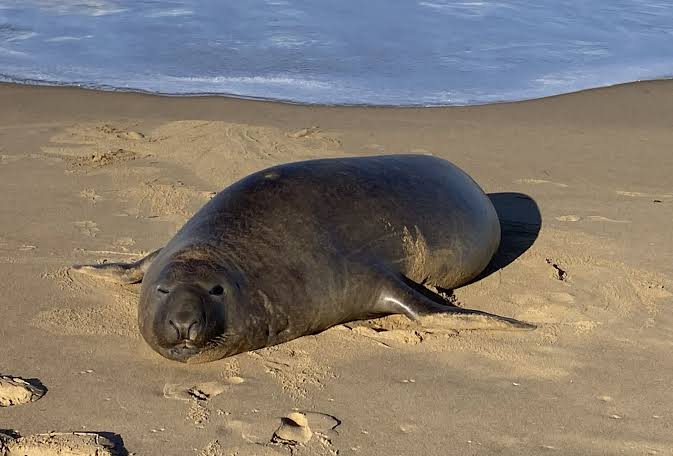
Unlike most southern elephant seals that spend their lives around remote islands, Neil is pre-programmed to return to the place where he was born. This instinct, known as natal philopatry, is common among seals — but in Neil’s case, it means he keeps coming back to populated coastal areas of Tasmania instead of remote beaches.
Neil makes two visits to Tasmania each year. The first is a mid-year “haul-out” — a period when he comes ashore to rest after months of feeding at sea. The second visit comes later when he returns to moult, shedding his old fur and skin in a month-long process.
Dr Clive McMahon, an expert in Southern Ocean and Antarctic ecology at the Sydney Institute of Marine Science, explains that this behaviour is perfectly natural. “It’s quite an extraordinary thing to see an elephant seal in Tasmania, to see it close to where people live and to see it in an accessible spot,” he said.
When Neil is at sea, he covers enormous distances. Satellite tracking data from 2023 showed that he spent six months foraging over 1,600 kilometres from the south-west of Tasmania, covering a round trip of more than 5,000 kilometres. That’s a journey that would take him through some of the most treacherous waters on the planet — and he does it twice a year.
The Antics That Made Neil the Seal Famous
Neil the Seal didn’t become famous by being shy. His visits to Tasmania are marked by a trail of destruction that locals have come to adore — and dread.
Videos posted to social media show Neil engaging in all kinds of mischief. He blocks roads, slams into street signposts, peels traffic cones off the road with his massive body, and peers through residents’ screen doors. He has crushed fences, rocked vehicles, and even followed people to parking lots.
One local resident, Rebecca Thomson, described the experience of being followed by Neil: “It’s like this giant slug coming at you. It was really exciting and intriguing, and yes, definitely a bit intimidating, too.”
But Neil isn’t being aggressive — he’s being a seal. Dr McMahon explains that Neil is a young male with all the natural instincts to spar and play, but in the absence of other seals, he interacts with whatever is available. “He’s in a difficult position, because he has all these innate behaviours and wants to spar and play and develop his skills and in the absence of other seals he’s having to do this with traffic cones and bollards and large things that stand up that look like seals.”
Neil’s antics have earned him nicknames like “the most notorious seal on earth” and comparisons to a typical “Aussie larrikin”. One fan described him perfectly: “Neil is an absolute menace and I love him.”
How Neil the Seal Became a Global Internet Sensation
Neil’s rise to fame began in July 2022, when he rested in Hobart for his month-long moulting period. During that time, videos of him playing with traffic cones and interacting with the public went viral.
By 2026, Neil’s following had grown exponentially. He commands a TikTok following of 1.4 million fans — a number that continues to grow. Fan pages, theme songs, and even insurance advertisements have featured the celebrity seal.
University of Tasmania media lecturer Gemma Blackwood attributes Neil’s popularity to his personality. “People are really enjoying the fact that he seems to be a bit of a rule-breaker — you might call him a folk hero,” she said. “[He] provides a lot of joy for people, and that’s both locally, nationally and internationally.”
The psychological appeal of Neil the Seal goes deeper than just entertainment. Dr Deanna Tepper, a lecturer in psychology and anthrozoology at La Trobe University, explains that humans are drawn to animals with “baby schema” — big round faces, cute cheeks, and wide eyes that resemble human infants. Neil’s bulbous face and playful expressions trigger an instinctive caregiving response in viewers.
The phenomenon of Neil the Seal represents something larger than a single animal — it’s a reflection of how social media can turn an ordinary wild animal into a global icon, and how that fame can bring both joy and serious consequences.
More Article You May Also Like:
58 Orangutan Deaths: North Sumatra Flood Disaster
The Science Behind Southern Elephant Seals
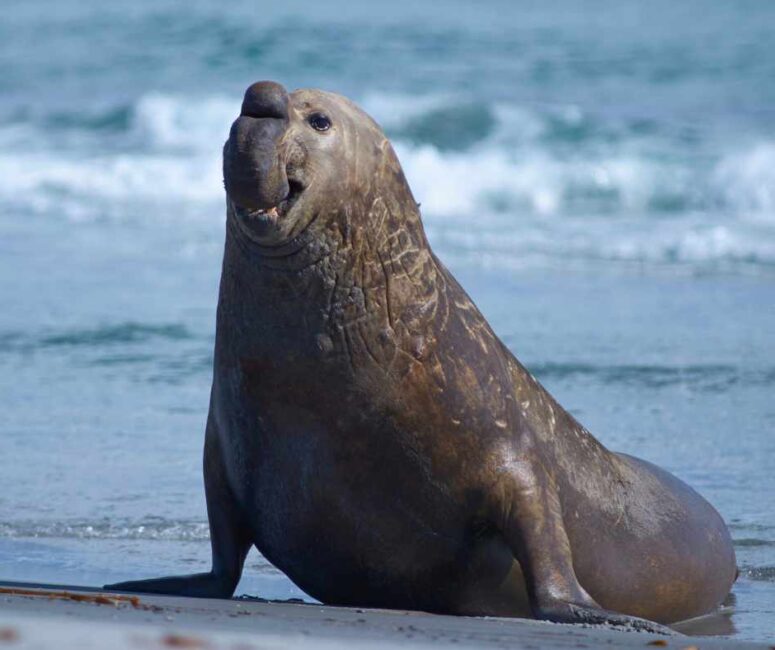
To truly understand Neil the Seal, it helps to understand the species he belongs to. Southern elephant seals (Mirounga leonina) are the largest seals on Earth. Adult males can reach up to 4.5 metres in length and weigh as much as 4,000 kilograms.
These marine mammals are superbly adapted to life in the ocean. They have streamlined bodies, powerful forequarters, and a thick layer of blubber that allows them to survive in the coldest waters of the Southern Ocean. They are capable of diving to extraordinary depths and travelling thousands of kilometres across the ocean.
Unlike sea lions and fur seals, true seals like the southern elephant seal lack external ear flaps and cannot rotate their hind flippers beneath their bodies. Instead, they move across land in a distinctive wriggling motion, using their fore flippers for support and propulsion.
Southern elephant seals spend the vast majority of their lives at sea, returning to land only for breeding, moulting, and periods of rest. Neil’s behaviour — coming ashore twice a year to rest and moult — is entirely typical for a young male of his species.
The world’s largest breeding colonies of southern elephant seals occur on islands including South Georgia, Macquarie Island, Heard Island, and the Kerguelen Islands. Only small numbers breed in Tasmania, which makes Neil’s regular appearances all the more remarkable.
Neil the Seal and Human-Wildlife Conflict
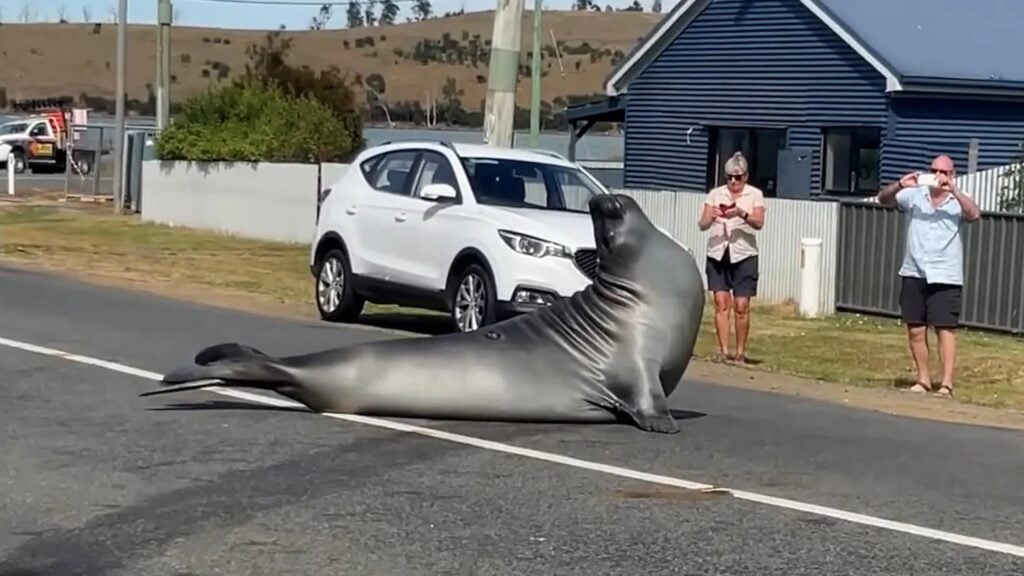
Neil’s celebrity status has brought thousands of visitors to Tasmania’s coastal towns. During his 2026 visit, hundreds of locals and tourists gathered at Seven Mile Beach each day to catch a glimpse of the famous seal. Some people even flew in from interstate just to see him.
But Neil’s fame comes with serious risks. Wildlife experts fear that the growing crowds could lead to dangerous human-seal encounters. At 1,000 kilograms and growing, Neil has the potential to cause serious injury — not out of malice, but simply because of his size.
“If you’re in the wrong place there’s a big big risk,” Kris Carlyon warned.
There are also fears that authorities could be forced to euthanise Neil if public safety cannot be guaranteed. This is not an unfounded concern — in 2022, a 600-kilogram walrus named Freya was euthanised by Norwegian authorities less than a month after she started interacting with boats.
In response to these concerns, almost 30,000 people have signed a petition calling for restricted access zones around Neil’s known habitats. The petition proposes making it illegal for tourists and non-residents to intrude upon Neil’s space, with fines for those who cause disturbances.
Wildlife rehabilitator Cory Young said action is needed now, before Neil gets even bigger. “As he’s aged, he’s gotten more attention and more popularity, and, as such, I think that’s why we need to do something now before he does get to two, three tonnes.”
Tasmanian Premier Jeremy Rockliff has resisted calls for new legislation, stating, “Common sense is what is key here; we don’t need to legislate for common sense.” However, local authorities have implemented traffic management plans, closed roads when necessary, and even engaged a 24/7 security guard to monitor Neil’s safety.
The public has been reminded to stay at least 20 metres away from Neil, keep dogs on a lead at least 50 metres away, and never touch, feed, or approach the seal.
Neil’s Return to the Sea — For Now
In early July 2026, Neil the Seal appeared to have returned to sea. The Department of Natural Resources and Environment confirmed that Neil “returned safely to sea last night. This is his natural behaviour and was expected.”
Premier Jeremy Rockliff remarked, “The traffic cones and street signs of Tasmania can breathe a small sigh of relief.”
But Neil’s departure doesn’t mean he’s gone for good. Wildlife experts say he is likely to return in summer to moult, and there is a chance he could do another mid-year haul-out before then if he needs to rest after feasting at sea.
Dr McMahon noted that if Neil has left the area, he would be moving towards the south-west of Tasmania, where ocean upwelling brings nutrients to the surface, attracting the fish and squid that make up the primary diet of elephant seals.
“We’ll keep an eye out for him but otherwise the traffic cones and street signs of Tasmania can breathe a small sigh of relief,” the Premier said.
What Neil the Seal Teaches Us
Neil the Seal is more than just a viral sensation — he is a symbol of the complex relationship between humans and wildlife in the modern world.
His story highlights the importance of wildlife conservation and the need for public education about how to interact with wild animals. Neil’s presence in Tasmania provides a rare opportunity for researchers to study a southern elephant seal up close, but it also presents challenges that require careful management.
For the people of Tasmania, Neil has brought joy and a sense of community. “There’s a lot of other stuff going on that’s negative, and to have this bit of positivity, especially down here, is wonderful,” one onlooker told the ABC. “You can see the people coming down and they are all smiling and it’s just really good to see — a bit of innocent fun.”
Neil the Seal is a reminder that wild animals are not just characters in our social media feeds — they are living creatures with their own needs, instincts, and behaviours. As Dr McMahon said, “I just hope that people enjoy seeing Neil and respect the fact that he is a wild animal. Give him the space he needs to rest when he is here and perform those behaviours, which everybody is being enchanted by.”
The Future of Neil the Seal
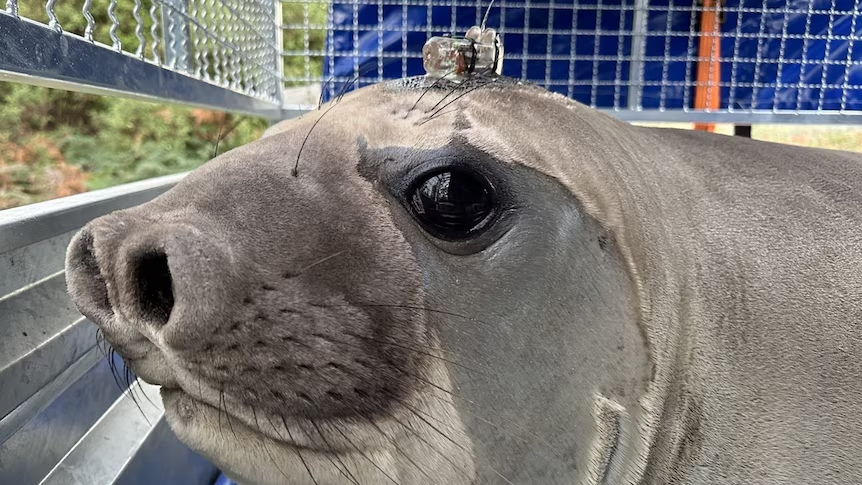
As Neil continues to grow, so too will the challenges he faces. Adult male southern elephant seals can reach up to 4,000 kilograms — four times Neil’s current weight. As he becomes larger, he is likely to become more territorial, which could make his interactions with humans even more complicated.
Wildlife authorities will continue to monitor Neil’s movements and health, and the public will need to remain vigilant about maintaining safe distances. The debate over whether Tasmania needs stronger legislation to protect Neil — and other seals like him — is likely to continue.
For now, Neil the Seal is back at sea, doing what elephant seals do best — feeding, travelling, and surviving in the vast Southern Ocean. But he will be back. And when he returns, the traffic cones, bollards, and fences of Tasmania will once again face their greatest challenger.
How You Can Help Protect Neil the Seal
If you ever find yourself in Tasmania during one of Neil’s visits, remember these important guidelines:
-
Stay at least 20 metres away from Neil at all times
-
Keep dogs on a lead at least 50 metres away
-
Never touch, feed, or approach the seal
-
Avoid blocking the seal’s access to the water
-
Report any sightings to the marine mammal hotline on 0427 WHALES (0427 942 537)
By respecting Neil’s space and treating him as the wild animal he is, we can ensure that future generations will have the opportunity to experience the joy and wonder that Neil the Seal has brought to the world.