
The DDR5 Price Drop Phenomenon
For months, the PC do-it-yourself (DIY) community watched in despair as RAM prices skyrocketed to unprecedented levels. However, in late March 2026, a seismic shift occurred. Market reports out of Shenzhen’s Huaqiangbei—China’s largest electronics hub—began showing a sudden and violent DDR5 price drop.
But what exactly caused this collapse? Is this the relief that gamers and PC builders have been desperately waiting for, or is it a temporary flash in the pan driven by panic and speculation? While many global markets still face tight supply, the DDR5 price drop in China represents a significant, albeit complex, shift in the memory landscape. This article will analyze the data, dissect the causes of the flash crash, and help you decide if it is finally time to upgrade your system.
How Much Have Prices Fallen?
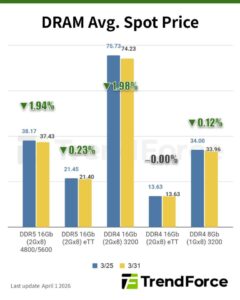
To understand the scale of the DDR5 price drop, we need to look at the specific pricing data coming out of the Chinese spot market. The numbers are staggering for a market that was defined by constant price hikes just weeks prior.
The most dramatic collapses have been observed in high-volume consumer kits:
-
32GB DDR5 Kits (Desktop): Mainstream 32GB DDR5 kits fell from a peak of roughly RMB 2,999 in mid-March to around RMB 2,200 by the end of the month. This represents a decline of nearly 27% in a single month.
-
16GB SO-DIMM Modules (Laptop): Laptop upgraders saw even better news. The price for a 16GB DDR5 SO-DIMM module dropped from RMB 1,759 to RMB 1,159—a 34% reduction from its February 2026 peak.
-
64GB High-Capacity Kits: The highest capacity consumer kits were hit hardest. Some 64GB DDR5 kits reportedly suffered single-week drops exceeding 20% as distributors scrambled to liquidate their most expensive inventory.
-
DDR4 Crossfire: Interestingly, the DDR5 price drop was so sharp that it caused a market inversion. In some instances, DDR4 16GB modules were briefly trading at premiums above DDR5, a rare phenomenon driven by production cuts of the older standard.
These declines are not just minor price corrections; they are described by local retailers as a “cliff-like crash” or a “complete collapse” of the spot market.
The Anatomy of the Crash: Why Prices Are Tumbling in China
To understand the DDR5 price drop, you have to look beyond simple supply and demand. The crash in China is a perfect storm of three distinct pressures: inventory liquidation, market psychology, and technical disruption.
The Panic Among Scalpers and Distributors
During the first quarter of 2026, as prices soared, many “big players” and even outside investors began hoarding DDR5 memory. They treated RAM like a commodity asset, hoping to sell high. However, the prices became too high. Retail and DIY sales volumes collapsed by over 60% in some channels. Facing a cash crunch and warehousing costs, these hoarders entered a panic-selling spiral. As prices started to slip, more sellers rushed to dump their stock, creating a cascading effect of lower and lower prices.
The Wider Tech Panic
Ironically, the DDR5 price drop was accelerated by good news in software. The market was shaken by the announcement of Google’s TurboQuant technology, which claimed to cut memory usage drastically. Even though this technology primarily targets data centers, the fear that it would reduce long-term demand for physical memory chips spooked the market, leading to a sentiment-driven sell-off.
Two Tiers of the Collapse: Channel vs. Original Pricing
Before celebrating the DDR5 price drop, it is crucial to understand a key distinction: the difference between “channel pricing” (distributors/resellers) and “original pricing” (manufacturers).
While you may see flash sales online, the official factory gate prices from giants like Samsung, SK Hynix, and Micron have not collapsed. Reports indicate that while retail spot prices fell, OEM contract prices remain strong. In fact, original IC-based modules remain stable, while the crash is primarily focused on used, recycled, or secondary-market modules. The channel prices are dropping because middlemen are cutting their own margins to move inventory, not because the chips are getting cheaper to produce. This means the DDR5 price drop is currently isolated to the volatile spot market, which only accounts for about 1–5% of the total DRAM market.
Google Effect: Did TurboQuant Trigger the DDR5 Price Drop?

A significant narrative surrounding the DDR5 price drop involves Google’s new “TurboQuant” memory compression algorithm. On March 26, 2026, Google announced a technology that could reduce the key-value cache memory usage of Large Language Models (LLMs) by over 60%. The immediate result was a massive panic in memory-related stocks, with over a trillion dollars wiped from the market caps of the big three memory manufacturers in a single week.
However, we need to put this in perspective. Experts like Richard’s Research Blog argue that TurboQuant is designed for AI data center inference, with little direct bearing on PC DDR5 DIMM pricing. The DDR5 price drop was already underway due to inventory corrections; TurboQuant simply acted as the psychological catalyst that broke the back of speculator confidence. It turned a slow correction into a flash crash.
The Harsh Reality: Are The New Prices Actually “Cheap”?
Here is the most important part of the DDR5 price drop story: context. Yes, prices are down 34% from February 2026. But are they low? Absolutely not.
Looking at historical data, the current “discounted” price is still 4 to 5 times higher than normal market levels. For example, the 16GB SO-DIMM module that now costs 1,159 yuan used to sell for just 246 yuan in June 2025. While the drop helps new builders who were priced out of the market completely, we are still far from the era of cheap RAM. The DDR5 price drop has brought prices down from “insane” to merely “very expensive.”
Enjoy this article so far? You might also check Why Indonesian Youth Trust Content Creators More Than Traditional Media in 2025
Market Outlook: Expert Opinions and Future Forecasts for DDR5 RAM
Despite the recent DDR5 price drop in China, the outlook for the rest of 2026 remains complicated and potentially inflationary. Analysts are not universally convinced the good times are here to stay.
Bearish View (Prices may rise again):
The structural supply issues have not gone away. Samsung, SK Hynix, and Micron continue to allocate over 75% of their output directly to hyperscalers (AI data centers), starving the consumer PC market. AI servers consume roughly eight times the memory of traditional servers, and this demand is projected to eat up 66% of global DRAM production. Goldman Sachs analysts recently revised their 2026 DRAM price increase forecast up to 250% to 280% , suggesting the crunch is far from over. If geopolitical tensions (such as the Middle East conflict) escalate, supply chains could be disrupted further, pushing server DDR5 prices up another 13% in Q3 2026.
Bullish View (Stabilization):
On the other hand, Pan Helin, a member of the Ministry of Industry and Information Technology’s Expert Committee, suggests that memory prices will generally continue their downward trend, although slowly. As manufacturing processes mature, the supply capacity should steadily improve.
Consumer Gains vs. ‘Scalper’ Losses

The DDR5 price drop has created a fascinating split in the tech ecosystem.
The Losers (The “Scalpers”): Social media in China has been flooded with images of scalpers sitting on “full rooms” of RAM inventory, now hopelessly trapped at high price points. Those who tried to treat DDR5 as an investment vehicle are facing massive losses as the floor drops out.
The Winners (New DIY PC Builders): Anyone building an AMD or Intel system in April or May 2026 has benefited. While the RAM is not cheap historically, the entry barrier has lowered. The DDR5 price drop aligns with price cuts on AMD CPUs, creating a strategic upgrade window for savvy consumers.
Should You Upgrade Your PC Now?
So, with the DDR5 price drop making headlines, what should you do?
If you need a PC now, the current correction is likely the best price you will see for the next few months. Waiting carries the risk that distributor inventory clears out and prices rebound if AI demand continues to suck up supply.
However, do not expect a return to 2024 price levels. The age of “cheap” RAM is over for now. The recent DDR5 price drop is a market exhale, not a crash. It is a prime example of how speculation and fear can drive short-term pricing, but the long-term trend is still dictated by the insatiable hunger of AI.
For now, enjoy the discount. Just remember—it is a discount on what remains a very premium product.