
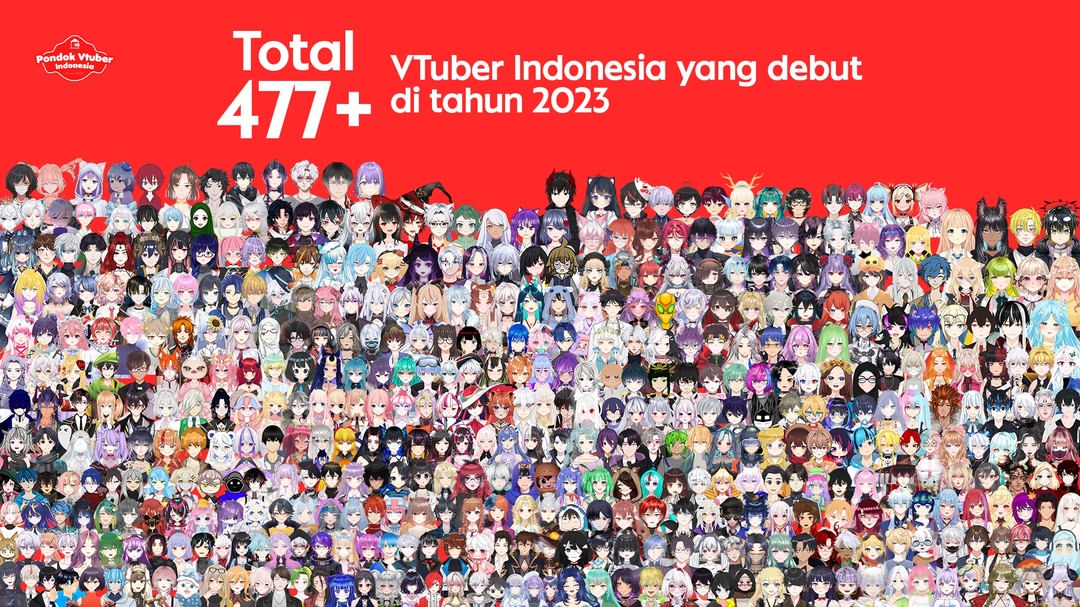
The digital entertainment landscape has experienced a monumental shift over the last few years, driven by the global phenomenon of Virtual YouTubers. What started as a niche subculture in Japan has rapidly transformed into a global powerhouse, and nowhere is this explosive growth more fascinating than in Southeast Asia. The rise of Indonesian VTubers is a testament to the country’s massive, highly engaged internet population and its deep-rooted appreciation for anime and digital pop culture.
From the humble beginnings of independent creators testing out basic facial tracking software to major government agencies like the Meteorology, Climatology, and Geophysical Agency (BMKG) utilizing virtual avatars to deliver weather forecasts, the journey is nothing short of extraordinary. The ecosystem has matured from a localized niche into a mainstream entertainment juggernaut. Today, content creators behind virtual avatars are securing massive brand deals, topping global superchat leaderboards, and actively reshaping how brands and even state institutions communicate with Generation Z and Millennials.
In this comprehensive guide, we will explore the fascinating timeline, technological advancements, cultural significance, and massive economic impact of this digital revolution.
The Dawn of Indonesian VTubers: Early Pioneers
To truly appreciate the current landscape, we must look back at the origins of Indonesian VTubers. The concept of a Virtual YouTuber was popularized globally around 2016 by Kizuna AI in Japan. It did not take long for this innovative content format to cross the ocean. Around 2018, Indonesia saw its very first wave of virtual talent. These early pioneers faced an uphill battle. The technology was expensive, requiring full 3D motion capture suits and high-end rendering software, which was completely inaccessible to the average content creator. Furthermore, the local audience was still unfamiliar with the concept of watching an anime-styled 3D model play games or sing covers.
One of the most notable pioneers in this era was Maya Putri. Debuting as a virtual singer, she was heavily inspired by the Japanese virtual idol industry. Maya Putri helped lay the groundwork for what was to come, introducing the concept of a virtual entertainer who spoke Bahasa Indonesia and sang localized covers of popular anime songs alongside traditional Indonesian pop music. During this era, other names like Cerita Tessa and Mintia also began to emerge, testing the waters of a completely unproven market.
These early Indonesian VTubers had to rely heavily on educating their audience. Viewers often asked questions about who was behind the screen, not fully grasping the “character” aspect of the medium. Despite the technological limitations and the slow initial adoption rate, these trailblazers built a highly dedicated, tight-knit community. They proved that there was a viable audience for virtual entertainment in the country, setting the stage for the massive corporate expansions that would follow just a few years later.
Corporate Titans Shaping Indonesian VTubers
The true explosion of the industry occurred when international corporate titans recognized the immense potential of the Southeast Asian market. The entry of major Japanese agencies revolutionized the ecosystem for Indonesian VTubers. In late 2019, Nijisanji, one of the largest VTuber agencies in the world, announced its Indonesian branch, Nijisanji ID. They debuted talents like Hana Macchia, Zea Cornelia, and Taka Radjiman. By leveraging basic Live2D technology instead of expensive 3D motion capture, Nijisanji proved that high-quality, engaging content could be produced sustainably. Hana Macchia, in particular, became a massive success, attracting both local and international viewers with her bilingual streams.
Shortly after, the industry giant Hololive Production launched Hololive Indonesia (Hololive ID) in early 2020. The first generation, featuring Ayunda Risu, Moona Hoshinova, and Airani Iofifteen, broke international boundaries. Moona Hoshinova’s interactions with international talents bridged the gap between Indonesian, English, and Japanese audiences. This era marked a paradigm shift. Corporate Indonesian VTubers were now backed by professional management, top-tier illustrators, and high-quality Live2D riggers.
The corporate era also saw the debut of Hololive ID’s third generation, which included Kobo Kanaeru. Kobo’s debut was a cultural phenomenon. Her rapid growth to over a million subscribers in record time demonstrated that Indonesian VTubers were no longer just a subculture; they were mainstream digital celebrities. Kobo’s use of local slang, relatable gamer rage, and musical talent resonated deeply with the Indonesian youth, pushing the entire industry into the local mainstream spotlight. The success of these corporate branches inspired local agencies, such as Maha5 (Maha Panca), which launched successful talents like Andi Adinata and Alia Adelia, further enriching the local virtual ecosystem.
The Indie Boom Empowering Indonesian VTubers
While corporate agencies brought mainstream attention and high production values, the democratization of technology sparked a massive boom for independent Indonesian VTubers. As smartphone technology advanced, anyone with a modern iPhone equipped with FaceID could achieve highly accurate facial tracking. Software like VTube Studio and PrprLive became widely accessible, and the cost of commissioning a Live2D model dropped significantly as local artists and riggers honed their skills.
This technological shift empowered thousands of creative individuals across the archipelago to become indie Indonesian VTubers. Without the strict guidelines and schedules of corporate management, indie creators had the freedom to experiment with highly niche content. We saw the rise of virtual creators who specialized in specific gaming genres, educational content, art streams, and even traditional Indonesian storytelling.
The indie scene is characterized by its strong sense of community and collaboration. Independent Indonesian VTubers frequently organize massive collaboration streams, charity events, and local tournaments. They utilize local donation platforms like Saweria and Trakteer, which integrate seamlessly with local payment gateways like GoPay, OVO, and Dana. This hyper-localized monetization strategy allowed many independent creators to turn their passion into a sustainable, full-time career. The indie boom proved that you didn’t need a massive corporate backing to succeed in the virtual space; you just needed creativity, a decent smartphone, and a strong connection with your audience.
Don’t forget to check:
7 Proven Reasons Why 2B Pencils Dominate Exams
Mainstream Breakthrough: BMKG and Indonesian VTubers

Perhaps the most surprising and incredible milestone in the history of the industry is the adoption of virtual avatars by official state and government agencies. When we talk about the mainstream acceptance of Indonesian VTubers, nothing highlights this better than the Meteorology, Climatology, and Geophysical Agency of Indonesia (BMKG) introducing their very own virtual avatar.
Recognizing that traditional news broadcasts and standard public service announcements were failing to capture the attention of the younger demographics, BMKG took a radically innovative approach. They introduced a virtual persona named Siska to deliver crucial weather forecasts, climate updates, and disaster early warnings. This was a brilliant strategic move. By utilizing the aesthetic and communication style of Indonesian VTubers, BMKG managed to make meteorology and disaster preparedness engaging, accessible, and highly shareable on platforms like YouTube, TikTok, and Instagram.
This development shattered the glass ceiling for virtual avatars in Indonesia. It proved that the technology and the medium were not exclusively reserved for gaming, anime, or pop culture entertainment. The BMKG avatar legitimized the use of virtual personas in professional, educational, and governmental communications. Following this success, we began to see various local brands, telecommunication companies, and even banks experimenting with their own virtual brand ambassadors. The inclusion of virtual avatars in mainstream public infrastructure is a unique phenomenon that solidifies the profound impact that the VTubing culture has had on Indonesian society as a whole.
The Cultural Impact Made by Indonesian VTubers
The success of the virtual entertainment industry in the country goes far beyond just numbers and subscribers; it is deeply rooted in cultural synthesis. Indonesian VTubers have masterfully blended the highly stylized, often idealized aesthetics of Japanese anime with raw, unfiltered Indonesian internet culture. This unique amalgamation is the secret recipe to their massive local and regional success.
A significant part of the cultural impact stems from language. Indonesian VTubers frequently switch between Bahasa Indonesia, English, and Japanese in a single stream. Furthermore, they heavily utilize local regional dialects—such as Javanese, Sundanese, or localized slang from Jakarta—which adds a layer of authenticity and relatability that purely international creators cannot replicate. When a high-production anime girl suddenly speaks with a thick Javanese accent or uses incredibly niche Indonesian internet memes, the comedic contrast creates highly viral, shareable moments.
Additionally, these creators have become massive cultural ambassadors for Indonesia on the global stage. Through international collaborations, Indonesian VTubers regularly introduce Indonesian food, traditions, music, and geography to millions of foreign viewers. They have effectively become soft-power diplomats for Indonesian pop culture. Fans across the globe are learning basic Indonesian words, recognizing local brands, and understanding Indonesian societal nuances simply by tuning into daily gaming streams or karaoke sessions. This cross-cultural exchange has fostered a highly inclusive, global community centered around the unique charm of Indonesian virtual talent.
Enjoy this article? Don’t forget to check:
7 Amazing 3D Printing Secrets
The Economic Powerhouse of Indonesian VTubers
The financial ecosystem surrounding this digital phenomenon has grown into a multi-million-dollar local industry. The economy of Indonesian VTubers is multifaceted, extending far beyond ad revenue from YouTube or Twitch. The primary driver of direct income is the live tipping system. While YouTube’s Superchat feature is prominent, the integration of local tipping platforms like Saweria has been the true game-changer. These platforms allow fans to donate amounts as small as a few thousand Rupiah with a personalized message that appears on the stream, making the interaction highly accessible to students and young adults.
Merchandising is another massive pillar of this economy. Corporate and indie Indonesian VTubers alike generate significant revenue through the sale of acrylic standees, voice packs, apparel, and plushies. Local pop culture conventions, such as Comic Frontier (Comifuro) in Jakarta, have seen a massive shift in their floor plans. Where previously booths were dominated by traditional anime fan art, entire halls are now dedicated to VTuber merchandise.
Brand sponsorships have also matured significantly. In the early days, sponsorships were limited to niche anime mobile games or tech peripherals. Today, mainstream consumer brands—ranging from local instant noodle giants and ride-hailing apps to major e-commerce platforms like Tokopedia and Shopee—actively sponsor Indonesian VTubers. Brands have realized that virtual creators hold massive sway over Gen Z consumer habits. The engagement rates generated by a popular virtual streamer playing a sponsored game or reviewing a product live often outpace traditional influencer marketing, making them highly sought-after assets in digital advertising campaigns.
The Bright Future for Indonesian VTubers

As we look toward the horizon, the trajectory for the industry remains overwhelmingly positive. The future of Indonesian VTubers will be defined by further technological integration and an even deeper push into traditional media spaces. We are already seeing the beginnings of full 3D concerts happening locally. As augmented reality (AR) and virtual reality (VR) technologies become more affordable, the barrier between the virtual entertainer and the audience will continue to blur. Fans will soon be able to attend virtual meet-and-greets in the metaverse, interacting with their favorite creators in a fully immersive 3D environment.
Artificial Intelligence (AI) will also play a role in the evolution of Indonesian VTubers. While human-driven content remains the core appeal, AI tools will assist creators in real-time translation, dynamic asset generation, and interactive chat moderation, allowing for even smoother international broadcasting. Furthermore, we can expect to see virtual talents breaking into traditional television, hosting mainstream game shows, or appearing in locally produced animated series.
The journey from a niche hobby to a governmental communication tool is a remarkable story of digital evolution. The ecosystem has proven to be resilient, highly adaptable, and incredibly creative. As internet penetration continues to deepen across the archipelago and as a new generation of digital natives comes of age, the influence, reach, and cultural significance of these virtual avatars will only continue to grow. The era of the virtual entertainer is not just a passing trend; it is a permanent, vibrant fixture of Indonesia’s digital future.