
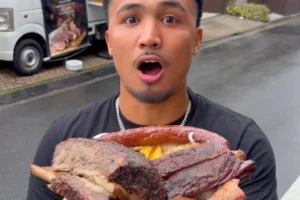
When two American influencers flew to Japan in May 2026, they expected to create viral content. Instead, they accidentally turned a humble food truck in Harajuku into a national sensation. What started as a cruel video – chewing and spitting out A5 Wagyu beef – ended with long lines, tearful apologies, and a powerful lesson about social media karma.
In this article, we reveal the untold story of Slice of Life BBQ, the food truck that faced humiliation and rose stronger than ever. You will also learn how the public reacted, and why this food truck became a symbol of resilience.
What Really Happened
On May 12, 2026, TikTok creator Cian Abion (3 million followers) and a friend visited a food truck called Slice of Life BBQ in Harajuku, Tokyo. They ordered the signature dish: A5 Wagyu brisket.
In the now-deleted video, Cian takes a bite, chews, then spits the chewed meat into his hand on camera. His friend does the same. They complain that the meat has “no flavor” and is “disgusting.” Then they throw the food away.
“This isn’t even wagyu,” Cian says while eating a pork rib – showing he does not know the difference between beef and pork.
The video was meant to be funny. Instead, it ignited a firestorm.
Before the Storm: How the Food Truck Was Doing
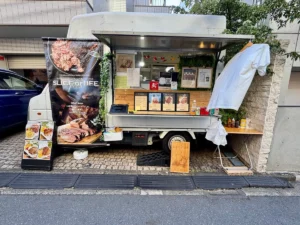
Before this incident, Slice of Life BBQ was a small but respected food truck in Harajuku. The owner, a Japanese-American chef named Kenji Tanaka, had been running it for three years.
-
Daily customers: 50–70 on weekdays, up to 120 on weekends.
-
Revenue: Stable but modest – enough to pay bills and save a little.
-
Online presence: A small Instagram page (2,000 followers) with local foodies.
-
Specialty: A5 Wagyu brisket sandwiches at ¥1,800 (about $12).
Kenji worked 14-hour days, personally marinating the meat and smoking it for 12 hours. He had no idea who Cian Abion was until his phone started blowing up with angry messages – and then with orders.
“I cried when I saw the video. Not because of the criticism, but because they wasted good food. That meat took two days to prepare.” – Kenji Tanaka
Viral Shame Turns into Viral Love
The video backfired spectacularly. Within 48 hours, it had been re-uploaded by hundreds of Japanese and international accounts, accumulating over 15 million views. But instead of hurting the food truck, the opposite happened.
Immediate effects (first week after the video)
| Metric | Before | After (Week 1) |
|---|---|---|
| Daily customers | ~70 | 450+ |
| Waiting time | 5 min | 2–3 hours |
| Instagram followers | 2,000 | 87,000 |
| Daily revenue | ~$800 | $6,500 |
Kenji had to hire three extra staff members and ran out of meat every day by 1 PM. He started using a ticket system to manage crowds.
Long-term changes (one month later):
-
The food truck expanded to a second location in Shibuya.
-
Kenji launched a packaged marinade product sold in local supermarkets.
-
He was invited to speak at a Tokyo small-business summit about “handling social media crises.”
“That influencer gave me the best marketing I could never afford. But I would never wish that feeling of humiliation on anyone.” – Kenji Tanaka
Don’t forget check this one too: Divorce Chicken: Chinese Couple’s Unusual Court Battle Over 29 Birds Ends with a Shared Meal
Public Reaction: From Anger to a Movement
The response was not just about defending a food truck. It became a cultural moment in Japan and beyond.
Japanese netizens:
-
Many pointed out that the influencer showed disrespect to shokunin (craftsman) culture.
-
Food critics revisited the food truck and gave rave reviews – some called it “the best brisket in Tokyo.”
International voices:
-
Several Japanese-American celebrities defended the food truck and condemned the “chew-and-spit” trend.
Influencers’ response:
Cian Abion posted a half-hearted apology, claiming it was “just a joke.” When backlash grew, he deleted his TikTok account for 48 hours, then returned with a more sincere video (still widely criticized for being scripted). His follower count dropped by 300,000. His friend, who had a smaller channel, quit social media entirely.
“This is the first time I’ve seen a negative viral video actually destroy the creator’s career while saving the business they attacked.” – Social media analyst, Yuko Sato
Where Is the Food Truck Now?
As of May 2026 (one month after the incident), the food truck Slice of Life BBQ is doing better than ever.
-
The original truck in Harajuku still has a daily queue of 100+ people.
-
The new Shibuya location opens at 11 AM and sells out by 4 PM.
-
Kenji is planning a brick-and-mortar restaurant for late 2026.
-
He has started a scholarship for young Japanese chefs to study barbecue in Texas.
The food truck also became a tourist attraction. Visitors from Korea, Taiwan, and the US specifically include it in their Tokyo itineraries.
“I came because I saw the drama online. I stayed because the food is actually incredible.” – Maria, tourist from Brazil
Lessons for Every Small Business Owner
What can other food truck owners and small businesses learn from this?
-
Bad publicity is not always bad – if you handle it with dignity. Kenji never attacked the influencers; he simply continued serving great food.
-
Quality speaks for itself. The reason people kept coming back was the A5 Wagyu, not the drama.
-
Document everything. Kenji’s security camera footage (showing the influencers laughing after spitting) helped prove the malice.
-
Engage with your supporters. Kenji personally thanked every customer for a week, building fierce loyalty.
Enjoy this article? You might also be interested: 3 Ways to Spot Fake Siomay Fish: Suckermouth Catfish Danger