
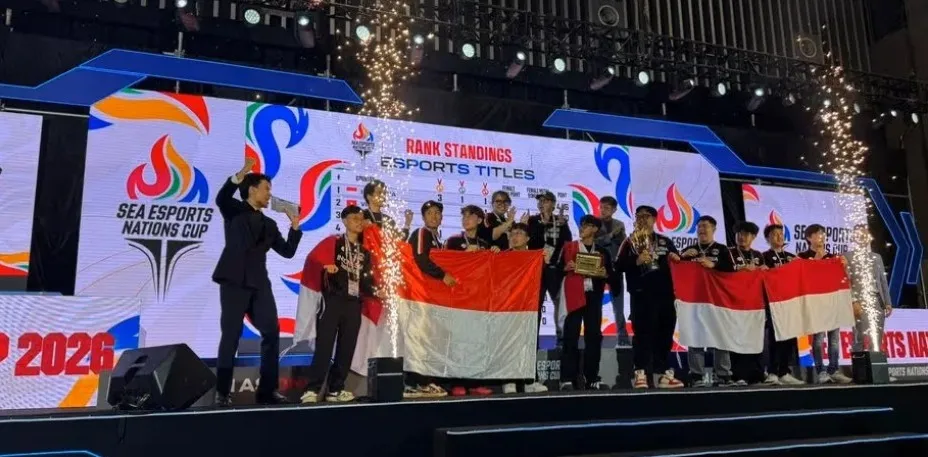
When the final match of the Crossfire: Legends Grand Final ended, the Vietnamese crowd sat in stunned silence. Their home team had just lost a 10-3 lead. The Indonesian squad, down one game and facing elimination, had done the unthinkable. They had clawed back, match point by match point, to snatch victory from the jaws of defeat.
That moment sealed the Indonesia Esports Victory at the inaugural SEA Esports Nations Cup (ENC) 2026. But it was just one chapter in a story of resilience, preparation, and sheer dominance that saw the Merah Putih squad emerge as the undisputed kings of Southeast Asian competitive gaming.
What Made the Indonesia Esports Victory at SEA ENC 2026 So Historic?
The SEA Esports Nations Cup 2026, held in Ho Chi Minh City from May 8-9, marked a new era for regional competition. Organized by the Southeast Asia Esports Federation (SEAEF), this was the first-ever national team-level esports tournament bringing together 87 athletes from 11 Southeast Asian nations .
Under the tournament’s scoring system, medals carried significant weight. Individual gold medals were worth 100 points, duo event gold medals 120 points, and team event gold medals 150 points . After two intense days of competition at the Saigon Exhibition and Convention Center, Indonesia topped the standings with an impressive 446 points .
Vietnam finished as runner-up with 390 points, while Thailand secured third place with 190 points . This wasn’t a narrow victory—it was a statement.
The Indonesia Esports Victory was built on a medal haul of three gold medals, one silver medal, and one bronze medal . More importantly, it demonstrated that Indonesia had developed something other nations lacked: a winning culture based on player initiative, mental fortitude, and meticulous preparation.
The Dynamic Duo: How PUBG Mobile Launched the Indonesia Esports Victory
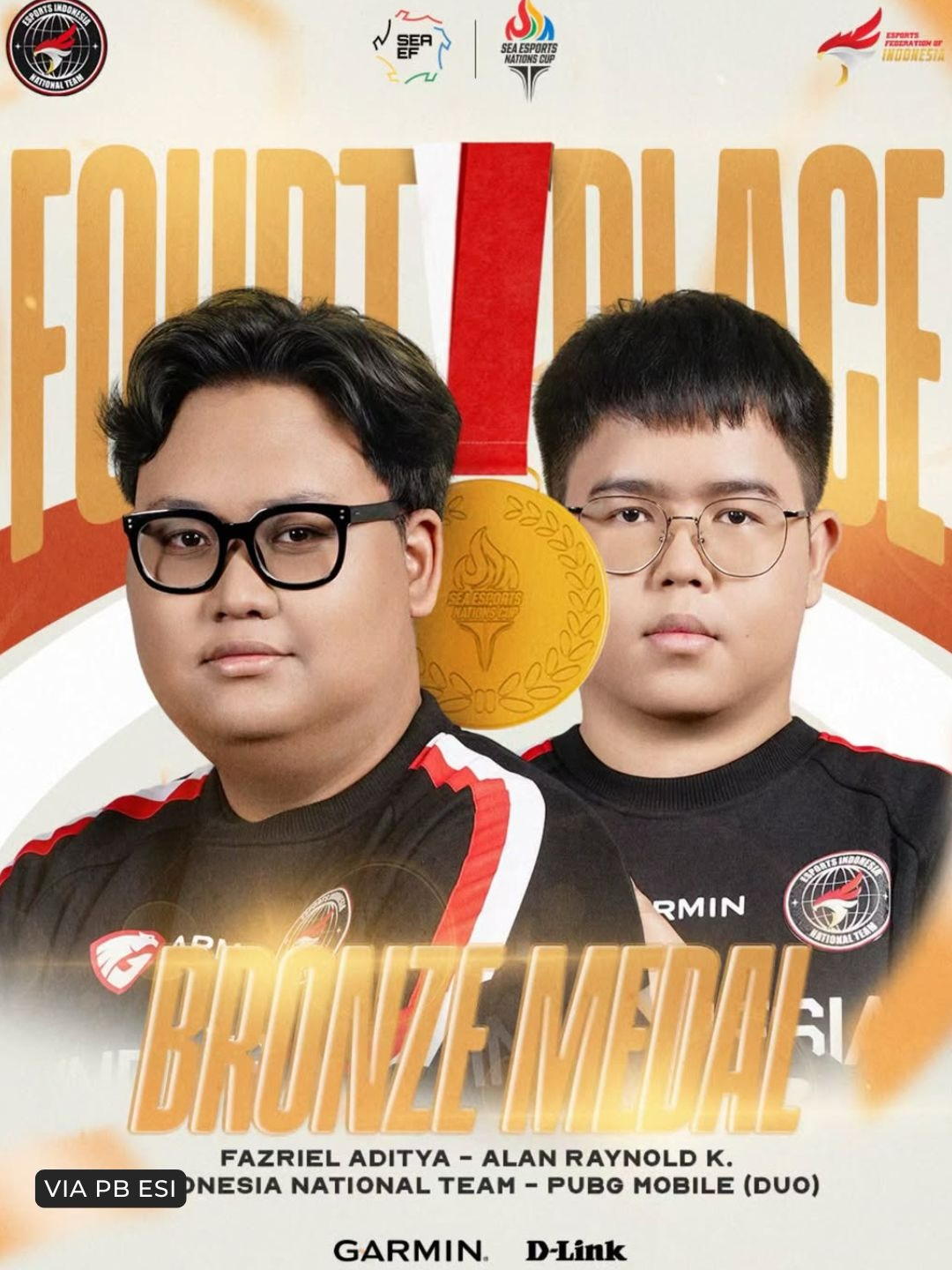
The first chapter of Indonesia’s golden campaign began on May 8, 2026, with the PUBG Mobile Solo category. Two Indonesian athletes, Alan Raynold Kumaseh (“Satar”) and Fazriel Haikal Aditya (“Yummy”), delivered a masterclass in battle royale gameplay .
Alan “Satar” Kumaseh claimed the gold medal with 42 points across two games . Close behind, Fazriel “Yummy” Aditya secured the silver medal with 37 points . This 1-2 finish immediately put Indonesia at the top of the early medal standings.
But their contribution didn’t end there. When they teamed up for the PUBG Mobile Duo category, the same pair added a bronze medal to Indonesia’s growing collection .
What made their performance remarkable wasn’t just the results—it was how they achieved them. Coach Richard Permana, the head coach of the Indonesian national esports team, revealed the secret behind their success.
“Our athletes are extremely proactive. The culture in our national team is player-centric; we want players to be more active and initiative-driven than the coach,” Richard explained .
This philosophy was put to the test before the tournament even began. The PUBG Mobile squad faced “frustrating obstacles” including technical delays and last-minute format changes . Instead of waiting for solutions, the athletes took matters into their own hands.
“They created scrim rooms, invited other countries, and kept practicing despite the uncertainty,” Richard added . This proactive mindset, developed during training camps in Jakarta, became the foundation for the Indonesia Esports Victory.
The Crossfire: Legends Final: A Comeback That Defined the Indonesia Esports Victory
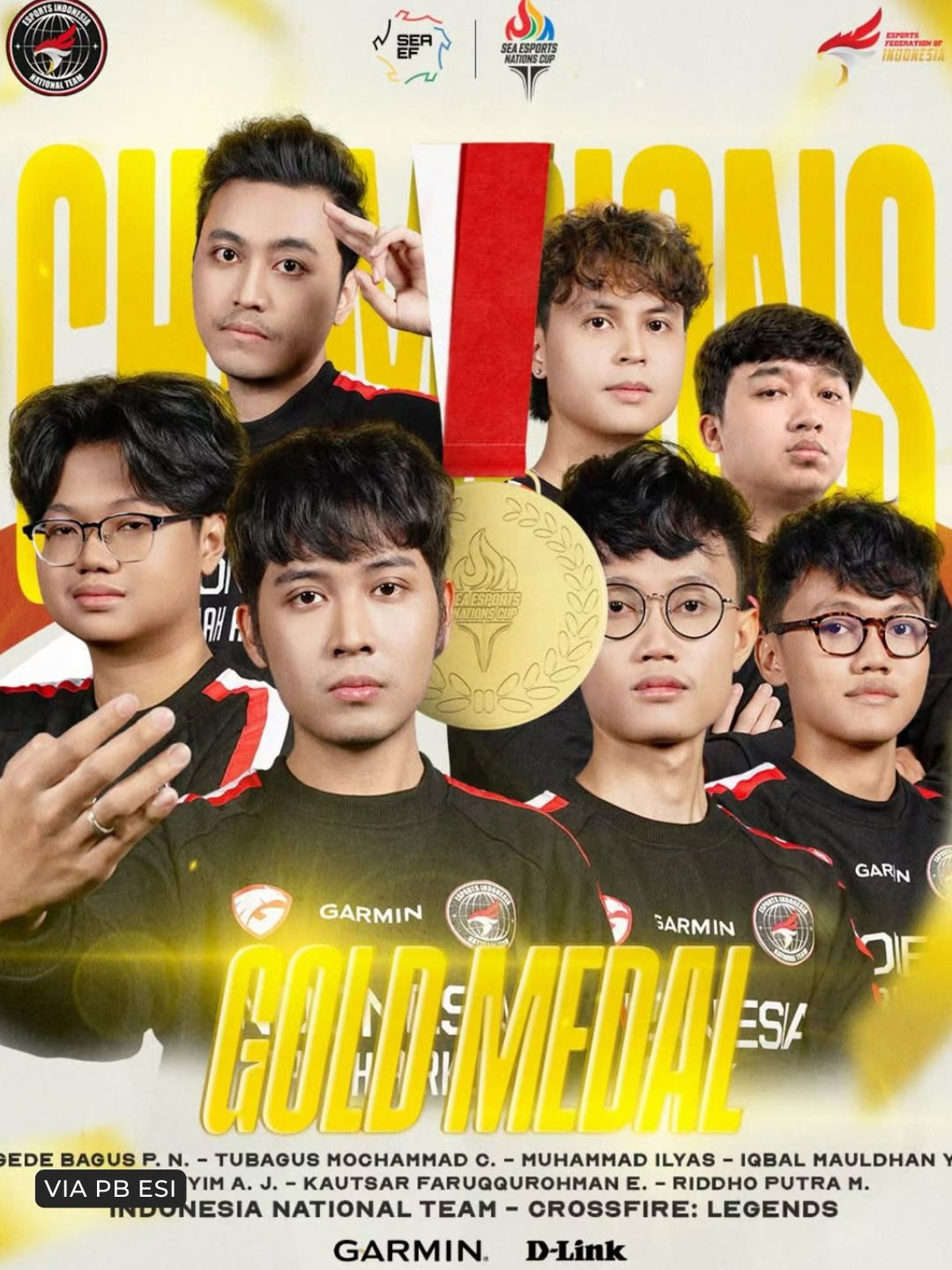
If the PUBG Mobile medals provided the foundation, the Crossfire: Legends final provided the defining moment of the tournament. This was the match that would determine whether Indonesia could hold off a charging Vietnamese team competing on home soil .
The Indonesian Crossfire: Legends squad featured a talented six-man roster:
-
Gede Bagus Panji Narajaya
-
Ibnu Qayyim Al Jauziah
-
Kautsar Faruqurrohman Ekatama
-
Muhammad Ilyas Alfarizi
-
Riddho Putra Muharam
-
Tubagus Mochammad Cipta
Coached by Iqbal Mauldhan Yusup, the team entered the semifinals with confidence, dispatching Malaysia with a decisive 10-4 victory .
Then came the Grand Final against host nation Vietnam. The atmosphere was electric. The Vietnamese crowd roared with every kill their home team secured.
Game 1 was a disaster for Indonesia. They lost decisively with a score of 3-10 . One more loss, and the gold medal—and potentially the overall championship—would slip away.
But this Indonesian team had something special. They didn’t panic. They didn’t crumble.
Game 2 saw a complete transformation. Indonesia adjusted their strategy, tightened their defense, and executed with precision. They won 10-6, forcing a third and final game .
Game 3 belonged entirely to Indonesia. With momentum now firmly on their side, the Merah Putih squad dominated the decisive match. When the final point was secured, pandemonium erupted—not from the Vietnamese crowd, but from the Indonesian contingent celebrating the improbable comeback .
Coach Iqbal Mauldhan Yusup credited the victory to rigorous preparation. “The preparation for SENC Crossfire Legends certainly involved practicing through scrims and reviewing participating countries… that really helped us achieve the gold medal,” he said .
This gold medal was more than just another addition to the tally. It was the victory that mathematically secured Indonesia’s position at the top of the leaderboard, making the Indonesia Esports Victory official before the tournament even ended .
The Tactical Genius Behind the Indonesia Esports Victory in Teamfight Tactics
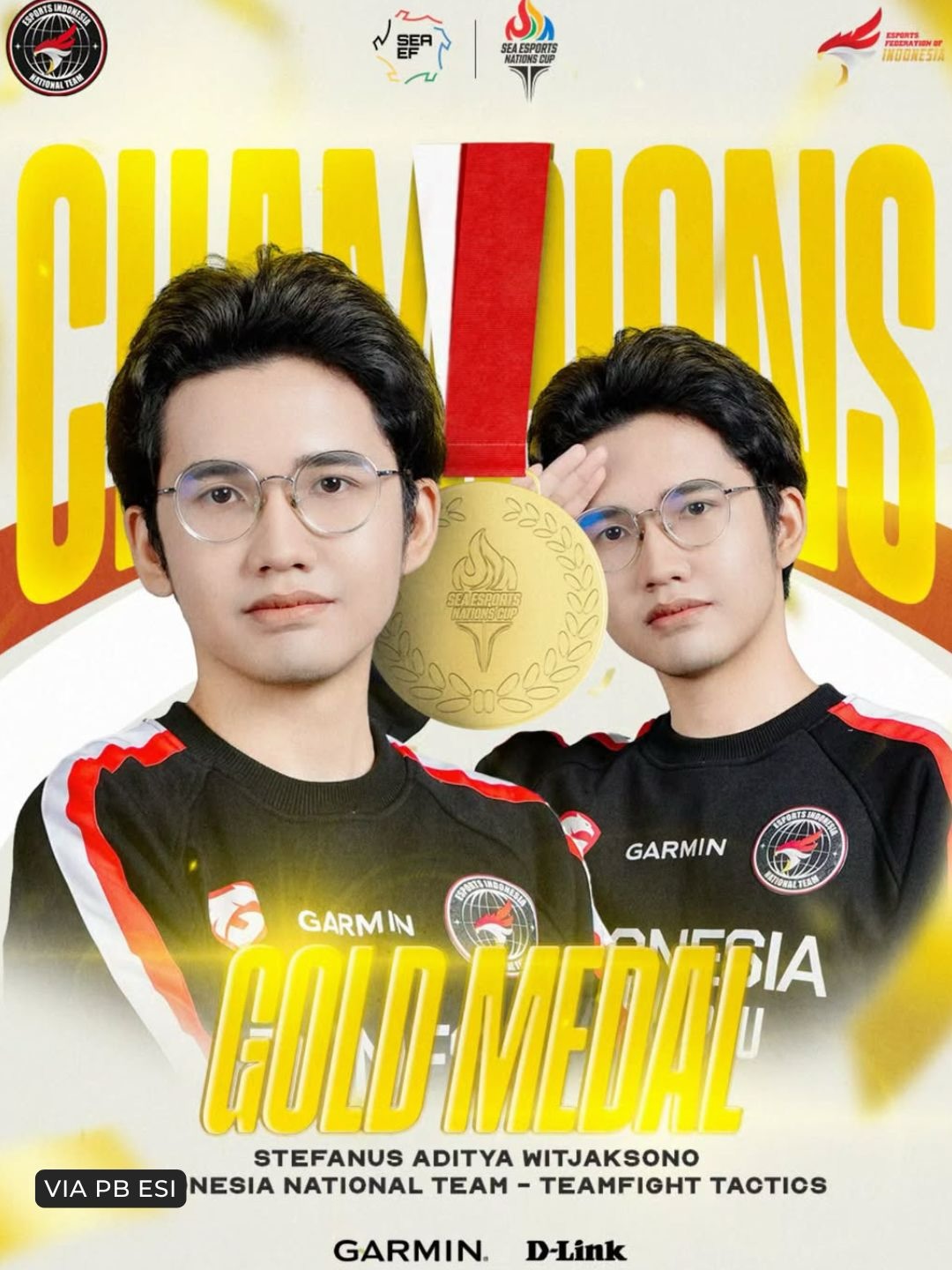
While Crossfire was a team effort requiring split-second reflexes, the Teamfight Tactics (TFT) category demanded something different: cold, calculated strategy. This was a mental battle, and Indonesia’s representative, Stefanus Aditya Witjaksono (known as “Adit” or “NANANDE”), proved he had the intellect to match .
Adit’s path to gold was anything but smooth. In fact, it started disastrously.
Match 1: Adit finished in 7th place, earning just 2 points. At that moment, a medal seemed improbable, let alone gold .
But Adit demonstrated the same resilience that would later define the Crossfire final. In Match 2, he adjusted his approach, staying patient in the early game while waiting for the perfect “power spike”—a moment when his team composition would reach maximum strength.
“It was a very close game, but I finally managed to win,” Adit explained after securing 1st place and 8 crucial points .
Match 3 showed the confidence of a champion. Adit had a “great opener, maintaining momentum and securing first place” for another 8 points . This consistent performance in the final two matches allowed him to accumulate the highest total points on the TFT leaderboard .
How did Adit prepare for such high-pressure competition? His answer reveals the dedication behind the Indonesia Esports Victory.
“Our preparation involved daily ranked practice. We joined study groups with international TFT players; some achieved top placement at TFT Worlds. We diligently studied statistics and VOD reviews,” Adit said .
This wasn’t just practice—it was professional-level preparation. By learning from world-class players who had competed at the highest levels of international TFT competition, Adit gained insights that proved invaluable when the pressure was on .
The Complete Medal Table: A Closer Look at the Indonesia Esports Victory
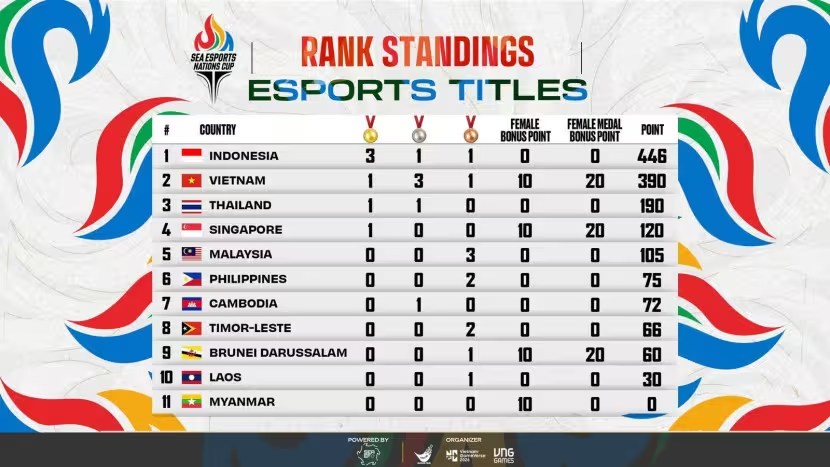
To fully appreciate the scale of Indonesia’s achievement, here’s the complete breakdown of medals won at the 2026 SEA Esports Nations Cup:
Indonesia’s Medal Haul:
-
Gold Medal 1: PUBG Mobile Solo – Alan Raynold Kumaseh (“Satar”)
-
Gold Medal 2: Teamfight Tactics – Stefanus Aditya Witjaksono (“Adit”)
-
Gold Medal 3: Crossfire: Legends – Indonesian National Team
-
Silver Medal: PUBG Mobile Solo – Fazriel Haikal Aditya (“Yummy”)
-
Bronze Medal: PUBG Mobile Duo – Alan & Fazriel
Final Team Standings:
-
Indonesia – 446 points
-
Vietnam – 390 points
-
Thailand – 190 points
-
Other participating nations: Singapore, Malaysia, Philipines, Cambodia, Timor-Leste, Brunei Darussalam, Laos, Myanmar
What makes this Indonesia Esports Victory particularly impressive is the depth of competition. Vietnam, as host nation, had the advantage of home crowd support and familiar conditions. Yet Indonesia still outperformed them by 56 points—a significant margin in a tournament where every medal counted .
The Philosophy Behind the Victory: A Player-Centric Culture
The most sustainable aspect of the Indonesia Esports Victory might be the culture that produced it. Head Coach Richard Permana has built the national team around a revolutionary philosophy: players should be more initiative-driven than coaches .
Traditional sports often rely on coaches dictating every move. But esports moves too fast for that model. When a match is live, players must make split-second decisions that can determine victory or defeat. Training them to think independently—to analyze, adapt, and execute without waiting for instructions—creates competitors who can thrive under pressure.
This philosophy was evident in how the PUBG Mobile squad handled tournament disruptions. Instead of complaining about delays or format changes, they organized their own practice sessions . They reached out to other national teams, arranged scrimmages, and maintained their competitive edge despite the uncertainty.
Coach Permana’s approach isn’t just about winning tournaments. It’s about developing athletes who can represent Indonesia with professionalism and resilience, regardless of the circumstances they face. That long-term investment paid off spectacularly in Ho Chi Minh City.
Looking Beyond 2026: What This Victory Means for Indonesian Esports
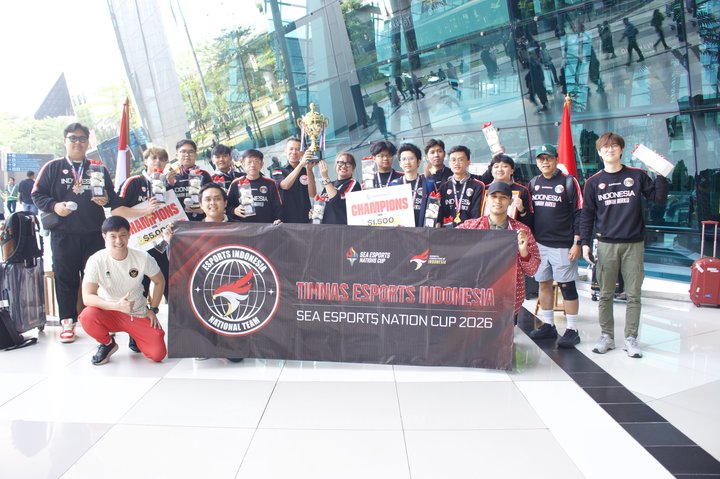
The SEA Esports Nations Cup 2026 was never meant to be an isolated event. As the first tournament organized by the Southeast Asia Esports Federation, it serves as a critical warm-up for the Asian Games 2026 .
For Indonesia, this Indonesia Esports Victory provides more than just bragging rights. It sends a clear message to every other competing nation: Indonesian esports athletes are not participants—they are contenders.
The momentum from this victory could carry into future international competitions. Indonesia has now established a blueprint for success that combines:
-
Player-centric training that develops independent decision-makers
-
Meticulous preparation including video review and statistical analysis
-
Mental resilience forged through high-pressure training scenarios
-
International collaboration through study groups and cross-border scrimmages
Other nations will likely study Indonesia’s approach and attempt to replicate it. But culture cannot be copied overnight. The trust that Indonesian coaches place in their athletes, and the initiative that those athletes demonstrate in return, creates a competitive advantage that will be difficult to overcome.
A Victory That Will Echo Across Southeast Asia
The Indonesia Esports Victory at the 2026 SEA Esports Nations Cup was never guaranteed. The team lost the first game of the Crossfire final. Their TFT representative started in 7th place. Tournament organizers changed schedules and formats at the last minute.
But Indonesia won anyway.
They won because Alan “Satar” Kumaseh and Fazriel “Yummy” Aditya refused to let obstacles derail their preparation. They won because Stefanus Aditya Witjaksono studied international champions and executed under pressure. They won because the Crossfire squad, down 3-10, chose resilience over resignation.
Most importantly, they won because Indonesia has built something special—a player-centric culture where athletes are trusted to lead, coaches provide guidance rather than commands, and everyone shares the same goal: bringing glory to the Merah Putih.
As the esports world looks toward the Asian Games 2026, one thing is certain. Indonesia won’t just be participating. They’ll be competing to win.
And after what happened in Ho Chi Minh City, no one should bet against them.