

A video of a mother crying at Soekarno-Hatta Airport while customs officials inspected her luggage recently went viral. The passenger, identified as JES, had returned from Guangzhou carrying a large number of Pokemon cards.
Many wondered: Why such an intense inspection for a few children’s cards?
The answer lies in Indonesia’s complex and often misunderstood customs duties system. This guide will explain exactly how customs duties in Indonesia work, what triggers a deep inspection, and why sometimes the fees imposed can be several times higher than the value of the goods themselves.
What Happened in the Viral Pokemon Card Incident?
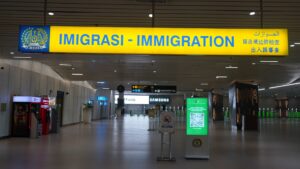
On May 13, 2026, upon arrival from Guangzhou on China Southern Airlines, JES was directed to the “red line” customs inspection lane. The X-Ray scan revealed an unusually large number of Pokemon cards in her suitcase. Beyond just the volume, customs risk management systems flagged her travel pattern—frequent international trips in a short period—as a potential “jastip” or unofficial importing service.
The passenger reportedly felt pressured, crying during the long inspection process, as officials cross-checked her online shopping history and purchase invoices. In the end, she was cleared without paying customs duties after proving the items were for personal use. She was not intimidated, but the case highlights a crucial reality: Indonesian Customs has broad authority to inspect any shipment that appears commercial.
What Are Customs Duties and What Goods Are Taxed?
In simple terms, customs duties (Bea Masuk) are a tax imposed by the government on goods brought into the country. Beyond basic duties, imported items are often also subject to:
-
11% VAT (PPN, Value-Added Tax), increasing to 12% for luxury goods.
-
Income Tax (PPh Pasal 22 Impor) for commercial shipments.
-
Excise for specific controlled items like alcohol and tobacco.
Almost all physical goods are technically taxable, but certain personal items get exemptions.
The Core Rule: PMK 34/2025
The single most important document for travelers is Minister of Finance Regulation (PMK) No. 34 of 2025. Effective from June 6, 2025, this regulation updates the export and import rules for passenger baggage. Its most critical provision is the US$500 duty-free allowance per person per arrival.
Exempted (FOC)
-
Goods valued up to US$500 FOB per passenger (for personal use).
-
No import duty, no VAT, no income tax.
-
This doubles the previous allowance, a traveler-friendly change.
Taxable (Non-Personal Use)
-
Goods exceeding US$500 or considered commercial.
-
10% import duty + 12% VAT (and possible income tax) on the excess value.
Hajj Pilgrims (Special Allowance)
-
US$2,500 duty-free allowance per person to bring back gifts.
Restricted & Prohibited
-
Alcohol (max 1 liter), tobacco (max 200 cigarettes).
-
Narcotics, firearms, pornography, certain printed materials.
Important: This US$500 exemption only applies to personal-use goods. If an officer suspects you are carrying goods for resale (commercial purposes), you lose this exemption completely and become subject to full commercial import rates.
Don’t forget to check this article Indonesian Rupiah Exchange Rate Hits Rp17,600: 7 Key Impacts You Must Know
How Indonesian Customs Calculates Duties
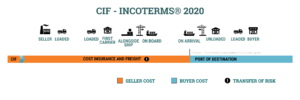
Understanding the calculation method is key to explaining why fees can sometimes seem shockingly high.
Indonesian customs uses the CIF method (Cost, Insurance, and Freight). This means duties are calculated not just on the price you paid for the goods, but also on the shipping cost and insurance premium. Here is the step-by-step:
-
Determine CIF Value: Item Price + Shipping Cost (Freight) + Insurance
-
Import Duty: CIF Value x Applicable Duty Rate
-
VAT: (CIF Value + Import Duty) x 11% (or 12%)
Here is a practical example for a non-personal use shipment of electronics valued at US$1,000 CIF:
| Component | Calculation | Amount (USD) |
|---|---|---|
| CIF Value | Item Price + Shipping + Insurance | 1,000 |
| Import Duty | 1,000 × 10% | 100 |
| VAT (11%) | (1,000 + 100) × 11% | 121 |
| Income Tax | (1,000 + 100) × 7.5% (approx) | 83 |
| Total Payable | Duty + VAT + Income Tax | 304 |
The final bill is 30.4% of the original item value.
Why Are Customs Duties Sometimes More Expensive Than the Goods?
You have probably heard stories of someone paying taxes three or four times the price of their imported item. This is not an urban myth. It happens for four specific reasons, often involving penalties.
Reason 1: Severe Penalties for Under-Declaration
The most common cause is penalties for under-declaration. If the stated value in your invoice is lower than the official customs valuation, you face fines based on the shortfall.
The penalty can be devastating:
-
If the underpaid duty is up to 50% of the correct amount, the fine is 100% of the underpaid duty.
-
If the underpaid duty exceeds 450%, the fine skyrockets to 1,000% (10 times) the underpaid amount.
These fines can easily surpass the original value of the goods.
Reason 2: High Tariff Rates for Specific Goods
Indonesia uses the BTKI (Indonesian Customs Tariff Book) with HS Codes for over 11,000 product categories. Specific items carry extremely high rates:
-
Import duties for luxury cars can reach 95%.
-
General tariffs range from 0% to 150% depending on the HS code.
-
In addition, anti-dumping duties may be applied to specific imported products.
Reason 3: Cumulative Tax Layers
As shown in the table, fees stack: Import Duty + VAT + Income Tax. This layered structure alone can easily reach 30-50% of the CIF value, even without penalties.
Reason 4: Confiscation Fees
If your goods are seized for failing to declare them or for carrying prohibited items, you may have to pay redemption fines to get them back. These fines are in addition to the normal duties and can be arbitrarily high.
Why is the fine so high?
The Indonesian government imposes severe penalties to deter smuggling and protect local industries. Under-declaring value or quantity is treated as a serious attempt to defraud the state, hence the multi-tiered penalty system that can reach 10 times the amount owed.
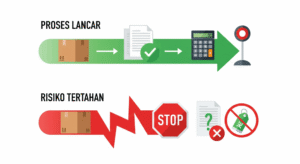
5 Practical Tips to Avoid Problems at Customs
-
Always Keep Your Invoices: Save receipts and transaction records for every item. Verification becomes much faster.
-
Declare Honestly: Use the customs declaration form or the electronic customs declaration (e-CD) app before arrival.
-
Stay Within the Limit: For personal items, try to keep total value under US$500 FOB per person.
-
Carry Supporting Documents: For high-value items like electronics or luxury bags, bring proof of prior ownership if leaving Indonesia.
-
Know the HS Code: If importing commercially, check the BTKI HS code online to estimate the exact duty rate.
The case of the mother crying over her Pokemon cards brought Indonesia’s customs enforcement into the spotlight. But at its heart, it was a textbook example of how customs duties enforcement works: intense scrutiny is triggered by high volume, high frequency of travel, or signs of commercial activity.
Indonesian customs duties are not designed to be arbitrary. The PMK 34/2025 rule offers a generous US$500 duty-free allowance, which is higher than many countries. Problems arise when goods cross into commercial territory or when penalties for mis-declaration apply.
To ensure a smooth arrival, keep your invoices ready, declare honestly, and stay within your allowance. With this guide, you are now better prepared than most travelers.